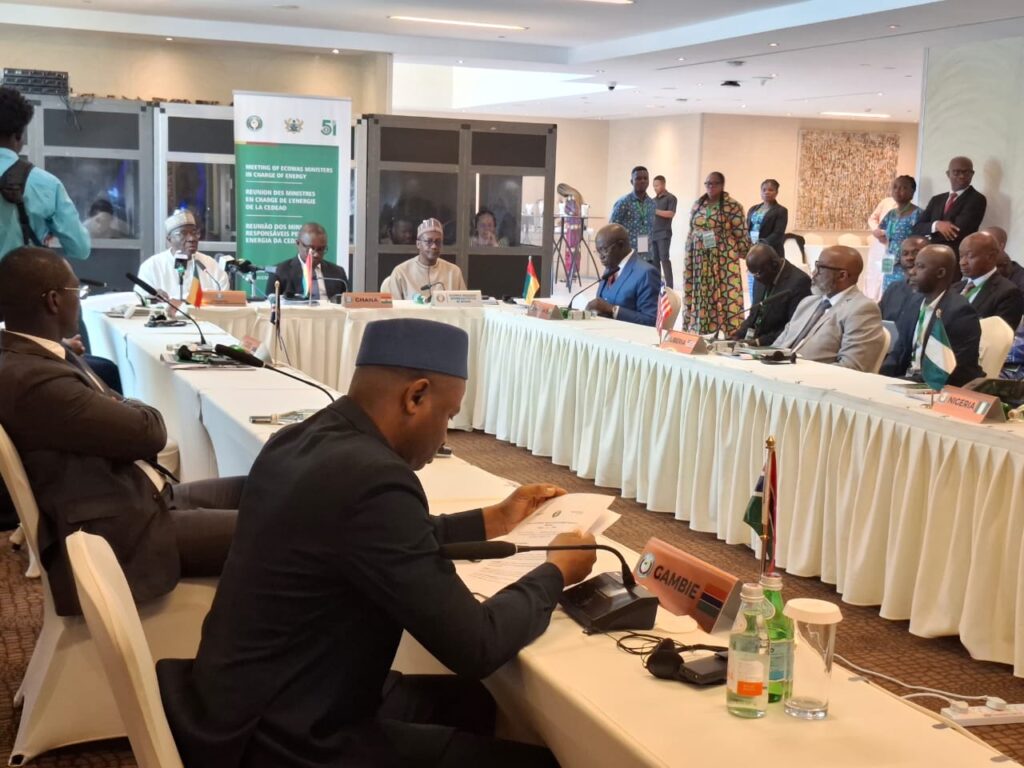
Accra, Oct. 22, GNA – Energy ministers of the Economic Community of West African States (ECOWAS) are meeting in Accra to consider two regional instruments on battery energy storage and electricity market regulation.
The instruments seek to harmonise energy sector operations among member states, support renewable energy development and strengthen the regional electricity market.
The first is a directive on Battery Energy Storage Systems (BESS) and related technologies, which is expected to facilitate the integration of solar and other variable renewable energy sources into electricity grids.
The second is a proposed amendment to the regulation on the ECOWAS Regional Electricity Market Levy, aimed at providing adequate resources for regional electricity institutions to carry out their regulatory and operational responsibilities.
Mr Amin Amidu Sulemani, Commissioner for Infrastructure, Energy and Digitalization at the ECOWAS Commission, said the instruments would promote a coordinated approach to energy development across the sub-region.
“If we operate independently, it will be difficult in the energy sector. We must operate as a region and as an integrated body,” he said in an interview with journalists at the meeting on Thursday.
He indicated that battery storage was essential for supporting solar power generation, particularly during peak demand periods, and could help reduce electricity production costs.
Dr John Abdulai Jinapor, Minister of Energy and Green Transition, said regional cooperation was essential to addressing challenges relating to electricity access, clean cooking and energy sustainability.
He said Ghana was pursuing battery storage solutions to manage peak demand and improve the utilisation of existing generation capacity.
The ifference between peak and off-peak demand could reach 800 megawatts during some seasons, he noted.
Dr Jinapor said the country had completed competitive bidding for about 200 megawatts of solar power and planned to procure an additional 200 megawatts to help meet peak demand.
“The future of energy security is not just simply about the power we generate. It is about how intelligently and efficiently we manage the power available to us,” he said.
He also called for stronger regional energy trade, particularly in natural gas, to reduce dependence on external suppliers and limit exposure to international disruptions.
The proposed amendment to the regional electricity market levy is expected to provide adequate funding for institutions such as the ECOWAS Regional Electricity Regulatory Authority, the West African Power Pool, and the System Market Operator to perform their functions.
Data from the ECOWAS Commission indicate that only 61 per cent of the population in the region has access to electricity, leaving nearly 180 million people without the service.
Stakeholders at the meeting noted that although the sub-region had abundant solar resources, deployment remained below the level required to meet its energy needs.
The ECOWAS Commission urged member states to increase investment in solar energy and other renewable sources.
The meeting forms part of ECOWAS efforts to strengthen regional energy integration and establish a functional electricity market to support economic development across West Africa.
GNA
Edited by Agnes Boye-Doe
Reporter: Edward Acquah
[email protected]