By Michael Foli Jackidy
Ho (V/R), Oct. 15, GNA – Speakers at the 64th Annual National Conference of the Conference of Heads of Assisted Secondary Schools (CHASS) have called for a comprehensive and collective approach to addressing indiscipline in schools, stressing the need for fair rules, responsible leadership, parental involvement and adequate resources.
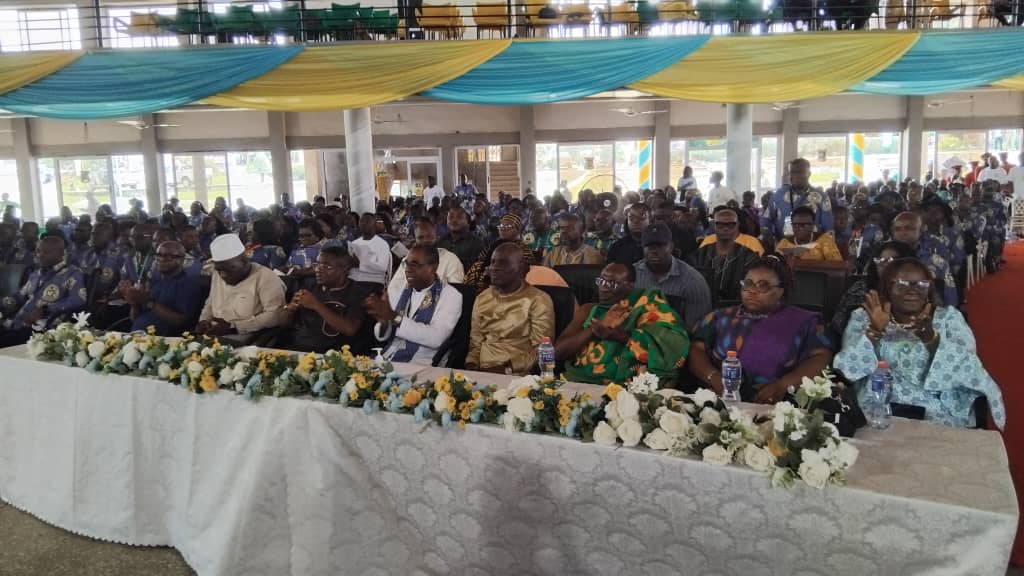
The conference, held in Ho on the theme, “Student Discipline in a Challenging World: Context, Challenges and a Constructive Way Forward,” brought together education officials and school administrators to discuss challenges affecting student behaviour and the delivery of quality education.
Mr Haruna Iddrisu, Minister of Education, at the opening ceremony on Wednesday, urged parents, teachers, students, traditional authorities and community leaders to support government’s efforts to tackle indiscipline, describing it as a shared responsibility that extended beyond students to include teachers, public officials and institutions.
He said the government was considering regulations to govern conduct in schools and intended to establish a seven-member committee to develop recommendations for addressing the problem.
The Minister announced plans to disable social media features on students’ tablets within a week, saying the misuse of mobile phones to facilitate examination malpractice was unacceptable and required collective action.
He also outlined measures to improve education infrastructure and teacher welfare, including a proposed GHS750 million teacher housing initiative, the construction of integrated basic schools in every district, and the recruitment of 10,000 additional teachers after the presentation of the 2027 Budget, alongside about 2,000 non-teaching staff.
Mr Iddrisu said the government had reviewed the Free Senior High School (Free SHS) programme and identified infrastructure, feeding and quality assurance as major challenges.
He cited a 300-million-dollar World Bank-supported initiative, referred to as STAR-J Project, to construct 10 model Category A schools across the country and expand or upgrade more than 100 existing schools.
He appealed to CHASS to offer practical recommendations to improve the transparency and merit-based nature of the school placement system.
Professor Lydia Aziato, Vice-Chancellor of the University of Health and Allied Sciences (UHAS) and guest speaker, said efforts to improve student discipline must also examine the conduct of teachers and other school staff.
She emphasised that discipline began at home, with parents and guardians playing a critical role in shaping children’s behaviour before they entered secondary school.
Prof Aziato urged school heads to ensure fairness in the application of rules and in the general treatment of students.
She called for regular student consultation sessions to allow learners to express concerns and understand school decisions, saying open communication could prevent tensions and misconduct.
She further advocated stronger mentorship and career guidance, as well as a more flexible education system that recognised alternative pathways to success.
She encouraged schools to promote entrepreneurship and practical skills, noting that government employment could not accommodate every graduate.
Dr Issahaque Munawaru, Deputy Director-General for Quality and Access at the Ghana Education Service (GES), speaking on behalf of the Director-General, said discipline should focus not only on punishment but also on developing self-control, respect, responsibility and dialogue.
He urged school authorities to establish clear and fair rules, apply them consistently, and provide students with opportunities to seek guidance before problems escalated.
Dr Munawaru called for stronger partnerships between schools and families, including the reintroduction of Parent-Teacher Associations (PTAs), subject to the resolution of ongoing legal issues.
He said disciplinary measures should protect those affected, hold offenders accountable and help students learn from their actions.
He also cautioned school leaders to demonstrate fairness and integrity, saying they could not demand respect from students while tolerating favouritism or undermining their dignity.
Reverend Father Stephen Owusu Sekyere, Headmaster of Opoku Ware Senior High School and National President of CHASS, commended government for its support for secondary education, particularly the dedicated funding for Free SHS through the uncapping of the Ghana Education Trust Fund (GETFund), and the restoration of a stable academic calendar.
He called for a review of the Student Code of Conduct to equip school authorities to respond effectively to indiscipline in the digital age.
Rev Fr Sekyere, however, expressed concern about delays in the release of operational funds and outstanding arrears covering 2021 to 2024.
He appealed for a predictable funding mechanism to enable schools to meet their obligations and settle debts.
He also urged government to accelerate plans to end the double-track system by 2028, complete stalled GETFund projects and address shortages of classrooms, dormitories, dining halls, furniture, buses and utility vehicles.
On digital learning, the CHASS President called for tablets to be provided to all intended students, adequate charging facilities and the blocking of social media platforms on the devices. He also advocated the provision of textbooks so that students would not depend solely on screens for learning.
He further urged government to clarify arrangements for the effective operation of PTAs, saying school heads needed to engage parents and seek their support on issues affecting students.
The speakers agreed that tackling indiscipline required a balanced approach combining accountability with guidance, fair leadership, family involvement, and a supportive learning environment.
They urged school authorities to protect students’ dignity while enforcing school rules and creating conditions that promoted responsible behaviour and effective teaching and learning.
GNA
Edited By: Maxwell Awumah/Kenneth Odeng Adade