By Samira Larbie, GNA
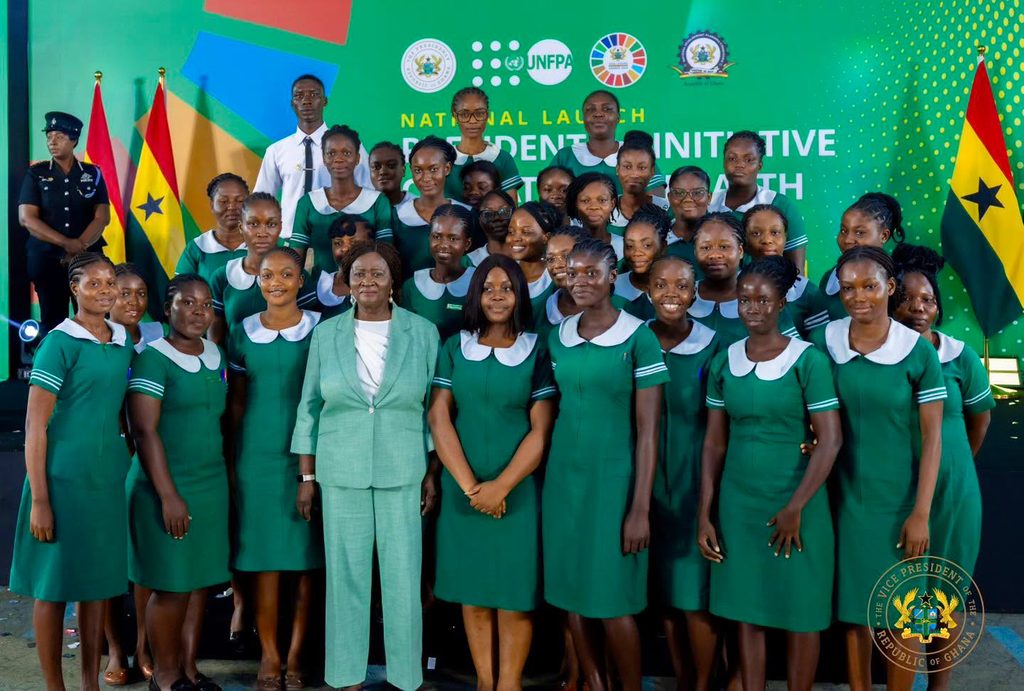
Accra, Sept. 14, GNA – Vice President Professor Jane Naana Opoku-Agyemang has launched the Presidential Initiative on Maternal Health Emergency Response (PRIMER), a five-year plan to reduce preventable maternal and newborn deaths in Ghana.
PRIMER seeks to strengthen emergency response, maternal and newborn care, referral systems, accountability and institutional coordination.
Speaking at the national launch in Accra on the theme, “No Woman Should Lose Her Life While Giving Life”, Prof. Opoku-Agyemang said Ghana had made gains in maternal healthcare, but maternal mortality remained unacceptably high.
She said about nine out of 10 women received at least four antenatal care visits, while roughly the same proportion delivered in health facilities, with skilled health personnel attending about 86 per cent of births.
“These numbers show that more women are entering the formal health system. However, the maternal mortality ratio remains unacceptably higher than the Sustainable Development Goal target of fewer than 70 deaths per 100,000 live births by 2030,” she said.
The Vice President said the focus must go beyond access to healthcare to improving quality, readiness and the speed of emergency response.
She said transport, communication systems, receiving facilities and clinical teams needed to work seamlessly to prevent delays that could turn manageable complications into fatalities.
Prof. Opoku-Agyemang said Ghana had the expertise and knew many of the interventions required to save maternal and newborn lives.
She cited Dodowa, where, according to President Mahama, a successful intervention during his first administration had resulted in a period of zero maternal deaths.
The Vice President said the leading causes of maternal deaths were known and largely preventable or treatable.
“Delays, the lack of essential materials, insufficient emergency capacity or slow corrective action too often turn a manageable complication into a fatal one,” she said.
Prof. Opoku-Agyemang said PRIMER would address challenges requiring action beyond individual health institutions, including financing, infrastructure, staffing, procurement, data and community mobilisation.
She said the initiative would identify and replicate successful interventions from high-performing facilities and regions to improve maternal survival nationwide.

PRIMER was first presented in February 2026 to the Sustainable Development Goals (SDGs) Implementation Coordination Committee, a multisectoral technical working group led by Dr Nii Moi Thompson, Senior Presidential Advisor on the SDGs.
The process subsequently developed into the five-year multisectoral initiative.
Prof. Opoku-Agyemang said PRIMER would operate around three pillars: political leadership and social mobilisation; institutionalised accountability and evidence-based action; and sustainable domestic financing and responsible external support.
She said it would strengthen coordination among ministries, public institutions, local authorities, traditional and religious leaders, civil society organisations, the private sector and communities.
The initiative would also strengthen maternal and perinatal death surveillance and response, improve data quality and timeliness, clarify institutional responsibilities and support regular high-level reviews.
On financing, the Vice President said PRIMER would support sustainable domestic financing while mobilising responsible external support to strengthen national systems.
She said the initiative covered maternity and newborn care, referral and transfer systems, access to blood, medicines and essential equipment, community engagement and effective use of data.
“It is not enough for many more women to enter our health facilities. They must return home safely with their babies to their families. This is the standard by which PRIMER must be measured,” she said.
Prof. Opoku-Agyemang said PRIMER would work within existing institutional mandates and address outstanding gaps, noting that roads, communication, transportation, water and energy also affected maternal survival.
She called on families and communities to encourage women to seek care early, recognise danger signs and ensure pregnant women received timely support.
The Vice President also urged traditional and religious leaders, civil society organisations and the media to strengthen public education on maternal health and emergency care.

“PRIMER cannot succeed as a stand-alone programme nor duplicate the work already underway across government. Its success will require careful coordination with the relevant ministries, agencies, local authorities and partners. Each stakeholder has a role to play,” she said.
Prof. Opoku-Agyemang welcomed development partners’ support, particularly initiatives that strengthened national systems and promoted sustainable interventions at scale.
She commended health professionals, particularly those working in maternal and newborn care, for their commitment and sacrifices in responding to emergencies.
“Every day, you make decisions under pressure, respond to emergencies, and carry the responsibility of bringing mothers and babies safely to childbirth,” she said.
The Vice President expressed the hope that PRIMER would help more mothers survive pregnancy and childbirth and keep more families whole.
GNA
Edited by Kenneth Sackey
Reporter: Samira Larbie
[email protected]