By Edward Dankwah
Accra, Sept. 9, GNA – Mr Mahama Ayariga, Minister for Local Government, Chieftaincy and Religious Affairs, has underscored the need for effective local government structures, warning that citizens often judge the performance of the entire government based on their experiences with institutions at the local level.
He said President John Dramani Mahama had made it clear that local government represented the first and most direct point of contact between citizens and the state.
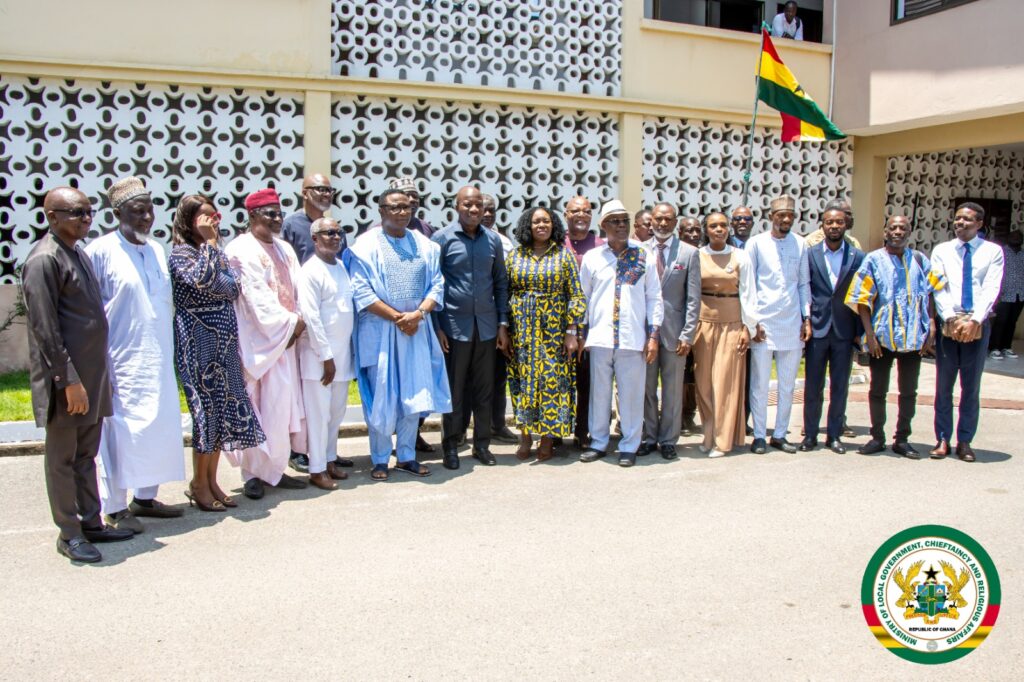
The Minister was speaking during a courtesy call paid to him by the Committee of the National Day of Prayer and Thanksgiving (NDPT) to formally congratulate him on his appointment and have a formal engagement with him together with his management.
He said years of mismanagement of public affairs had contributed to growing mistrust among citizens, while misconduct by some religious leaders had also affected public confidence in religious institutions.
Mr Ayariga called for a collective effort to rebuild trust in government, local governance structures, and faith-based institutions.
“If we don’t rebuild trust, it becomes very difficult to mobilise the citizenry and galvanise them behind us to pursue key social and economic objectives,” he stressed.
He explained that when local government structures failed to serve citizens effectively, people would likely conclude that the government was not working for them.
He noted that assembly members, Metropolitan, Municipal and District Chief Executives, Mayors and Coordinating Directors were among the first public officials’ citizens encountered in their daily lives.
The Minister said his mission was therefore to ensure that local government structures worked efficiently and responded to the needs of the people.
The Minister identified sanitation as one of the most basic services citizens expected from their local authorities, stressing that communities could only remain clean when effective systems were designed to support citizens in fulfilling their responsibilities.
“If you don’t have the systems that work, you invite apathy and there’ll be chaos and the result is insanitary conditions,” he added.
He said the ministry would therefore deepen collaboration with religious bodies, including churches and mosques, particularly in promoting mindset change and encouraging responsible environmental behaviour.
Mr Ayariga said religious institutions had enormous influence within communities and could help government mobilise citizens to address sanitation challenges and other risks confronting communities.
He also pledged to work closely with religious leaders to preserve Ghana’s long-standing culture of peaceful coexistence among different religious groups.
The Minister described religious harmony as an important national inheritance that must be protected and passed on to future generations.
Touching on the relationship between the state and religious organisations, he said both institutions ultimately pursued the welfare and development of the population.
He noted that religious organisations had expanded their activities beyond spiritual matters by establishing hospitals, schools, universities, financial institutions, and housing projects to address the immediate needs of citizens.
Government, he said, had historically complemented such efforts by providing personnel and other forms of support to institutions established by religious bodies.
Mr Ayariga said there was therefore a need for stronger partnerships to harness the “social capital” embedded in religious institutions to support national development and improve the delivery of public services.
He urged religious leaders to use their experience and influence to help find ways of restoring public confidence, arguing that citizens would be more willing to support national development initiatives when they trusted the institutions leading them.
Mr Ayariga assured the religious leadership of his ministry’s openness to their advice and guidance, stressing that restoring confidence in Ghana’s institutions must be a collective and system-wide responsibility rather than the task of one individual.
GNA
Edited by Linda Asante Agyei