A GNA feature by Godwill Arthur-Mensah
Accra, Sept. 16, GNA – For decades, communities along the country’s international boundaries have lived with poor roads, unreliable telecommunications, and inadequate social amenities.
Despite their strategic role in safeguarding national security and driving cross-border trade, they have unconsciously been marginalised.
Recently, some 11 border communities in the Jaman North District of the Bono Region, urged the government of Ghana to urgently improve road infrastructure and telecommunications services within the enclave.
From Jenini to Kokosua No. 2, the voices of border residents echo a common refrain; exclusion from the national cake. Their plea was made during a five-day operational assessment and stakeholder engagement led by Major General Anthony Ntem, the Commissioner General of the Ghana Boundary Commission.
Voices from Residents in Border Communities
Egya Kwesi Suma of Jenini says: “When it rains, everything gets flooded. No cars come here. Our cashew rots on the farm.
Kwame Abbam of Buko says: “Our situation is even more dire.
“We mostly sell our harvested cashew to buyers in Côte d’Ivoire due to the poor condition of the roads to Sampa. Access to Côte d’Ivoire is easier than reaching our own district capital.”
Beyond roads, the absence of reliable telecommunications services has left communities cut off from emergency response and border security coordination. While towns like Sampa and Kabree struggle with unstable networks, villages such as Kokosua No. 2, Bonakire, Jenini, Febi, Buko, Nsosomea, and Kuroase have no mobile access at all.
Nana Adu Kwaku Ababio, Chief of Kokosua No. 2 says: “We are cut off as though we are not Ghanaians.
“During emergencies, we have no way of reaching security services. Our children sit the same exams as their peers in Accra, yet they lack access to digital tools. This is a threat to our safety and development.”
Stakeholders and Responsibilities
The plight of border communities implicates multiple stakeholders.
Government ministries such as Roads and Highways, Communications, Education, Health, and Interior must coordinate interventions.
Although the Ghana Boundary Commission is mandated to safeguard territorial integrity, the Commission acknowledges its limited resources to address human security needs directly. Therefore, the Local Authorities such as the District Assemblies must prioritize border communities in development planning and allocation of resources.
The security agencies such as the Police and Immigration Services require presence in these areas to strengthen border management.
Civil society and development partners can support infrastructure, education, and health projects in these marginalised communities.
Major General Ntem of Ghana Boundary Commission give an assurance that “concerns of residents in border communities would be relayed to the relevant ministries.”
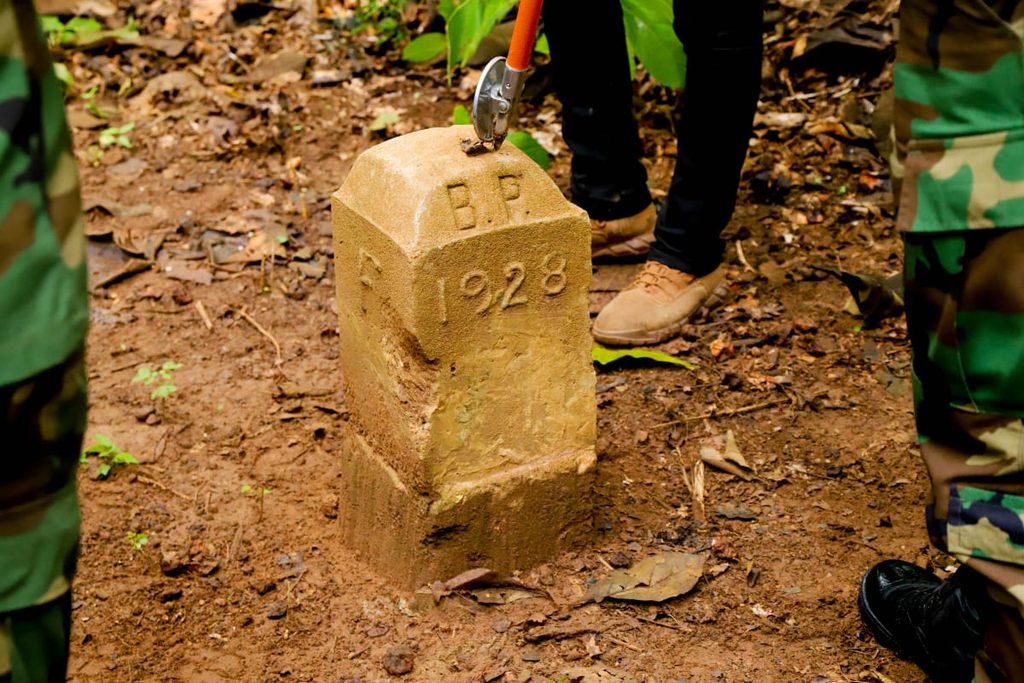
He adds: “Boundary management is not only about pillars. It is also about the people living along the international boundaries.”
Neglect Across the Borders
The Jaman North case is not isolated. Similar complaints have emerged from border communities in the Oti, Upper West, and Northern Regions. Poor infrastructure forces farmers to trade across borders; weak telecom services hinder security coordination, and inadequate schools and health facilities perpetuate inequality.
These communities, though vital to Ghana’s sovereignty, remain peripheral in national development priorities.
Workable Recommendations
To break the cycle of neglect, a multi-pronged approach is needed: Government must prioritise feeder roads linking border villages to district capitals to facilitate trade and access to services. It is important that Ministries, Departments and Agencies partner with mobile network operators to extend coverage, backed by government incentives.
More also, efforts must be geared towards establishing police posts and immigration offices in all border communities to enhance border management and strengthen security.
It is imperative for government to act urgently by providing educational and health facilities as well as ensuring equitable teacher postings to border communities.
Integrated Border Development Policy
It is time, as a country, Ghana adopts a national framework that aligns boundary management with socio-economic development, ensuring border communities are not left behind.
Border communities are the first line of defense for Ghana’s sovereignty, yet they remain the most neglected. Their appeal is not merely about roads and networks; it is a call for inclusion, dignity, and recognition. Addressing their needs is not charity; it is a strategic investment in national security and development.
GNA
Edited by Benjamin Mensah
Feature Writer: Reporter: Godwill Arthur-Mensah
Feature Writer’s email address: [email protected] gh