By Samira Larbie, GNA
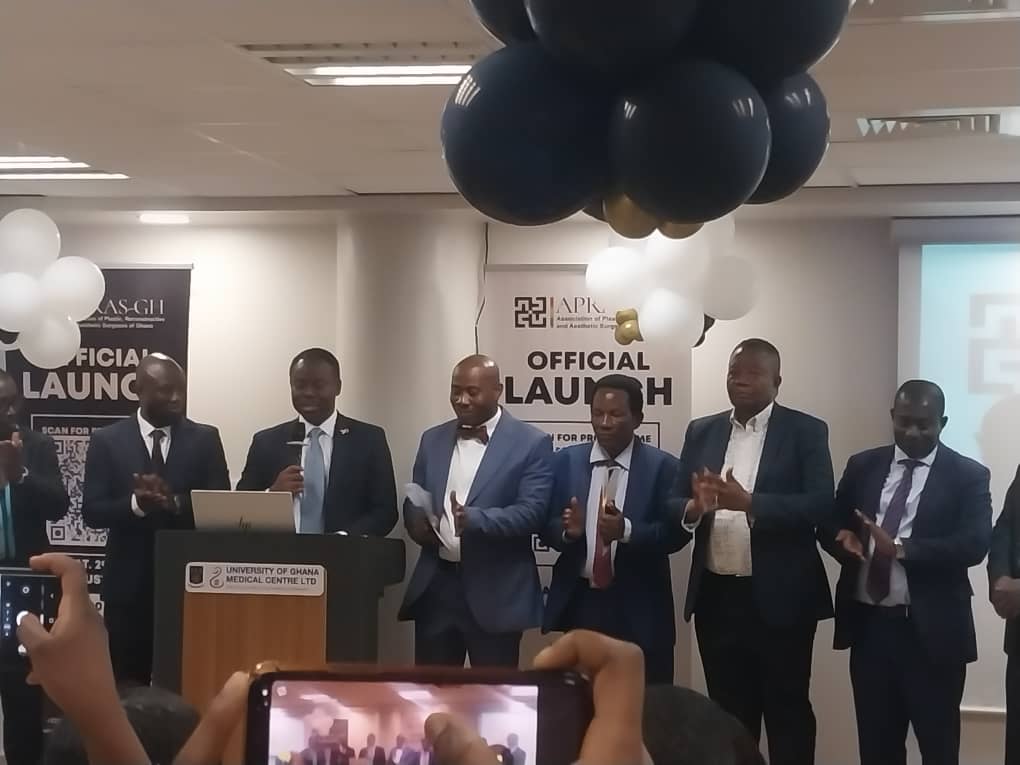
Accra, Sept. 1, GNA – The Association of Plastic, Reconstructive and Aesthetic Surgeons of Ghana (APRAS-GH) has been established to expand access to specialist reconstructive surgical services nationwide.
The association, launched in Accra, will promote professional standards, specialist training, research, patient safety and public education, while providing a platform for plastic, reconstructive and aesthetic surgeons to strengthen the specialty.
Dr Ernest Konadu Asiedu, Head of the Medical and Dental Programme Technical Coordination Directorate of the Ministry of Health, representing the Deputy Minister of Health, said the formation of APRAS-GH represented more than the creation of a professional body, but a commitment to advancing specialist surgical care and contributing to national health development.
He said the association had an important role to play to promote excellence, support training, encourage research, advocate for patients and provide a credible professional voice to shape the future of plastic and reconstructive surgery.
Dr Asiedu said plastic surgery was often misunderstood as being limited to cosmetic procedures, stressing that the specialty had a much broader role in restoring function, dignity and quality of life.
He said reconstructive surgery was critical in the management of severe trauma, burns, complex wounds, congenital conditions such as cleft lip and palate, and defects resulting from cancer treatment.
“Reconstructive surgery restores more than physical appearance. It also restores dignity, confidence, independence and quality of life,” he said.
Dr Asiedu urged APRAS-GH to prioritise the training of more specialists in areas including microsurgery, hand surgery, craniofacial surgery, breast reconstruction and oncological reconstruction.
He said although Ghana had developed capacity in specialist surgical care, expertise and services remained concentrated in a few centres, creating the need for deliberate efforts to expand services geographically.
Dr Asiedu also called for stronger multidisciplinary collaboration involving surgeons, nurses, allied health professionals and other stakeholders to improve patient care.
He stressed the importance of research, saying Ghana needed to generate its own evidence to guide plastic and reconstructive surgical practice.
Dr Asiedu advocated clinical audits, patient registries, outcome studies and collaborative research to document experiences, identify gaps and contribute Ghanaian perspectives to global surgical knowledge.
He said the association must also make patient safety a defining priority, particularly as interest in aesthetic procedures continued to grow.
Patients, he said, needed protection through proper standards, ethical practice, appropriate qualifications and informed decision-making.
Dr Asiedu said the Government was positioning Ghana as a medical tourism hub in the West African sub-region and that strengthening specialist surgical services could contribute to that objective while generating revenue for the country.
He encouraged APRAS-GH to measure its success not only by conferences and membership numbers, but by its impact on patients, including safer care, improved surgical outcomes, better training and increased access to reconstructive services.
Dr Paa Ekow Hoyte-Williams, President of APRAS-GH and Head of Plastic Surgery at the Korle-Bu Teaching Hospital, said the association was formed to improve the practice and delivery of plastic surgery in Ghana and ensure that patients received the highest level of care.
He said Ghana currently had only about 25 to 30 plastic surgeons serving a population of approximately 30 million, describing the situation as inadequate.
Dr Hoyte-Williams said one of the association’s key objectives would be to increase training and encourage more young surgeons to specialise in plastic and reconstructive surgery.
He also identified public education as a major priority, noting that many people associated plastic surgery mainly with cosmetic procedures.
The association, Dr Hoyte-Williams said, would educate the public on the broader scope of the specialty and promote safe and ethical approaches to aesthetic procedures.
He said the association would establish committees and engage stakeholders, including the Ghana College of Physicians and Surgeons, to explore ways of improving specialist training.
Dr Abdul-Samed Tanko, Chief Executive Officer of the University of Ghana Medical Centre (UGMC), welcomed the formation of the association, saying it would give greater impetus to the development of plastic and aesthetic surgery in Ghana.
He said there was a need for more plastic surgery centres across the country to ensure that children and adults with congenital and acquired deformities could access appropriate care regardless of where they lived.
The launch was marked by the unveiling of a seed fund and the adoption of a constitution to guide the operations of APRAS-GH.
The association is expected to collaborate with the Ministry of Health, health institutions, universities, professional colleges and international partners to strengthen training, research, public education and access to quality plastic and reconstructive surgical services.
Edited by Kenneth Sackey
Reporter: Samira Larbie
[email protected]