By Francis Ntow
Accra, Sept. 29, GNA – The Ghana Audit Service has been urged to fully enforce its constitutional powers of disallowance and surcharge against offenders to deter the misappropriation of public funds.
It has also been urged to modernise its operations through performance-based digital and artificial intelligence (AI)-enabled auditing systems to keep pace with increasingly complex public financial systems.
Professor Francis Dodoo, Presidential Advisor on the National Anti-Corruption Programme, and Dr David Ofosu-Dorte, Senior Partner at AB & David Africa, made the call at the launch of the 2026 Financial Year Audit in Accra on Tuesday.
They said stronger enforcement and modern auditing systems were critical to building public trust, safeguarding Ghana’s democratic credentials and protecting national resources for development.
Prof Dodoo said figures from the Auditor-General’s reports indicated that the country had lost GHS100 billion over the past six years through financial irregularities.
He urged the Audit Service to adopt a firmer approach towards offenders, saying leniency in dealing with financial misconduct undermined efforts to protect public resources.
He said family ties, friendships, church and political connections, as well as lobbying, were sometimes used to seek forgiveness, reduced punishment or the complete clearance of offenders.
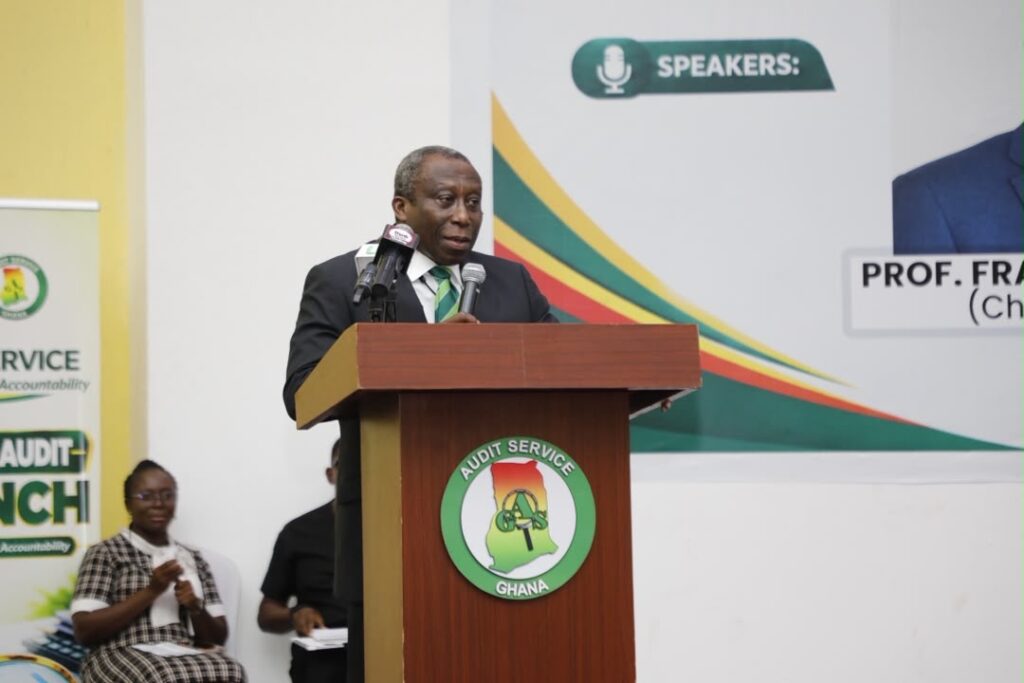
“Going soft on wrongdoers only hurt society,” he said.
Prof Dodoo said those who misappropriated or unlawfully used public funds must be held accountable to protect resources needed for schools, hospitals, water systems and other social amenities.
He, therefore, urged the Auditor-General to make surcharge rates sufficiently punitive and higher than prevailing Treasury bill rates to serve as a stronger deterrent and ensure effective recovery of public funds.
Dr Ofosu-Dorte said the Auditor-General’s constitutional powers to disallow and surcharge were significant tools for promoting accountability, credibility and sustainability in public financial management.
He urged the Audit Service to strengthen the quality of its reports and involve relevant institutions and professionals in the audit process to ensure that punitive actions were legally sound and did not amount to harassment.
“There are institutions such as the Police, the internal auditing organisations, the Special Prosecutor and the recent Value for Money Office, and their activities in one way or the other touch on audit or rely on audit… all these institutions must collaborate with the Audit Service,” he said.
Dr Ofosu-Dorte also called for the accelerated adoption of digital technologies, including AI-assisted systems, to improve monitoring, tracking and reporting.
“If we do not at this stage move away from manual methods of auditing as quickly as we can and deploy modern software, such as AI-assisted accounting systems, you will come to the point where the auditor will be lost as to what is being done,” he said.
On capacity building, he recommended broadening the qualifications and expertise required for auditors beyond accounting to include law, engineering, quantity surveying and procurement.
He said such multidisciplinary expertise would help the Audit Service identify and prevent recurring systemic errors in public financial management.
GNA
Edited by Beatrice Asamani Savage
Reporter Francis Ntow
Email:[email protected]