By Kekeli K. Blamey
Mafi Kumase (V/R), Sept. 16, GNA – The Department of Social Welfare and Community Development has called for intensified efforts to promote early detection, treatment and rehabilitation of children with visual impairment to prevent avoidable blindness and improve their prospects in life.
Mr Lucky Atokple, the Central Tongu District Director of Social Welfare, said early identification of eye conditions, coupled with timely professional medical attention, was critical to preventing some forms of childhood visual impairment from worsening.
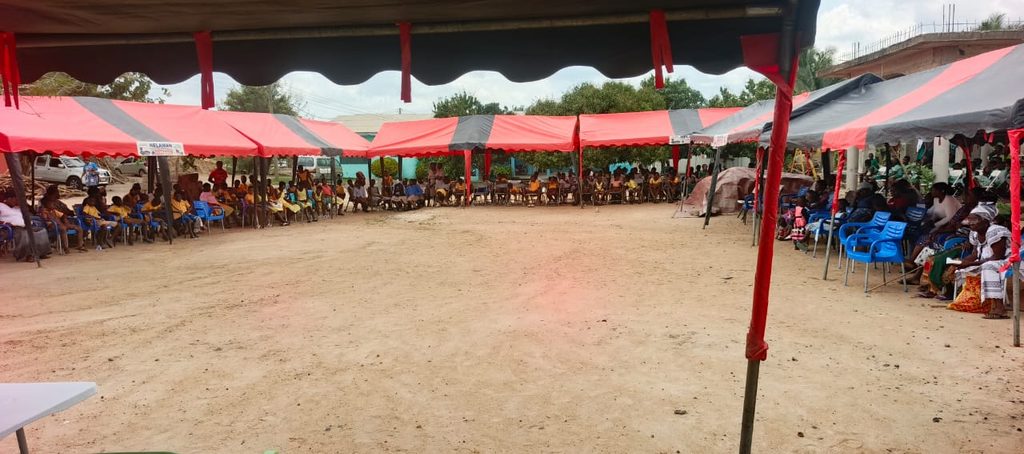
He made the call at a community sensitisation programme on visual impairment held at the Global Evangelical Church, Mafi Kumase, in the Central Tongu District.
The programme, held under the theme: “Caring for Children with Visual Impairment: Why Children Lose Their Vision and What We Can Do,” sought to raise awareness among parents, caregivers and community leaders on the causes, effects, prevention and treatment of visual impairment among children.
The programme was organised as part of the Holistic Development Programme for Visually Impaired Children (HODVIC), an intervention of the Department of Children under the Ministry of Gender, Children and Social Protection, with support from Dutch Visio International.
Mr Atokple said visual impairment could significantly affect a child’s education, social development, independence and future opportunities, particularly when conditions were not identified and addressed early.
He noted that misinformation, late presentation for medical care, misconceptions and some traditional practices could contribute to delayed treatment and worsening eye conditions.
He therefore urged parents and caregivers to pay close attention to children’s visual development and seek professional medical attention whenever abnormalities were suspected.
Speaking on behalf of Reverend Israel Akrobortu, the Volta Regional Director of the Department of Children, Madam Nancy Anyri, an officer of the Department, indicated that the HODVIC had been implemented for more than seven years in selected districts and regions across the country, with the Volta Region being one of the beneficiary regions.
She said the programme targeted children aged between zero and 15 years, with emphasis on early detection, identification, screening, assessment, appropriate referral and treatment, as well as care and management of children with visual impairment.
Madam Anyri emphasised that the programme was officially introduced in the Central Tongu District last year, where free eye screening, awareness creation and the formation of parent support groups were undertaken at the old District Assembly premises in Adidome and at New Bakpa.
She said the current intervention was intended to deepen community awareness while screening children’s eyes and identifying parents and caregivers who required further support and guidance.
“Parents and teachers could identify possible vision problems by observing children’s developmental milestones and behaviour. At school, a child who struggled to see what was written on the board despite sitting at the front, moved repeatedly towards the board, had poor handwriting or performed below expectation academically could also be experiencing visual difficulties rather than lacking intellectual ability,” Madam Anyiri said.
She urged teachers, health workers, social workers, parents, caregivers and psychosocial counsellors to work together to identify such children and ensure that they received the appropriate assistance.
Madam Adzraku Faith, an Optometrist at the Adidome Government Hospital, said treatment depends on the nature and severity of the condition.
Treatment, she ould include prescription of spectacles, medication or surgery, while children whose sight could not be restored could benefit from rehabilitation to enable them to live productive and independent lives.
She stressed that visual impairment should not be regarded as the end of a child’s future, saying with appropriate rehabilitation, support and opportunities, children with visual impairment could develop their abilities and contribute meaningfully to society.
Mr Dennis Agyei Enkson, the Chairman of the programme, also appealed to parents and guardians not to hide children living with visual impairment, but rather bring them forward to access available medical, social protection and rehabilitation services.
He said visual impairment was a condition that required collective responsibility, resources and appropriate structures to ensure the full inclusion of affected children in society.
He said the fact that a child was visually impaired did not mean that the child’s life had been truncated, stressing that such children retained other senses, including hearing and touch, which could be strengthened through appropriate support and rehabilitation.
The Chairman commended Visio International for their support and called for sustained collaboration among government institutions, development partners, health professionals, traditional leaders, communities and families to protect the rights and wellbeing of children with visual impairment.
The programme brought together representatives of the Central Tongu District Assembly, Department of Social Welfare and Community Development, Department of Children, Visio International, Ghana Health Service, traditional and community leaders, teachers, parents, caregivers and children with visual impairment.
GNA
Edited by Maxwell Awumah/Benjamin Mensah