By Kodjo Adams
Accra, Sept. 22, GNA – Professor Felix Y.H. Kutsanedzie, Pro-Vice-Chancellor of Accra Technical University, has urged researchers, academics, industry players and policymakers to translate ideas and research findings into practical solutions to address societal challenges.
Prof. Kutsanedzie made the call at the closing ceremony of the two-day second edition of the Applied Research Conference of Accra Technical University (ARCATU) held in Accra.
The conference provided a platform for participants to share research findings, exchange ideas, examine existing approaches, showcase innovative solutions, and prototype technologies.
The conference was on the theme: “Applied Research and Innovation for Sustainable and Resilient Development in the Era of Artificial Intelligence (AI).”
The event brought together researchers, academics, industry practitioners, development partners, policymakers and other stakeholders to deliberate on the role of research and innovation in addressing national development challenges.
Prof Kutsanedzie, also the Conference Chair, said the discussions had demonstrated the importance of collaboration across disciplines, institutions and sectors in developing solutions to complex societal challenges.
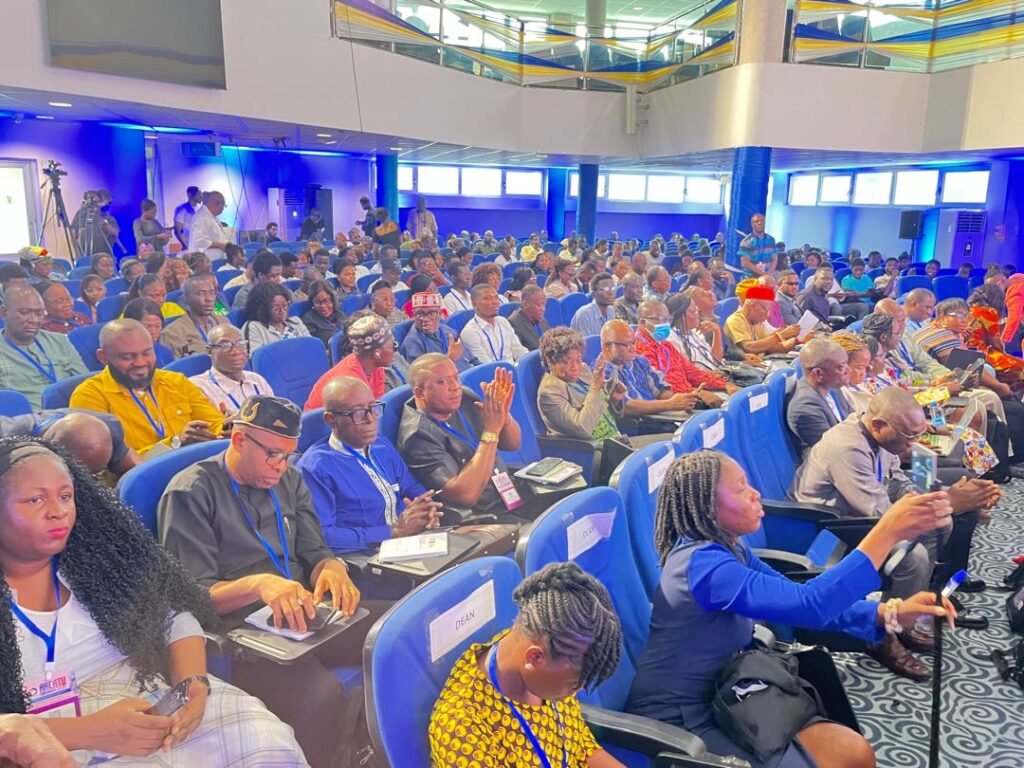
He said the quality, uniqueness, and diversity of contributions at the Conference reinforced the need for academia, industry and policymakers to work together to ensure that research had a meaningful impact on communities and society.
“For us to have sustainable solutions, we must come together,” he said, emphasizing the importance of an interdisciplinary, inter-institutional and multisectoral approach.
He described AI as a useful supportive tool but cautioned that its growing application must be accompanied by responsible use.
“AI is a supportive tool, and it is very useful. But we must use it responsibly,” he said.
Dr Theophilus Anyanful, Co-Chair for the Planning Committee of Applied Research Conference of Accra Technical University, announced plans to publish the Conference’s proceedings in a Scopus-indexed journal through Springer, creating further academic publication opportunities for participants.
Dr Ananful described the event as a rewarding experience and said the team had achieved the objectives set for the event.
Dr Victoria Owusu-Ansah, a member of the Planning Committee of ARCATU, said the Conference recorded a total of 3,366 participants, expressing optimism about increasing attendance to about 5,000 at next year’s edition.
Participants came from several countries, with Nigeria recording the highest representation, as well as South Africa, and Benin.
GNA
Edited by Agnes Boye-Doe
Reporter: Kodjo Adams
Email: [email protected]