By Jesse Ampah Owusu, GNA
Accra, Nov. 10, GNA – Development partners and foreign institutions have been urged to align their scholarships and investments with the research needs and priorities of Africa.
That would ensure that foreign investments in higher education were channelled into areas that directly affected the continent’s growth trajectory, rather than being dispersed across unfocused initiatives.
Professor George Kweku Toku Oduro, Technical Advisor to Ghana’s Minister of Education, made these recommendations on Tuesday at the 2026 Carnegie African Diaspora Fellowship Programme (CADFP) Convocation held in Accra.
The CADFP, an initiative funded by Andrew Carniege Foundation of New York and administered by the Institute of International Education (IIE), links African universities with African-born academics working in the United States and Canada.
This is done through institution-led projects in curriculum co-development, research collaboration and graduate student mentoring and training.
The three-day convocation in Ghana, organsised by the IIE and the Association of African Universities, brought together the fellowship’s alumni and stakeholders to celebrate more than a decade of academic collaboration and consider ways to sustain its achievements.
Also, the grathering recognised contributions to research, curriculum development, graduate student mentorship and institutional partnerships across African higher education.
Professor Oduro said localised solutions were needed to combat climate and energy insecurity, build local capacity for disease surveillance and pharmaceutical manufacturing, modernise smallholder farming, as well as preserve indigenous knowledge systems, languages, and histories.
He also urged African governments and institutions to commit resources to complement external grants, thereby strengthening the continent’s research capacity and reducing dependency on foreign funding.
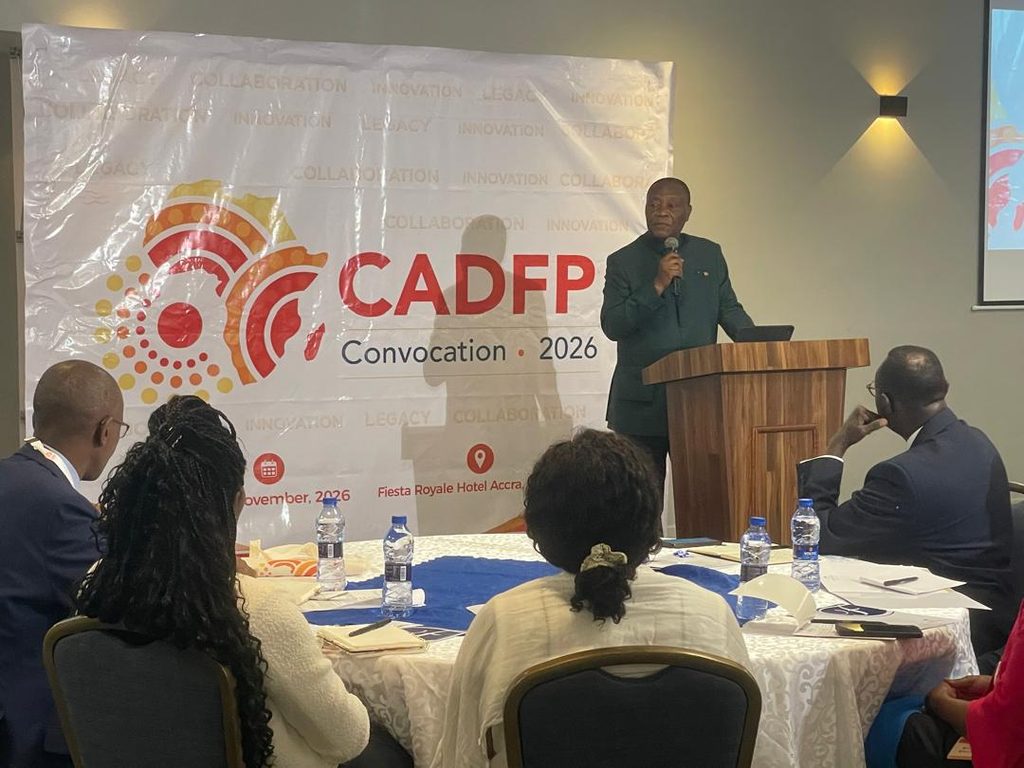
Professor Oduro challenged the gathering to balance international exposure with continental and global citizenship, warning that pursuing global standards without grounding students in African history, values, and community priorities created intellectual alienation.
“For me, true global citizens are not rootless wanderers. They are deeply rooted in their heritage, contributing to the world from a place of cultural confidence and identity,” he said.
Mr Jonah Kokodyniak, the Executive Vice President of IIE, said the convocation celebrated CADFP’s achievements and contributions to African higher education since 2013.
It had awarded more than 750 fellowships, supported over 200 African universities in 11 countries, and mentored nearly 5,000 graduate students, he said.
Mr Kokodyniak also touched on the IIE’s collaboration with the Association of African Universities since 2022 when it became a collaborative partner, contributing to the launch of the African Diaspora Fellowship Initiatives (ADFI).
The AFDI, registered in September 2026, was intended to institutionalise and expand the CADFP legacy through partnerships among African institutions, diaspora scholars and skilled professionals.
“Its planned activities include in-person, hybrid and online fellowships, thematic programmes, professional development partnerships and stakeholder convenings,” he added.
ADFI targets for 2027-2031 include 250 new fellowships, 75 global institutional partners, 75 new institutional beneficiaries, 500 alumni and network members, engagement in 25 additional African countries, and 60 new publications and convenings.
GNA
Edited by Agnes Boye-Doe
Reporter: Jesse Ampah Owusu