By Opesika Tetteh Puplampu, GNA
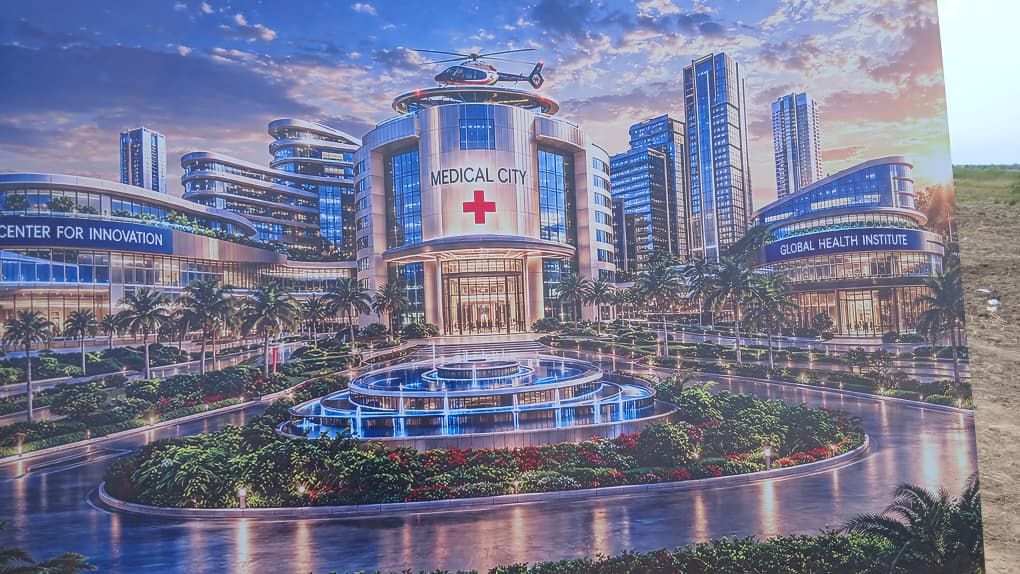
Togbloku-Ada, Sept. 07, GNA – Africa’s Brain Bank, a non-profit organisation, has cut sod for the construction of an Africa Medical City project, which is expected to comprise hospitals, medical training institutions and other healthcare-related facilities.
The proposed medical city to be constructed at Togbloku Okor in the Ada East District, is expected to create employment and skills development opportunities, while providing a major healthcare and medical training hub for Ghana and other African countries.
Reverend Pam Fomunung, the Chief Executive Officer and Group Chair of Africa’s Brain Bank, said the vision for the project was conceived in 2019 but was delayed by the COVID-19 pandemic, however, efforts to revive the project began in 2023 following discussions with traditional authorities in Ada.
Rev. Fomunung, who is also a development queen mother for the Amafuwe of Lomobiawe in Ada, said the project would require billions of dollars in investment and called on Africans on the continent and in the diaspora to invest in it.
“Though it is a multibillion-dollar project, I am only the visionary. The project would be owned by the people who finance it,” she said.
She said the initiative was intended to provide a platform for Africans to contribute to the development of healthcare infrastructure on the continent.
Dr Michael K. Obeng, the President of Africa’s Brain Bank, said Ghana’s selection as the location demonstrated confidence in the country as a destination for major investments.
Dr Obeng, who is also the founder and Chief Executive Officer of MiKO Plastic Surgery and MiKO Pharma, said Africa continued to lose resources through the importation of medicines, migration of trained health professionals and the treatment of patients abroad.
“We currently import 70 to 80 per cent of our medication. We train nurses and doctors, and they leave because we do not have the infrastructure and good-paying systems, and we also send our patients abroad. We are losing in three ways,” he said.
Dr Obeng said Africa had the technical expertise required to address its healthcare challenges but needed the infrastructure and investment to retain its professionals.
He noted that the first phase of the project was expected to be completed within three to five years, with subsequent phases to be developed progressively.
Dr Diola Bagayoko, a board member of the Medical City project, said the development would incorporate hospitals, training schools and other facilities to provide comprehensive healthcare services.
He said Ghana’s geographical location made it a strategic base for a project intended to serve people from across Africa and the wider global community.
He urged Africans to support the initiative, saying the continent’s development required Africans to take responsibility for building its institutions and infrastructure.
“No one else will come out of space to build Africa for us. We are the ones we are waiting for. We can do it,” he said.
Nene Lomo IV, the Divisional Chief of the Lomobiawer Clan of the Ada Traditional Area, said the traditional authority was supporting the project because of the many opportunities the area would derive from it and it had had allocated 2,000 acres of land to it.
Mr Blemano Odehe Yiboi I, the President of the Lomobiawe Youth Association, said the project could create thousands of direct and indirect jobs for young people during its construction and eventual operation, covering masonry, electrical, welding, healthcare, information technology, administration and hospitality, and others.
He said the proposed development could also provide an environment that would encourage trained professionals from Ada to remain in the area and contribute to local development.
Mr Yiboi stated that the project’s proposed focus on medical training, specialised healthcare, research and technology, could position Ada as an important destination for healthcare and medical education, pledging their support.
“We pledge our unflinching support for this project. We pledge to offer our communal labour, our energy and our intellect to ensure this project succeeds,” he said.
Naana Lomoki Lomo I, the Divisional Queen of the Lomobiawer Clan, said Togbloku Okor was historically significant to the Ada people and expressed optimism that the development would have a positive impact on the community.
She said the project could help attract African professionals working abroad back to the continent and urged young people, particularly girls, to take advantage of opportunities that would emerge from the development.
“This project is for Ada, Ghana and Africa. I want every girl child to take advantage of this project,” she said.
GNA
Edited by Laudia Anyorkor Nunoo/ Christabel Addo
Reporter: Opesika Tetteh Puplampu, GNA