By Lydia Kukua Asamoah
Accra, Aug. 19, GNA – The Petroleum Commission (PC) has launched its 15th anniversary celebration, marking a year-long activities that offer the opportunity to reflect on its core values, celebrate achievements, and set sights on the next chapter of innovation and regulatory excellence.
It was lunched on the theme: “15 Years of Regulatory Excellence: Promoting a Sustainable Upstream Petroleum Industry for Ghana’s Energy Future.”
Speaking at the launch in Accra, Ms Emefa Hardcastle, Chief Executive Officer (CEO) of the Commission, called on staff and stakeholders to unite in building a stronger petroleum industry for future generations.
She urged staff to reflect on the Commission’s achievements over the past 15 years while aspiring to greater accomplishments.
“As we launch this celebration, let us commit to carrying forward the same spirit of innovation, integrity, and unity that has defined our journey so far. The next chapter is ours to write — and I believe it will be even more extraordinary.”
Ms Hardcastle encouraged actors across the upstream petroleum value chain to participate actively in the anniversary activities.
“Let us make this anniversary a celebration of unity, resilience and ambition,” she added.
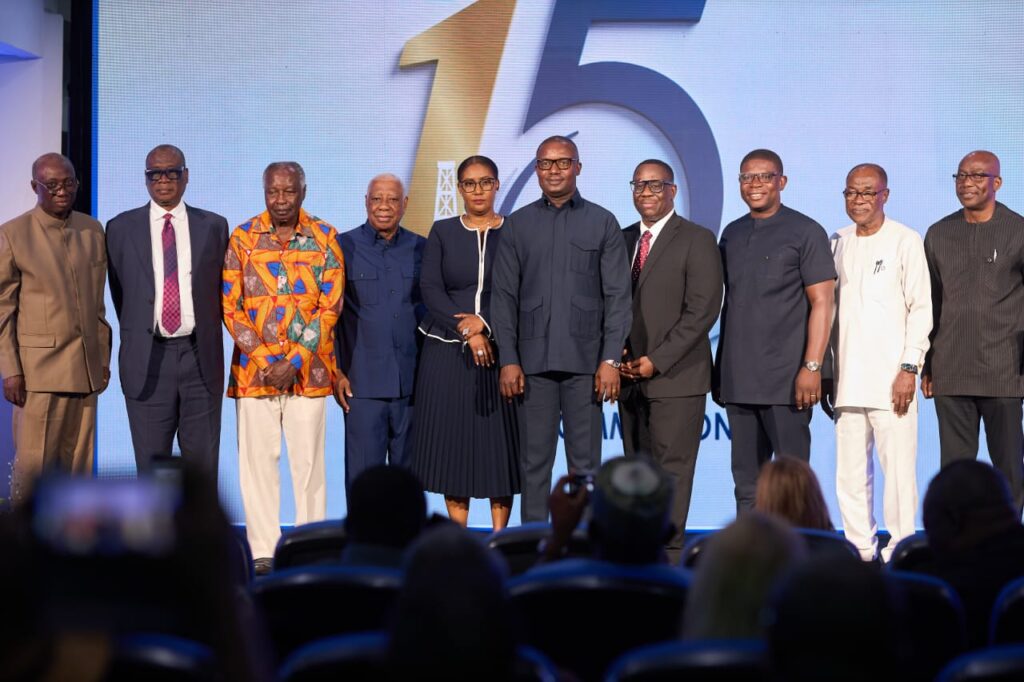
Activities lined up for the anniversary include public symposiums, the premiere of a documentary on the Commission’s journey, a PC@15 Sports Festival, staff forums, team-bonding exercises, STEM-focused corporate social responsibility projects, donations, coastal clean-up exercises, a gala dinner, and Islamic and Christian thanksgiving services.
The events will be held in Accra and Takoradi.
Ms Hardcastle expressed gratitude to the founders of the Commission, past and present board members, staff, partners, and stakeholders whose contributions had shaped the institution’s growth.
Reflecting on the Commission’s journey, she noted that it was established in July 2011 to regulate and manage the exploitation and utilisation of Ghana’s petroleum resources for the benefit of all Ghanaians.
She said over the past 15 years, the Commission had evolved into a strong regulatory institution, balancing statutory oversight and compliance while ensuring Ghana remained an attractive destination for petroleum investment.
According to her, the Commission has become a reference point for petroleum regulatory frameworks across Africa, particularly through its implementation of the Petroleum (Local Content and Local Participation) Regulations, 2013 (L.I. 2204), and its subsequent amendments under L.I. 2435.
She said the Commission had consistently promoted the growth and participation of indigenous Ghanaian companies in the upstream petroleum sector, especially in technical service areas previously dominated by foreign firms.
Ms Hardcastle disclosed that the Commission had overseen the award of contracts worth approximately US$4.9 billion to indigenous Ghanaian companies, representing 22 per cent of total contracts awarded in the sector.
In addition, joint venture companies involving Ghanaian firms secured contracts worth about US$7.9 billion, representing 35 per cent of total contracts.
She noted that several industrial facilities, which did not exist before the introduction of the local content regulations, had since been established in the country.
These include capital-intensive investments such as cementing units, waste management and thermal absorption plants, fabrication yards, manufacturing facilities for bolts, nuts and valves, as well as aviation hangars.
On employment, Ms Hardcastle said available data indicated a job localisation rate of more than 90 per cent, with Ghanaians increasingly occupying key technical and managerial positions in the industry.
She highlighted the Commission’s role in safeguarding national interests through effective resource management, noting that its review of petroleum field development plans had saved the country about US$2 billion.
She also announced that a recent petroleum cost audit conducted by the Commission uncovered infractions amounting to US$229 million.
The amount, she explained, had been disallowed as recoverable petroleum costs, creating potential future gains for the State through Corporate Income Tax and Additional Oil Entitlement.
Ms Hardcastle said Ghana’s regulatory framework had become a model for other African countries, leading to technical cooperation agreements with regulators in Uganda, Liberia, Nigeria and The Gambia.
She added that the Commission had also provided technical support to Guyana and Suriname in developing local content and governance frameworks.
The CEO thanked the Ministry of Energy and Green Transition, upstream petroleum companies, sister regulatory institutions, academia, civil society organisations, development partners and host communities for their support.
She paid special tribute to Mr Moses Asaga, a former Chief Executive of the National Petroleum Authority, for providing seed funding when the Commission was established.
“The initial loan of GH¢1 million from the NPA was a lifesaver,” she said, adding that the United Bank for Africa (UBA) also supported the acquisition of the Commission’s office complex when other financial institutions declined assistance.
Looking ahead, Ms Hardcastle said the Commission remained committed to becoming a world-class regulator and positioning Ghana as a leading upstream petroleum hub.
She said the institution was working closely with operators of the Jubilee, TEN, and Sankofa-Gye Nyame fields to address production decline and improve reserve replacement.
“The result has been a steady ramp-up in production in recent months, particularly in the Jubilee Field,” she stated.
Dr John Abdulai Jinapor, Minister of Energy and Green Transition, reaffirmed Government’s commitment to strengthening reforms in the upstream petroleum sector to boost investor confidence and enhance competitiveness.
He commended the Petroleum Commission for its technical leadership and contribution to the effective management of Ghana’s petroleum resources.
Dr Jinapor also paid tribute to the founding architects of the Commission, describing the institution as a critical pillar of Ghana’s upstream petroleum industry.
“I recognise and applaud the many remarkable achievements of the Commission and its dedicated workforce over the past 15 years. These accomplishments give us confidence that the future holds even greater promise for Ghana,” he said.
GNA
Edited by Benjamin Mensah