By Anthony Adongo Apubeo, GNA
Binaba (U/E), Aug. 28, GNA – The National Peace Council (NPC) has called for stronger civilian-security collaboration in the fight against crime and violent extremism to promote peaceful co-existence to enhance development.
Mr Damien Asobayire, the Upper East Regional Executive Secretary of the National Peace Council, said security could not be left solely to security agencies, as community members were often the first to observe suspicious activities and emerging threats.
“Security is a collective responsibility, so if civilians and security agencies come together, they will be able to collaborate and tackle insecurity to enhance development,” he said.
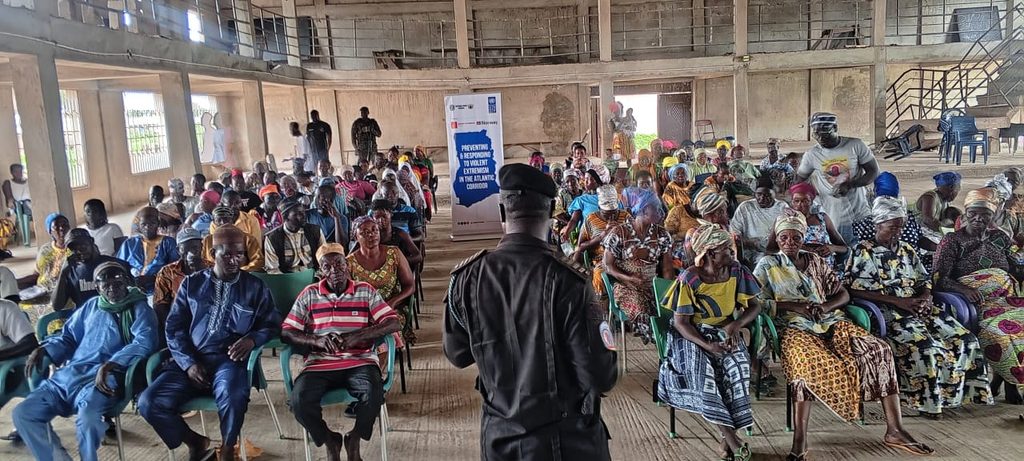
Mr Asobayire was speaking at a Civilian-Security Dialogue organised at Binaba in the Bawku West District, as part of activities under the Preventing and Responding to Violent Extremism in the Atlantic Corridor project, funded by the Governments of Norway and Denmark through the United Nations Development Programme (UNDP).
He said the dialogue followed an earlier online violent extremism awareness engagement with community members, which identified the need for civilians and security engagement.
Mr Asobayire said the initiative was therefore intended to create an avenue for community members to interact directly with security personnel, understand their respective roles and develop practical ways of working together to address threats.
Assistant Superintendent of Immigration (ASI) Mr Tahiru Jamalideen, an Officer with the Ghana Immigration Service, said the porous nature of the country’s borders continued to make the movement of people and goods difficult to monitor effectively.
He said security agencies required the support of residents living along the borders to identify and report suspicious movements and activities and urged community members to remain vigilant and report suspicious characters.
“Where necessary, you can effect a citizen’s arrest and hand the suspect over to the security agencies for further interrogation,” he added.
Assistant Superintendent of Narcotics (ASN) Mr Emmanuel Awinbe, an Officer with the Narcotics Control Commission, cautioned residents against the use and abuse of illicit drugs.
He said drug abuse could adversely affect users’ health, impair judgement and contribute to behaviours that exposed individuals and communities to crime.
Mr Awinbe said the Narcotics Control Commission Act, 2020 (Act 1019), distinguished between narcotic offences, including personal possession, cultivation and trafficking.
He explained that personal possession had been reclassified as a misdemeanour and might attract a fine or lesser punishment, while unlawful cultivation attracted a minimum 10-year prison sentence, with repeat offenders potentially facing life imprisonment.
Deputy Superintendent of Police, Mr Tonka Apam, a Station Officer with the Ghana Police Service, said the evolving nature of crime required closer collaboration between security agencies and community members, noting that residents possessed vital information that could aid crime prevention.
He urged residents to provide timely intelligence to the police and other security agencies to enable them respond effectively to emerging threats.
Mr Jeremiah Asandow, a participant, commended the Peace Council and its partners for creating the platform for direct engagement between civilians and security agencies.
“We are very grateful for this platform that has been created for us to have an interface with the security agencies. It has afforded us the opportunity to spell out our concerns and how we can effectively collaborate to combat crime in our community,” he said.
GNA
Edited by Caesar Abagali/Christabel Addo
Reporter: Anthony Adongo Apubeo
Email: [email protected]