By J. K. Nabary, GNA
Winneba (C/R), Aug 17, GNA – Nana Kweigya, the National Coordinator of the Small-Scale Fisheries (SSF) Academy has asked stakeholders in fisheries benefiting from its trainings to help translate the legal framework of the Academy into practical actions.
This, he said, could be achieved by strengthening co-management and encouraging dialogue to fore, greater voluntary compliance with fisheries laws and regulations at their respective regions.
Nana Kweigya, who made call in an interview with Ghana News Agency at Winneba, stated that the Small-Scale Fisheries Academy, a non-governmental initiative, was being championed by Mundus Naris, and the Canoe and Fishing Gear Owners Association, Ghana (CAFGWAG), a safe dialogue platform for fishers, actors and various groups in the fisheries sector.
He stated that the partnership was aimed to mobilise fishing communities to identify and implement locally driven initiatives to complement government’s efforts to regenerate fisheries resources and safeguard the livelihoods of fishers and fish workers.
Nana Kweigya, who is also the Partnership Manager for Blue Ventures, Ghana said the SSF Academy provided a safe, inclusive space for dialogue where people from across the fisheries sector and others with interest in its future could meet to exchange experiences, learn from one another, discuss issues effecting the sector which included illegal, unreported and unregulated fishing (IUU), and pollution at the landing sites, to jointly develop practical solutions to shared challenges at their landing beaches.
“We are raising common concerns with the Ministry of Fisheries and Aquaculture and the Fisheries commission to inform future policy and management decisions, “he stated.
According to him, the collaboration also focused on lessons from previous development initiatives in Ghana, including the recent training of a number fisher leaders and community representatives on the Fisheries and Aquaculture Act, 2025 (Act 1146), which provided a legal foundation for fisheries co-management, supported by Blue Ventures Conservation.
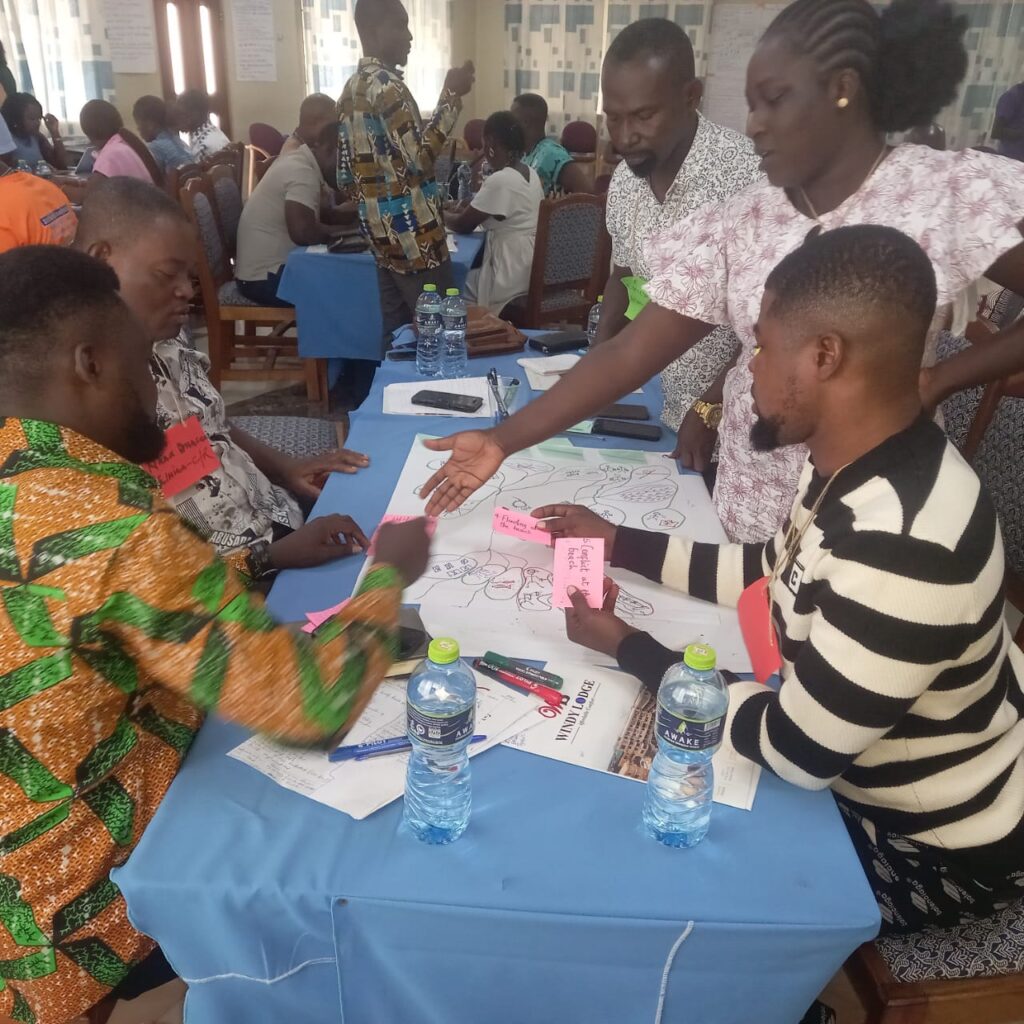
The Academy brought together 34 people, made up of Chief Fishermen, canoe owners, fish processors and other fish workers across the four coastal fishing regions in the country to undergo a five-day workshop to train them as regional and national trainers, with Ms Maria Fernada Arraes of the Academy as the lead facilitator.
The capacities of the beneficiaries were also strengthened as community facilitators to facilitate regular dialogue, convene monthly meetings, establish local co-management structures at supporting their fellow fishers to better understand the Fisheries and Aquaculture Act and to play a more active role in fisheries co-management.
Nana Kweigya said: “We recognise the important efforts being made by the Ministry of Fisheries and Aquaculture and the Fisheries Commission to reduce fishing pressure and addressing overfishing which include campaigns against IUU fishing, the establishment of Marine Protected Areas, and the promotion of co-management approaches.
“In this context, the SSF Academy which marks the beginning of a one-year partnership represents a timely and valuable contribution that can reinforce and accelerate these ongoing initiatives.”
GNA
Edited by Alice Tettey/Benjamin Mensah