By Albert Allotey
Accra, Aug. 27, GNA – Stakeholders at a high-level roundtable policy dialogue has called on the government to swiftly implement strong food policies to protect public health against rising non-communicable diseases (NCDs) in Ghana.
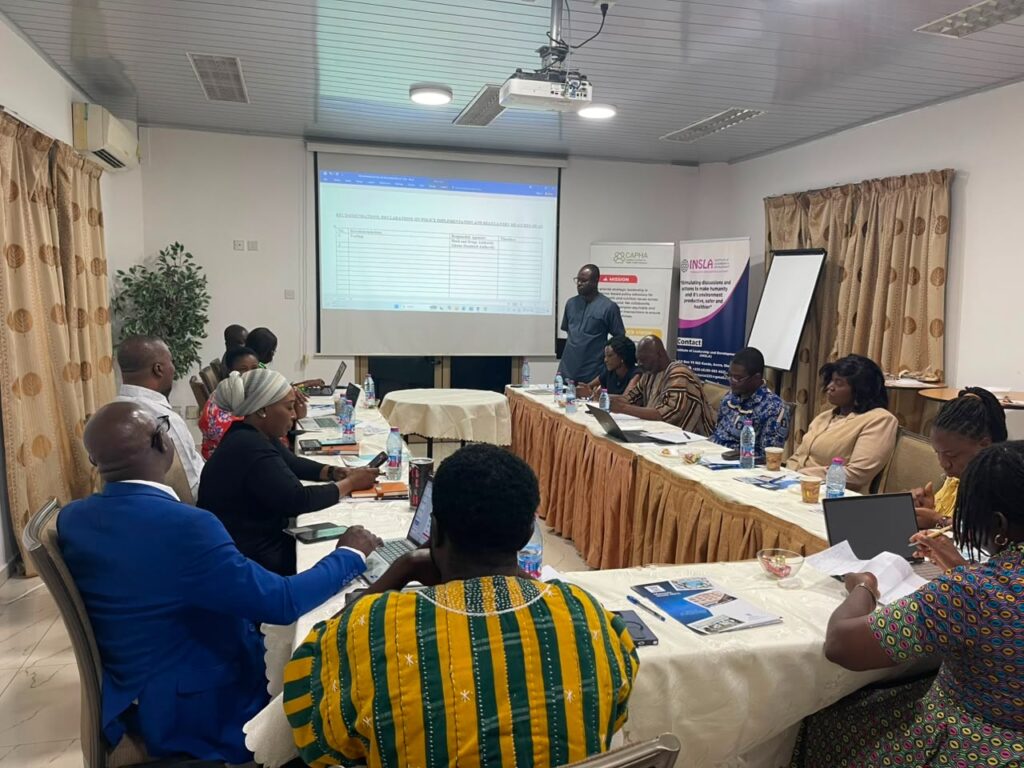
The dialogue was organised by the Institute of Leadership and Development (INSLA) and Coalition of Actors in Public Health and Advocacy (CAPHA) in Accra.
It was on the theme: “Best Practice Food Regulatory Frameworks – A Catalyst for Healthy Food Environments and NCDs Prevention in Ghana” to help accelerate food regulatory reforms aimed at curbing Ghana’s growing burden of NCDs.
The programme brought together representatives from Government, Parliament, academia, civil society, and development partners.

Prof Amos Laar of Public Health Nutrition at the University of Ghana and Head of the Department of Population, Family and Reproductive Health in a presentation said various research study have be done by professors to show that Ghana’s food environment was unhealthy because for every one metre square of healthy foods, one could found six metre square of unhealthy foods.
“Government is concerned about this unhealthy food environment but the commitment to making the environment healthy is very low,” he stated, adding, “Government need to act early in making Ghana’s food environment a healthy one.
“Ghana is already paying for unhealthy food environment through paying in clinics, homes, workplaces and funerals; in medicine costs and lost income.”
Prof Laar said when government act now the cost involved were upfront regulatory and transition cost, earlier health and productivity gains, avoided treatment and household expenditure and if possible, health-tax revenue.
Ms Mary Yayra Kpogo, the Programme Officer of INSLA highlighted NCDs deaths of 43 per cent in Ghana while recognising its growing health burden to the country and called for the urgent need to address these challenges by implementing healthier food environment policies.
She mentioned some of the health burdens as hypertension, diabetes, cancers, and heart disease, stressing that these diseases are no longer distant threats, “They are present in our homes, our workplaces, and our communities.
“And the evidence is clear: the food environments in which we live is a major driver. Front-of-pack warning labels, food market restriction policy, food related fiscal policy and public food procurement, and service policy are no longer optional, but a public health necessity and as such needs strong and swift actions.”
Dr. Sabastian Sandaare, the Vice Chairperson of Parliamentary Select Committee on Health and the Member of Parliament for Daffiama/Bussie/Issa Constituency in the Upper West Region, affirmed Parliament’s commitment in ensuring that Ghana’s food environment is healthy.
“The select committee on health is ready to provide strong oversight and legislative support for evidence-based policies,” he stated.
He said once the conversations on the policies to protect the public from unhealthy food environment were ongoing, “The general public must make sure that they stay away from unhealthy foods and embrace healthy food choices preferably go back to their traditional foods.”
Present at the meeting were representatives from Food and Drugs Authority, Ghana Health Service, Ghana Revenue Authority, Ghana Standards Authority, Ghana Education Service, National Health Insurance Authority, Academia, Civil Society Organisations, and the Media.
GNA
Edited by Linda Asante Agyei