By Solomon Gumah
Tamale, July 17, GNA – Eco Restore Limited, a landscape restoration organisation based in Tamale, has supported the establishment of more than one million indigenous trees across 10 districts in three regions.
The organisation has also supported about 3,500 farmers to restore degraded landscapes, improve ecosystem health, and strengthen rural livelihoods.
Dr Peter Lovett, a Co-Director of Eco Restore Limited, who announced this in an interview with the Ghana News Agency in Tamale said the interventions began in 2020.
He said the organisation’s restoration approach combined indigenous tree growing with farmer training, community mobilisation, continuous monitoring, and sustainable land management practices to promote environmental sustainability and improve household income
He said the organisation also promoted Farmer Managed Natural Regeneration, biochar-enriched compost production, the practice of zero burning on farmlands, reduced dependence on synthetic pesticides, and the conservation of insect pollinators to improve soil fertility, restore biodiversity, and enhance agricultural productivity.
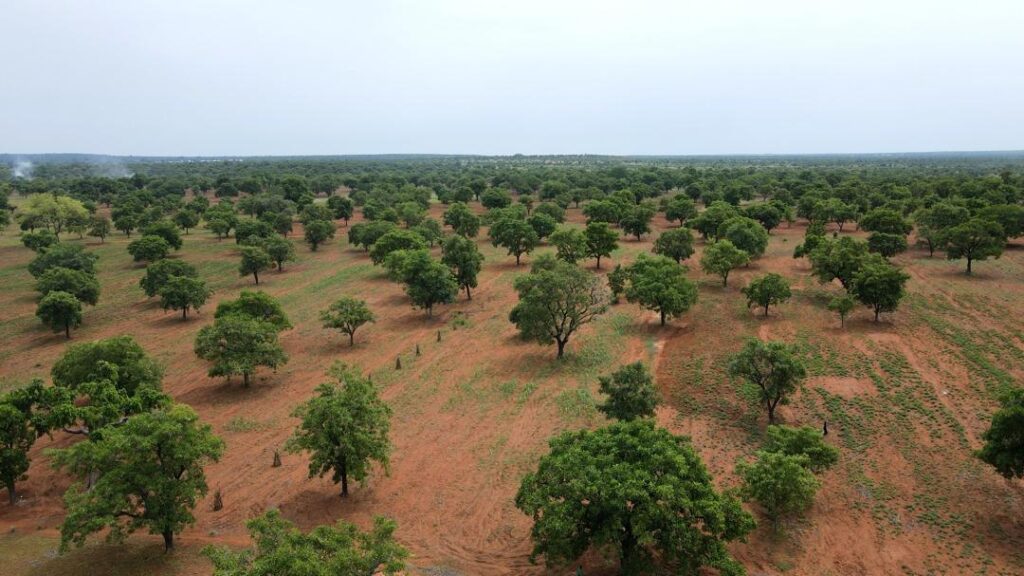
Dr Lovett explained that Eco Restore worked closely with traditional authorities, government institutions, development partners, private sector actors, and local communities to promote indigenous tree species including shea, dawadawa, baobab, among others, while encouraging community ownership of restoration initiatives.
He said such interventions were contributing to increased tree cover, improved ecosystem health, and enhanced production of non-timber forest products, which provided food, medicine, and income opportunities for rural households.
He said Eco Restore’s shea value chain partnerships with companies such as Bunge, Golden Forest, Fuji Oil Europe, and Fuji Oil Ghana were helping to strengthen community-based systems and improve opportunities for women shea producers.
He said “Our shea partners play an important role in supporting communities by strengthening cooperative capacities, improving shea warehousing systems, and providing pre-financing for shea purchases to ensure women have more reliable market access and income opportunities.”
Dr Lovett said Eco Restore’s multi-year engagement with beneficiary communities had consistently achieved tree survival rates of more than 80 per cent while encouraging farmers to protect existing mature indigenous trees.
He called for stronger collaboration among government, development partners, research institutions, commodity off takers, the private sector, and local communities to expand indigenous tree restoration efforts across the country.
GNA
Edited by Eric K Amoh/ Christabel Addo
July 17, 2026
Writer’s Email: [email protected]