By Benjamin Adamafio Commey, GNA
Accra, June 2, GNA – The Social Security and National Insurance Trust (SSNIT) has launched a Telehealth Service to provide remote healthcare consultations, medical advice, chronic disease management and prescription support through a digital platform for pensioners nationwide.
The initiative, developed in partnership with the National Health Insurance Authority (NHIA) and The Trust Hospital, enables pensioners to access healthcare services through a dedicated toll-free call centre without the need to travel to health facilities for routine consultations.
The service forms part of efforts to expand healthcare access through technology and reduce barriers associated with distance, transportation costs, long waiting times and mobility challenges, particularly among older persons, with 267,000 retirees expected to benefit nationwide.
Under the programme, users can consult qualified healthcare professionals through scheduled audio consultations, receive follow-up care, obtain medical advice and, where necessary, be referred for physical examinations at designated health facilities.
Prescriptions generated after consultations are transmitted electronically to approved community pharmacies connected to the telehealth platform, enabling patients to access medication closer to their homes through collection or delivery arrangements.
At the launch in Accra on Tuesday, Mr Kwesi Afreh Biney, the Director-General of SSNIT, said the initiative represented a shift in SSNIT’s approach to social protection by extending support beyond pension payments to interventions that promoted the health and well-being of retirees.
“It reflects our belief that social security in the modern context must evolve beyond income replacement into supporting the broader well-being and quality of life of the people we serve,” Mr Biney added.
He said the launch marked an important milestone in efforts to leverage technology to improve healthcare access, promote healthy ageing and enhance the quality of life of retirees across the country, adding that it reflected SSNIT’s commitment to innovation, institutional relevance and improved service delivery.
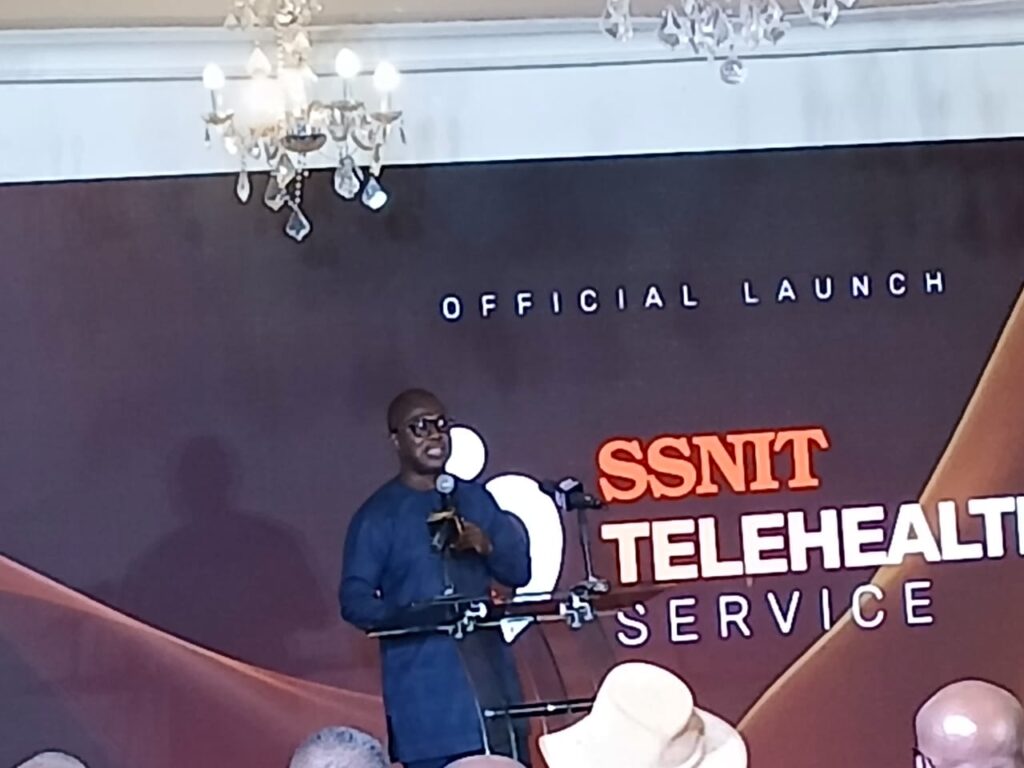
Mr Biney disclosed that the programme had successfully completed a one-month pilot phase and was already operational nationwide, adding that consultation costs under the programme would be supported through the NHIA framework, while medication coverage would follow the NHIS medicines list.
“The cost is borne by the NHIA from the 2.5% payment that SSNIT makes to the NHIA,” he said, adding that “consultation is free. Medication is limited to what is covered under the NHIA.”
At the centre of the intervention is a dedicated telehealth call centre accessible through the toll-free number 0800 877 555, where trained personnel are available daily to support pensioners with their healthcare needs.
Pensioners who contact the centre for the first time are taken through a secured registration and verification process to confirm their identity and collect relevant demographic, clinical and insurance information required for service delivery.
Following registration, a formal patient record is created on the telehealth platform using essential details such as the pensioner’s SSNIT number and National Health Insurance Scheme (NHIS) information to activate access to the service.
Pensioners whose NHIS cards are not linked to their records could use the shortcode *929# to link their NHIS cards to their pension details to facilitate access to the service.
Dr Victor Asare Bampoe, Chief Executive Officer of the NHIA, described the initiative as an important step in Ghana’s efforts to modernise healthcare delivery and improve access to quality healthcare services.
He said telehealth was increasingly becoming an important component of healthcare systems worldwide because it enabled patients to consult healthcare professionals remotely while reducing geographical and financial barriers to care.
Dr Bampoe noted that the integration of telehealth into the NHIA ecosystem aligned with the Authority’s mandate of ensuring access to quality healthcare without financial hardship.
The model’s inclusion of pharmacy services strengthened continuity of care by ensuring that prescribed medications could be accessed conveniently after consultations, he said.
Dr Henry Shirazu Alhassan, the Supervising Director of The Trust Hospital, said the service would reduce the costs, burden and inconvenience pensioners often encountered in accessing healthcare services.
He said a dedicated telehealth call centre had been established to support the programme and that free telephone services had been provided to eliminate communication barriers and make healthcare more accessible to pensioners across the country.
He added that clinicians, call centre professionals, and support teams had received specialised training in telehealth service delivery and the use of the NHIA digital platform underpinning the programme and assured pensioners that The Trust Hospital was fully prepared to provide medical consultations, guidance and support through the telehealth platform.
Mr Stephen Boakye, the General Secretary of the National Pensioners Association, described the launch as a significant milestone for pensioners across the country, saying it demonstrated that the concerns of retirees were being heard and addressed.
He noted that healthcare remained one of the most pressing issues raised by pensioners during engagements with the Association because many older persons required regular medical attention and ongoing support for chronic conditions.
He said access to healthcare remained a major challenge for pensioners, with many travelling long distances, enduring long waiting times or overcoming mobility difficulties to receive medical care.
He, therefore, commended SSNIT, the NHIA, The Trust Hospital and the Pensioners Medical Scheme for collaborating to implement the initiative, assuring that the Association would support the programme by creating awareness among its members and providing feedback to help improve service delivery.
GNA
Edited by Agnes Boye-Doe
Reporter: Benjamin Adamafio Commey