June 4 (TV BRICS/GNA) – The accelerated development of technology companies in BRICS countries could increase annual gross domestic product (GDP) growth by up to US$656 billion, while cooperation among member states could generate an additional GDP effect of more than US$2.7 trillion per year.
This was stated by Ilya Ivaninsky, Director of the Center for Business Education and Analytics of the Central University, citing a report prepared jointly with the Ministry of Finance of the Russian Federation. Ivaninsky was moderating the round table discussion “IPO: First Steps on a Journey to Public Markets and Capital” at the 29th St. Petersburg International Economic Forum (SPIEF).
As Ivaninsky noted, the channel through which this GDP reaches investors’ accounts is an IPO (Initial Public Offering) – the process by which a private company offers its shares for public sale on a stock exchange for the first time.
In 2025, BRICS countries accounted for up to 50 per cent of technology company IPOs, Ivaninsky continued, although 90 per cent of them were concentrated in China and India. The ratio of technology company market capitalisation to GDP in BRICS countries (excluding China) stands at between 5 and 15 per cent. Participants in the round table discussed how this figure could be increased.
In Russia, there is a presidential directive to achieve a stock market capitalisation-to-GDP ratio of 66 per cent. As Ivan Chebeskov, Deputy Minister of Finance of the Russian Federation, noted, the most important development is that there is now an understanding in the country that the stock market is an integral part of the economy that must be developed, that it can serve as a driver of growth and as a tool for attracting investment.
“There is a common understanding within the country among financial market participants and financial authorities. There are a number of areas that need to be developed. These include financial market infrastructure, investment instruments and investor protection. And, of course, an important issue is increasing the number of issuers traded on our exchange. Our objective is for companies that are ready and able to attract investment from the perspective of corporate governance and financial reporting to enter the IPO market. […] There are already around twenty suitable candidates. Incidentally, many of them are technology companies. This is because technology companies are currently developing rapidly. We are, of course, very interested in bringing our state-owned companies to IPO”
Ivan Chebeskov, Deputy Minister of Finance of the Russian Federation
Russia is also studying international experience.
“We are looking at BRICS countries, we are looking at our partners, and we are very interested in the experience of China, India, and the UAE, where capital markets are developing actively. In addition to exchanging experience, we certainly need to integrate our infrastructure and find synergies between our infrastructures. Investors from our countries should be able to invest freely in companies from our countries, and companies should be able to list freely on one another’s markets. I believe this is also one of our key objectives,” Chebeskov added.
The experience of the United Arab Emirates was shared by Younis Haji Al Khoori, Undersecretary of the Ministry of Finance of the United Arab Emirates. The Emirates were tasked with becoming the world’s first government to operate entirely on the basis of artificial intelligence.
To attract investors and achieve this objective, numerous changes were introduced to domestic policy, legislation and capital market regulation. In essence, the UAE created an ecosystem that simplified regulatory requirements and registration procedures. This enabled companies to establish new businesses.
“That has really attracted a lot of specific sectors […] last year we attracted more than 53,000 new investors into the stock market, out of which 80 per cent have been from outside the UAE,” Younis Haji Al Khoori noted.
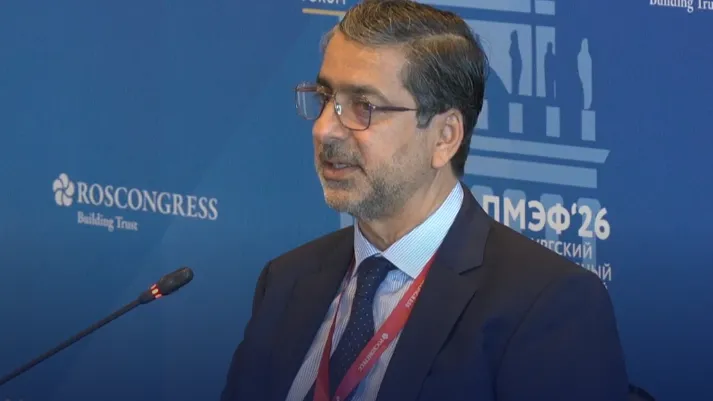
According to the Deputy Minister, while the UAE is dynamically adjusting its policies to stimulate market development, China, with its scale and state support initiatives, is seeking to become a leader in two key sectors, particularly high technology. India, for its part, possesses a vast talent pool: the country has invested significant resources in its system of Indian Institutes of Technology (IITs).
According to experts, one of the key development factors is the existence of an alternative financial market infrastructure within the BRICS framework.
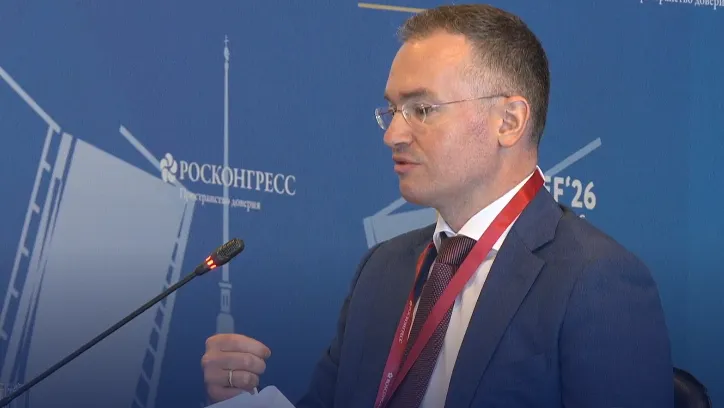
“The creation of this infrastructure has a significant impact on economic growth. Previously, all infrastructure operated through a small number of Western hubs. Our colleagues and partners from BRICS countries and the countries of the Global South are already working to create alternatives to these hubs. The markets of China and the United Arab Emirates are becoming alternative hubs,” Chebeskov said.
As Chebeskov noted, the existence of an alternative financial market infrastructure within BRICS could contribute up to US$12 billion annually to the economy.
“We are discussing with our partners the importance of integrating our infrastructure. These may be traditional depository bridges or entirely new models. Any platform solution within a large group is always complex. Therefore, I believe that new approaches will emerge and that countries already have certain developments in place to establish such cooperation on a bilateral basis,” he added.
The 29th St. Petersburg International Economic Forum is taking place from 3 to 6 June. Representatives from more than 130 countries and territories are participating, including heads of government bodies, international organisations, businesses, and members of the expert and scientific communities. The theme of the Forum in 2026 is “Pragmatic Dialogue: The Path to a Stable Future”.
TV BRICS is serving as an information partner of the Forum.
GNA/Credit: TV BRICS