By Albert Futukpor, GNA
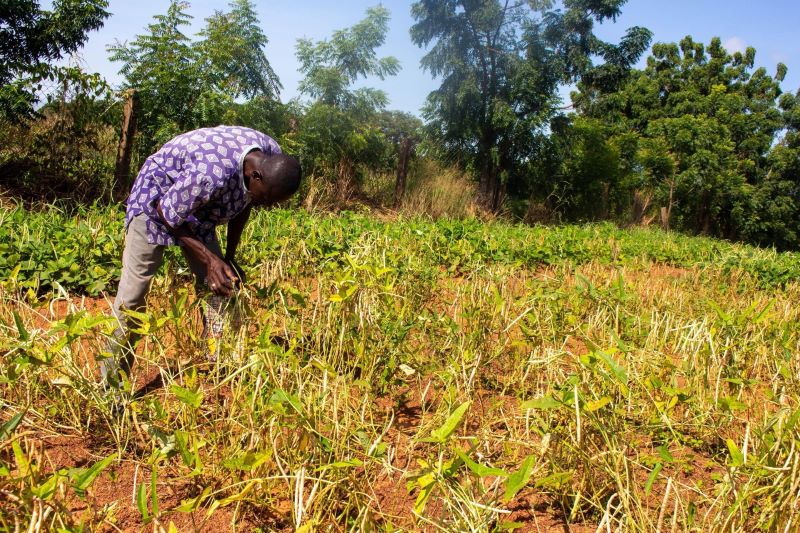
Nyankpala (N/R), June 10, GNA – Farmers in the northern part of the country, who have adopted the genetically modified cowpea variety; Songotra-T, are now able to cultivate and harvest twice within a single farming season.
This became possible due to the short/early maturity period of the Songotra-T variety, which takes about 60 to 65 days to mature.
Unlike the southern part of the country (Ghana) where farmers benefit from two rainy seasons (major rainy season is March/April – July and minor rainy season is September – November) annually, the northern part of the country experiences only one rainy season (from May – October with peak rainfall from July – September) limiting farmers to a single planting/farming season.
Mr Abdulai Mohammed, a farmer, who cultivated Songotra-T cowpea variety for the past two years at Nyankpala in the Tolon District of the Northern Region, in an interview with the Ghana News Agency (GNA) at Nyankpala, said the improved cowpea variety had significantly improved his farming activities compared to conventional cowpea varieties.
He said since adopting Songotra-T in 2024, he had been planting and harvesting twice in one farming season, which had boosted his income.
He said he convinced his elder brother to cultivate the variety last year, adding that after he harvested in mid-July, he planted beans again within the same farming season.
Mr Ibrahim Sulemana, another cowpea farmer at Gbullung in the Kumbungu District, also in an interview with the GNA at Gbullung, shared his experience of cultivating and harvesting twice in a single farming season.
He said “Previously, after harvesting my cowpea, the rains would not be sufficient for me to plant another crop. I had to wait until the following year. But with Songotra-T, I can harvest early and still have enough time to plant again before the rains end.”
He said in 2025, he planted the first crop at the onset of the rains and harvested in early July, and encouraged by the good yield and the remaining rainfall, he immediately prepared his field and planted a second crop, which he harvested later in the season.
He emphasized that “The first harvest was very successful. Because the variety matures quickly, I was able to clear the field and plant again. I ended up harvesting two times in one season, something I had never achieved before.”
He said the second harvest provided additional grain for household consumption and generated extra income from sales, thereby helping him to meet family needs including children’s school expenses and farm investments.
Dr Jerry Nboyine, a Research Scientist at the Council for Scientific and Industrial Research-Savanna Agricultural Research Institute, explaining the science behind the variety’s performance, told the GNA that “Songotra-T begins flowering about 38 days after planting, starts pod formation by the 40th day, and is ready for harvest within approximately 65 days.”
He said it was this short growth cycle that enabled farmers in northern part of the country to cultivate and harvest the variety twice within a single rainy season improving productivity and incomes of farmers.
GNA
Edited by Eric K. Amoh/Kenneth Odeng Adade
albert.futukpor@gna. org.gh