By Eric Appah Marfo
Accra, June 18, GNA – The Ghana Meteorological Agency (GMet) on Wednesday engaged stakeholders in Accra to solicit inputs into the proposed Ghana Meteorological Authority Bill, 2025, aimed at strengthening the country’s meteorological governance framework and enhance climate resilience.
The proposed Bill seeks to transform GMet into the Ghana Meteorological Authority, with expanded regulatory powers, while retaining its role as the country’s provider of weather and climate services.
Among its key provisions are the establishment of a National Framework for Climate Services, licensing of meteorological operators, strengthening of early warning systems, and the creation of sustainable financing mechanisms through the National Meteorological Fund.
Dr Eric Asuman, Director-General of GMet, said the proposed Bill represented Government’s commitment to strengthening the country’s meteorological services architecture to better respond to growing weather and climate-related challenges.
He noted that weather and climate variability had become defining challenges of the era, with increasing frequencies of floods, droughts, rising temperatures, coastal erosion and other climate-related hazards affecting lives, livelihoods and national development.
Dr Asuman said the engagement formed part of a broader consultative process to ensure that the legislation was passed after extensive stakeholder participation and consensus-building.
He explained that the Agency had issued a public call for comments on the draft Bill and had undertaken engagements with institutions involved in meteorological service delivery, climate governance, disaster management, infrastructure development and economic planning.
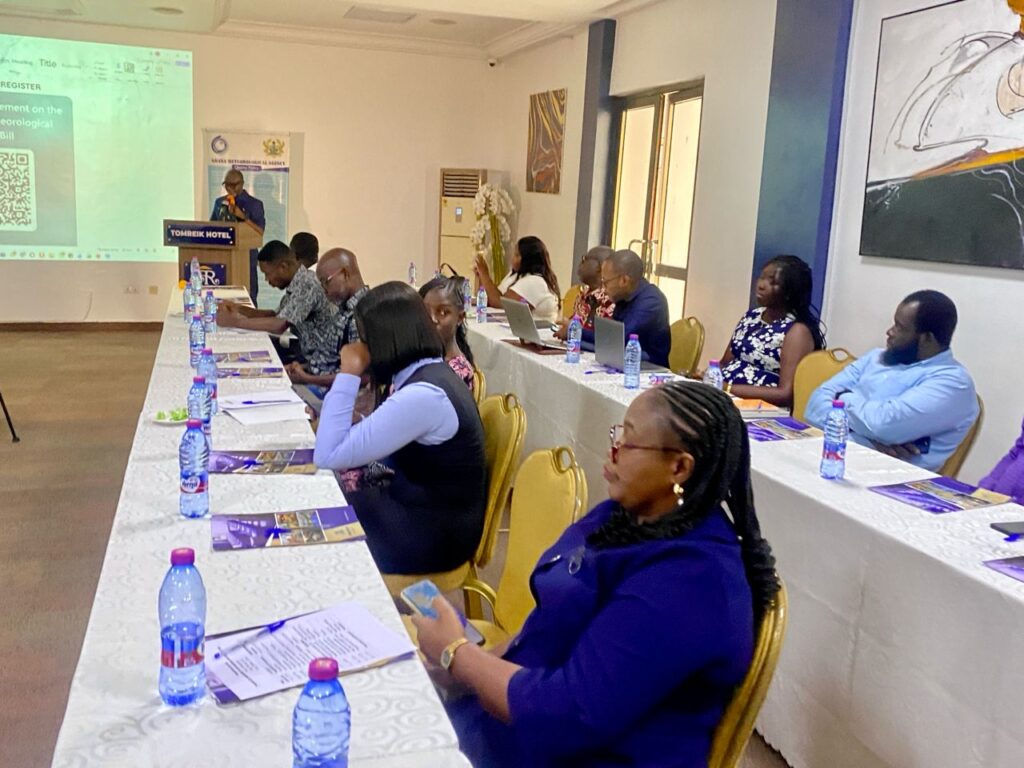
“We recognise that the quality and effectiveness of any legislation is significantly enhanced when it benefits from diverse perspectives and practical experience,” he said, urging participants to provide frank, constructive and solution-oriented recommendations.
Madam Barbara Barnes, Legal Practitioner and Director of Research, Statistics and Information Management of the Ministry of Communication, Digital Technology and Innovations, said the review of GMet’s legislation formed part of a broader exercise involving 15 bills under the Ministry.
She said technological advancements and emerging trends had necessitated the review of several laws, some of which dated back to 2004 and 2008.
Madam Barnes, also the Coordinator of the Legislative Review Exercise, said agencies under the Ministry had been tasked to identify implementation challenges associated with their existing laws and propose amendments.
The Ministry received comments from the public and key stakeholders, she said, adding that the agencies were required to justify which recommendations could be incorporated and why some could not be adopted.
Madam Barnes said the revised draft Bill would be circulated to stakeholders again for further review before being submitted to Cabinet.
She lauded participants for their suggestions and urged them to submit written comments to [email protected] by June 16, 2026.
“The team would take about a week to review your written comments, incorporate those they can and give reasons as to why they can’t include certain comments, after which you would be given another week to review the final draft,” she added.
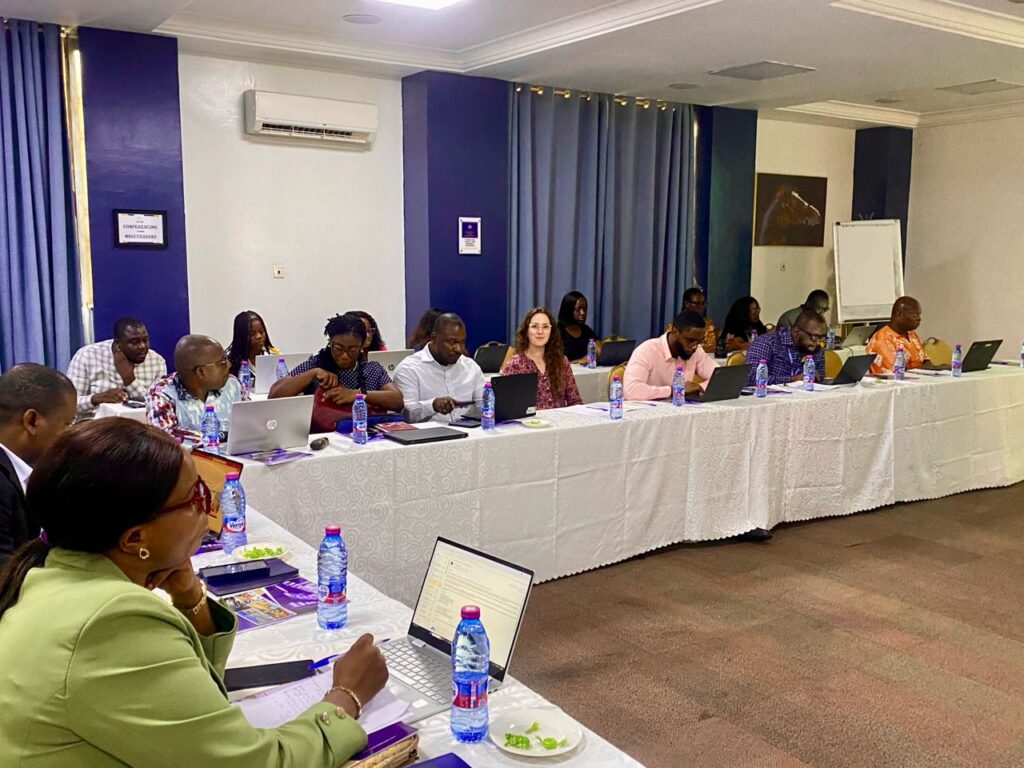
The stakeholder engagement brought together representatives from the Ghana Hydrological Authority, Minerals Commission, Ghana Chamber of Telecommunications, Ministry of Communication, Digital Technology and Innovations (MoCDTI), Ministry of Environment, Science and Technology, Energy Commission, Ministry of Local Government, Danish Embassy.
Others were the Ghana Statistical Service, Environmental Protection Agency, Ghana Health Service, Water Resources Commission, Ghana Irrigation Development Authority, Ghana Standards Authority and the National Disaster Management Organisation (NADMO), and MTN Ghana, among others.
Some of the participants raised concerns about specific provisions of the draft legislation, for instance questioning the proposal to impose a 1.5 per cent pre-tax levy on telecommunications infrastructure projects, arguing that the industry was already burdened by multiple taxes, regulatory fees and permitting costs.
They noted that the levy could increase the cost of network expansion projects, including telecommunications towers, fibre optic deployments, data centres and rural connectivity initiatives, potentially affecting consumers through higher tariffs.
They called for stronger collaboration between the health sector and GMet, citing the growing relationship between climate conditions and disease patterns, as well as establishing a stronger presence within Metropolitan, Municipal and District Assemblies to improve access to weather and climate information for planning purposes.
The Ghana Standards Authority raised concerns over provisions relating to calibration services and the setting of national standards, cautioning against potential overlaps with its statutory mandate.
Participants further called for greater female inclusion in the composition of governance structures proposed under the Bill.
MTN Ghana commended GMet for engaging industry players in the legislative process and pledged the company’s support for future collaboration.
The GMet assured stakeholders that the concerns raised would be addressed through further consultations and collaboration to ensure clarity and avoid duplication of responsibilities.
The proposed Ghana Meteorological Authority Bill, 2025, is expected to undergo further stakeholder review before being submitted to Cabinet for approval.
GNA
Edited by Agnes Boye-Doe
Reporter: Eric Appah Marfo