A GNA feature by Godfred Aaneamenga Polkuu
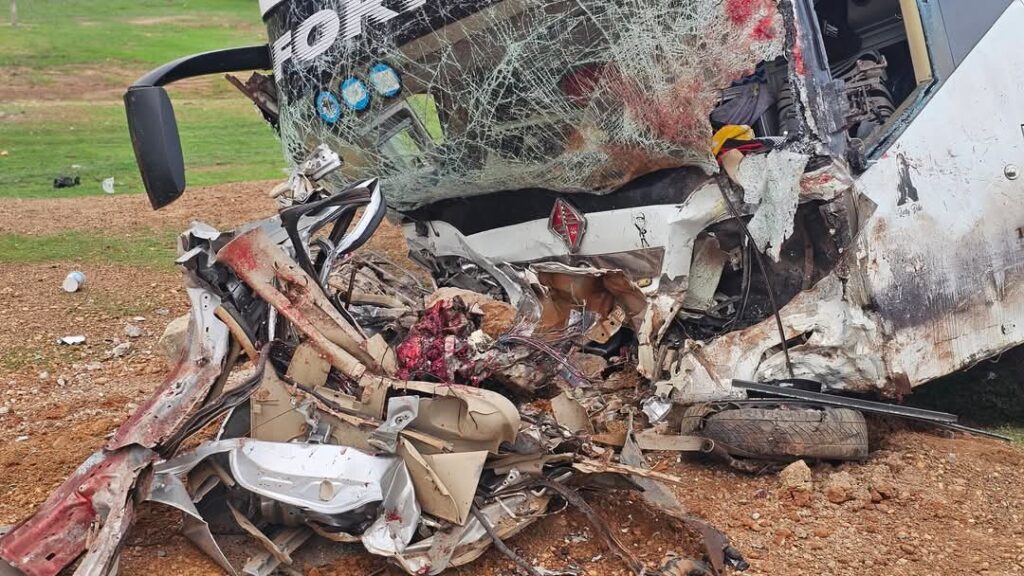
Bolgatanga, June 28, GNA – Behind every road crash headline in Ghana lies a life cut short, a breadwinner who never makes it home, a child whose future is lost on the asphalt, and a family forced to live with grief.
While we often speak of these tragedies as “accidents,” international best practices and a growing chorus of experts in Ghana are sounding the alarm: these deaths are not inevitable. They are perhaps the predictable results of a transport system that prioritizes the movement of vehicles over the survival of human beings. Recent data from the Upper East Region highlights both the progress possible through intervention and the lingering shadows of this crisis.
According to a report from the National Road Safety Authority (NRSA), the region saw a significant decline in road traffic casualties during the first quarter of 2026. Total crashes dropped to 25, involving 42 vehicles, compared to 37 crashes involving 62 vehicles in the same period of 2025. While deaths decreased by 26.67 per cent (from 30 to 22) and injuries plummeted by 81.08 per cent (from 74 to 14), the statistics reveal a harrowing reality: the road remains a battlefield for the most vulnerable.
At the heart of this “public health emergency” is the unchecked menace of excessive speed and the vulnerability of specific road users. As Ghana looks toward a more connected future, the choice for duty bearers and policy makers is clear: continue with a system where speed steals our future, or adopt a “Safe System” that refuses to accept blood as the price of mobility.
The philosophy of survival: Beyond the driver’s error
For decades, the narrative has blamed “poor drivers,” but global leaders in road safety like the Netherlands and Sweden have proven that humans are inherently fallible. International best practice suggests we must design roads that “forgive” these mistakes.
“The truth is, we cannot leave the responsibility of our safety in anyone else’s hands,” says Mr Dennis Yeribu, Principal Planning Manager at the National Road Safety Authority (NRSA). He emphasized that while every road user must take personal responsibility, the system itself must act as a guardrail.
The 2026 data confirms this vulnerability. In the Upper East Region, motorcycles accounted for a staggering 86.36 per cent of all fatalities. Of the 22 lives lost, 19 were motorcyclists or their pillion riders. The NRSA report, released by Mr John Quarshie, the Regional Public Relations Officer, attributed this high fatality rate to non-compliance with regulations, specifically the failure to wear crash helmets, speeding, and riding under the influence.
A framework known as the Roads-for-Life (R4L) argues that speed limits should be based on what the human body can survive. This is particularly relevant given that males accounted for 86 percent of the fatalities in the region, with most victims being 18 years and above, the economically active heartbeat of the nation.
Designing for life, not just traffic
Ghana’s current road infrastructure often forces dangerous interactions. Mr Enock Jengre, a lawyer and Programmes Officer at the Legal Resources Centre (LRC), told the Ghana News Agency that “Our road designs have failed to reflect changing mobility trends.”
The Upper East report serves as a case study for this failure: motorcycles recorded the highest share of involvement, accounting for 50 per cent of all crashes. Despite a 50 percent reduction in pedestrian knockdowns (from four cases in 2025 to two in 2026), the conflict between high-speed heavy vehicles and motorcycles remains deadly.
Mr Jengre noted that “Road safety doesn’t come cheap, but the cost of our silence is far higher.” International success stories show that when cities implement “self-enforcing” roads using speed humps and dedicated lanes-speeds drop naturally.
A call to action: Moving from “Entertainment” to Enforcement
The consensus among advocates is that awareness alone is a blunt tool. “Education without enforcement becomes entertainment,” Mr Yeribu warns.
To sustain the gains seen in early 2026 where February alone recorded the highest fatalities with 10 deaths, Ghana must transition to a culture of “real consequences.” This requires moving beyond manual checks to automated technology like Traffictech, ensuring that even in the most remote regions, the law is felt.
Recommendations for a Safer Ghana
To align Ghana with international best practices, the following interventions are urgently proposed:
Advocacy and the Media:
Embrace solution journalism: Move the narrative from episodic reporting to thematic stories. For instance, highlight why February remains a peak month for fatalities in the Upper East (45.45 per cent of total deaths) and push for systemic fixes.
Champion “30 km/h” Zones: Scale up advocacy for lower speed limits in residential areas.
For the Government and Duty Bearers:
Legislative Urgency: Accelerate the passage of amendments to the Road Traffic Regulations (L.I 2180) to provide legal backing for safety standards.
Institutional Unification: Merge fragmented road agencies into a unified body to eliminate “responsibility shifting.”
Targeted Interventions: As the NRSA plans for the Upper East, prioritize motorcycle-specific safety measures, including mandatory helmet enforcement and dedicated lanes to protect the 86% of victims who are currently left vulnerable.
For the Motoring Public and Road Users:
Demand Safe Streets: Communities should proactively request traffic-calming measures.
Culture of Discipline: Every motorcyclist must recognize that a helmet and a sober mind are the boundary between a safe arrival and a lifelong tragedy.
Conclusion
The reduction in crashes in the Upper East Region during the first quarter of 2026 is a glimmer of hope, proving that progress is possible. However, with economically active citizens still disproportionately affected, there is no room for complacency. As the nation moves toward a 24-hour economy, embedding safety into the fabric of our growth is a moral imperative to ensure that no more chairs sit empty at the Ghanaian dinner table.
GNA
Edited by Caesar Abagali /Kenneth Odeng Adade