Accra, June 15, GNA – The Economic Community of West African States (ECOWAS) is shifting from negotiations to the practical implementation of free trade by investing US$151 million in the region and promoting a 25 per cent reduction in airport taxes.
This effort is aimed at helping Africa increase its share of global trade, which is currently less than one per cent, while strengthening the African Continental Free Trade Area (AfCFTA) agreement.
At the fifth joint meeting of ECOWAS Ministers of Trade and Industry in Accra, regional leaders outlined concrete steps to reduce trade costs, improve regional integration, and support private sector growth across the continent.
They emphasised the importance of intra-African trade, which currently stands at only 10 per cent compared to 60 per cent in other regions of the world, and called for urgent action and clear timelines to speed up policy implementation.
Dr Ngozi Okonjo-Iweala, Director-General of the World Trade Organisation (WTO), revealed that US$151 million has already been mobilised to support development goals in the region.
She noted that over 30 per cent of exports were still low-value products, showing that trade patterns had not changed significantly.
She stressed the need for Africa to focus on value addition and higher productivity, especially in light of global supply disruptions and geopolitical tensions.
She encouraged African countries to use their natural resources to support industrialisation rather than exporting raw materials.
Ghana’s Minister of Trade, Agribusiness and Industry, Mrs Elizabeth Ofosu-Adjare, stated that the meeting must produce practical results with clear timelines and targets.
She emphasised the essence of industrialisation to job creation, particularly for the youth, and that no country could develop alone.
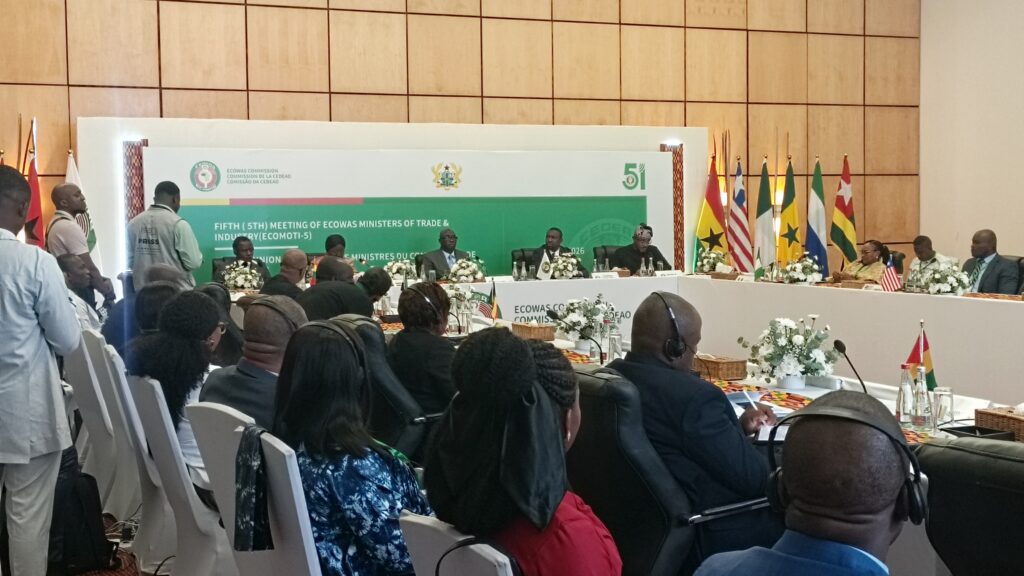
She highlighted the need for regional cooperation, integrated supply chains, seamless borders, and harmonised standards to fully benefit from AfCFTA.
She also described non-tariff barriers, such as delays and strict regulations, as the biggest obstacle to trade, calling them a “monster” that must be urgently addressed, especially through digitalisation.
As the host of the AfCFTA Secretariat, Ghana reaffirmed its commitment to leading continental trade efforts. The country pledged to provide policies and leadership that would ensure AfCFTA produces meaningful results capable of improving the lives of West Africans.
Mr Kolawole Adebowale Sofola, Director of Trade at the ECOWAS Commission, explained that a five-pillar implementation strategy had been adopted to ensure that AfCFTA benefitted all citizens, not just large companies.
He noted that the strategy places special focus on micro, small and medium enterprises (MSMEs), as well as women and youth traders, while also promoting awareness at the grassroots level so traders couldd take advantage of available opportunities.
On infrastructure, ECOWAS identified connectivity as the backbone of trade with plans in place to improve roads, railways, maritime transport, and air travel.
To reduce the cost of transportation, ECOWAS heads of state have directed member countries to cut airport taxes by 25 per cent.
In addition, modern storage facilities are being introduced at selected border posts to preserve perishable goods and reduce losses, particularly for agricultural traders.
To address financing challenges, ECOWAS is working to harmonise financial regulations and establish a regional capital market authority. This initiative is expected to provide access to funding through regional bonds and other financial instruments, which will support infrastructure development across the region.
ECOWAS is taking important steps to make AfCFTA a reality by investing in development, reducing transport costs, improving infrastructure, and supporting businesses.
These efforts are expected to boost intra-African trade, promote industrialisation, and drive economic growth across West Africa and the continent as a whole.
GNA
Edited by Agnes Boye-Doe
Reporter: Francis Ntow