By Prince Acquah
Abura Dunkwa (C/R), May 14, GNA – The University of Cape Coast (UCC) branch of the Ghana Science Association has trained some 50 STEM teachers in the Abura-Asebu-Kwamankwese District of the Central Region to equip them with modern teaching and pedagogical skills to enhance STEM education.
The participants, drawn from 50 basic schools, were taught how to make the teaching and learning of STEM-related subjects more practical, fun, and understandable to evoke the interest of learners in the field.
They also received practical lessons in basic electronics, a subject many basic school teachers find difficult to understand and teach effectively.
Dr Benjamin Aboagye, the Branch President of the Association, explained that the training formed part of a series of workshops initiated around 2021 which sought to modernise STEM education and encourage the use of practical tangible materials during lessons.
He added that the workshops were also intended to complement efforts by the Ghana Education Service to improve STEM education, hoping that through the hands-on training sessions, teachers would return to their classrooms better prepared to apply the new teaching methods.
“We are hopeful that the training would inspire students to develop greater interest in science, technology, engineering and mathematics, and ultimately produce more skilled professionals to contribute to national development because building strong STEM capacity among young people is essential for the country’s future growth,” he added.
Addressing the role of technology in modern education, Dr Abaogye encouraged teachers to learn to integrate digital tools and technological knowledge into teaching Science, leveraging Artificial Intelligence and the digital transformation.
He believed that access to online information and digital resources could make teaching more effective and reduce the time spent explaining difficult concepts in the classroom.
In that regard, he called for practical actions to address the digital divide in the country, calling for the establishment and proper resourcing of district resource centres where students and teachers could periodically access technological tools and STEM equipment.
“We appealed to NGOs, donors and other organisations to support schools and districts with gadgets and training opportunities to ensure that children in deprived communities are not left behind in STEM and technology education,” the Association President said.
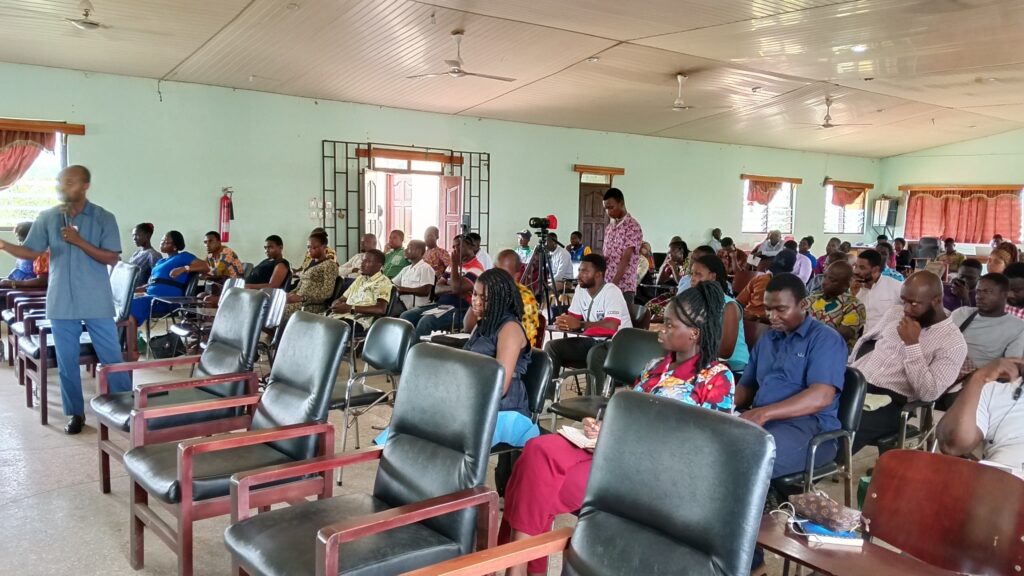
Madam Mary Cudjoe, the AAK District Director of Education, expressed appreciation to the Association for the training, underscoring the importance of effective STEM education in a modern world.
She noted that STEM education had become a major national policy with government making significant investments to improve teaching and learning in the sector.
She disclosed that the district had received about 17 STEM kits for 17 Junior High Schools and 15 STEM kits for lower primary schools, which would help students gain practical exposure and strengthen STEM learning at the foundational level.
Professor Benjamin Anderson of the UCC Department of Physics, who facilitated the session on basic electronics, explained that exposing children to electronics education at an early stage would prepare them to better understand the technology around them and grow with practical technological knowledge.
He stressed the importance of safety in electronics education, cautioning that electronics and electricity were closely linked and could be dangerous if mishandled.
Prof Anderson further educated participants on the importance of using the correct chargers and power supplies for electronic devices, explaining that every device had a specific power rating and that using incompatible chargers, extension boards or cables could damage gadgets or create electrical hazards.
Mr Daniel Mensah Wardy, the District Chief Executive (DCE), made a strong case for the integration of digital technologies in STEM education, citing AI and coding as powerful fields.
He also stressed the need to empower teachers with the right tools and create a conducive learning environment through investment.
He observed that government was actively investing in STEM, indicating that a rural technology project was in the offing to improve connectivity and assist learning.
For the district, the DCE said the Assembly was working to reclaim some IT centres at Abura Dunkwa and Abakrampa which had been taken over by some community members and put them into rightful use.
Mr Wardy advised the teachers to cultivate growth mindset and collaborate with one another to broaden their horizon.
Dr Kofi Acheaw Owusu, who took participants through modern teaching methods, entreated the teachers to contextualise teaching and base concepts on learners’ experiences.
Referencing the curriculum, he said learners must be actively engaged in the learning process, making co-creators of the knowledge.
He further advised them to make their lessons learner-centred, use simple language, and clear language, and organise local field trips to learn in a natural environment.
Mr Bismark Kyeah, a teacher from the Moree Methodist A and B Basic School, noted that the training had improved his practical teaching skills and electronics knowledge, including assembling components and using breadboards and jumpers.
“I have learnt that I need to apply project-based methods and demonstrative methods in my teaching to make my learners practically oriented,” he said.
Ms Eunice Nyarko from the Moree D/A Basic B School, said “I have learnt that instead of using the traditional means of giving the children everything, we should allow them to also experience things around, and then come out with their own results and ideas to improve their creativity and promote innovation.”
GNA
Edited by Alice Tettey
Reporter: Prince Acquah
E-mail: [email protected]