By Isaac Arkoh, GNA
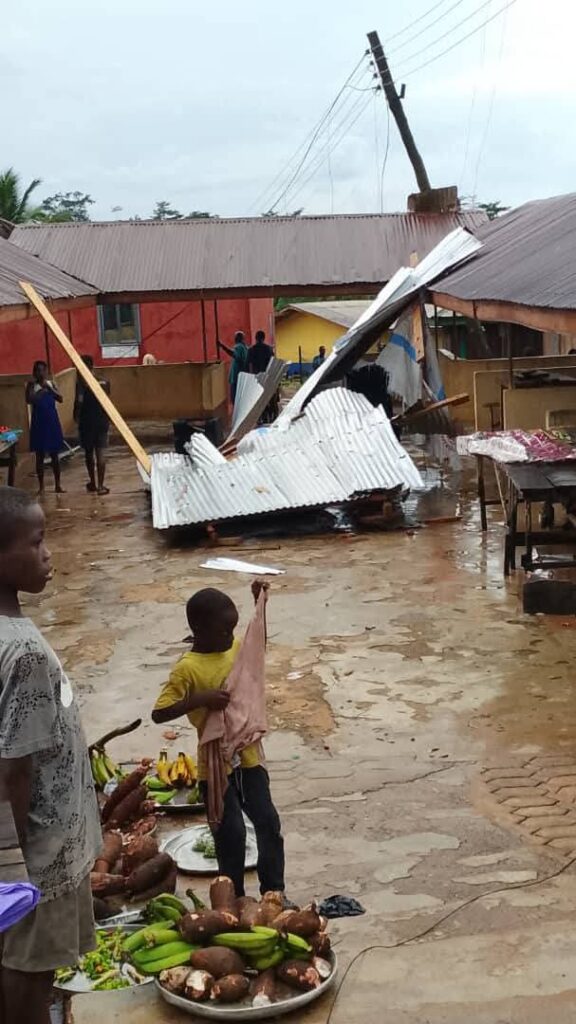
Cape Coast, May 18, GNA – A severe rainstorm with strong winds swept through parts of the Assin South District on Sunday afternoon, damaging 20 structures and displacing 55 people in the Akrofuom and Anyinabrim communities along the Cape Coast–Assin Fosu highway.
Homes, market stalls, and several roadside structures were either partially or badly damaged.
Fallen trees and debris also blocked the highway between Anyinabrim and Nsuta for about two hours, disrupting traffic and delaying emergency access.
Residents told the Ghana News Agency that the storm caused power outages and flooded many compounds, leaving several people temporarily homeless.
A woman in her late forties who sustained minor cuts was treated and discharged at the community clinic, while NADMO personnel and community volunteers cleared debris and assisted affected families.
Confirming the incident, Mr Edusei Sarpong, Assin South NADMO director, said his office had prioritised the collation of verified field data to facilitate swift, and equitable distribution of relief materials, while simultaneously compiling technical recommendations to guide safer, more resilient structural rehabilitation within the community.
He said NADMO was focused on psychological and psychosocial support for victims and strategic coordination of alternative accommodation for displaced families.
Beyond immediate relief, he reinforced disaster risk reduction protocols, where victims and other residents would be sensitised on safe building practices.
Particularly, it would focus on the structural reinforcement of roofs and the critical importance of avoiding shelter under vulnerable structures or large trees during severe weather events.
Touching on some renewed interventions, Mr Sarpong said NADMO had committed to intensifying public education ahead of the rains, despite logistical and funding constraints.
Mr called on homeowners, landlords and traditional authorities to support the demolition of old and dilapidated structures that posed risks during heavy rains.
He said the demolition of such structures would reduce the risks of collapsed buildings, lessen the number of people exposed to injury or death and decrease obstruction of drainage channels that often caused flooding.
“Clearing unsafe buildings would improve access for emergency responders, lower post-storm recovery costs, and contribute to overall community resilience,” he added.
GNA
Edited by Alice Tettey/Linda Asante Agyei
Reporter: Isaac Arkoh