By Eric Appah Marfo, GNA
Accra, May 25, GNA – Dr Adam Bonaa, the Executive Secretary of the National Commission on Small Arms and Light Weapons (NACSA), says more than 4,000 weapons were voluntarily surrendered during the recently ended national gun amnesty programme.
He said thousands of the weapons would soon be destroyed in line with international protocols and conventions to which Ghana is a signatory.
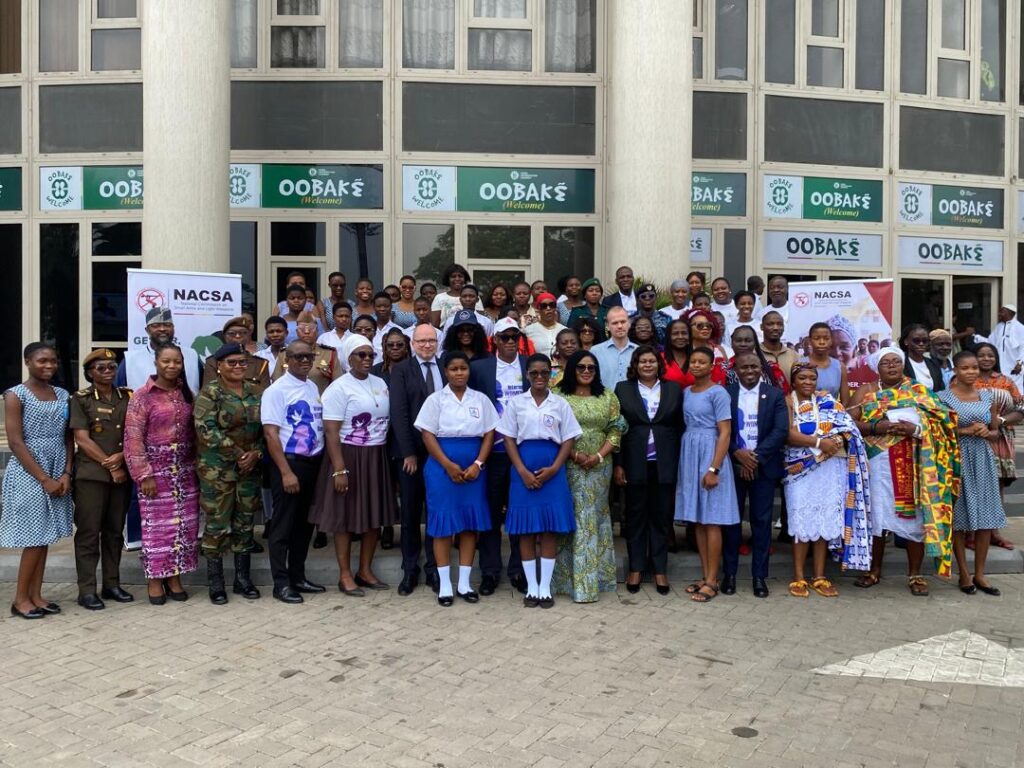
Dr Bonaa disclosed this in an interview with the Ghana News Agency on the sidelines of the Women and Girls Empowerment Seminar to commemorate the 2026 International Women’s Day for Peace and Disarmament in Accra.
The seminar was held on the theme: “Women and Girls as Active Agents of Peace and Disarmament: From Awareness to Action for a Peaceful and Gun-Violence-Free Ghana”.
It brought together participants from faith-based organisations, traditional authorities, market associations, educational institutions, political parties, civil society organisations, security agencies, government institutions and development partners to discuss strategies for promoting peace, preventing gun violence and strengthening community participation in disarmament efforts.
The programme aimed to equip women and girls with practical knowledge and tools to contribute to peacebuilding, violence prevention and disarmament efforts in Ghana, while strengthening collaboration within the national peace and security framework.
Dr Bonaa described the number of weapons surrendered as significant in Ghana’s efforts to combat illicit arms proliferation and gun-related violence.
He said NACSA was considering June 25 or July 9, 2026 for the destruction exercise as part of activities marking the United Nations Day for Weapons Destruction.
“We haven’t done destruction for a while and this is a significant number of weapons in peacetime that will be destroyed,” he said.
Dr Bonaa added that the exercise would be conducted publicly at a designated location to allow the media and the public to witness the process.
He said NACSA had written to the Presidency and was hopeful that President John Dramani Mahama, as Commander-in-Chief of the Ghana Armed Forces, would attend the event.
The nationwide Gun Amnesty Programme was launched by the Ministry of the Interior in collaboration with the Ghana Police Service, NACSA, security agencies, traditional leaders, religious organisations and civil society groups to curb the proliferation of illicit firearms and gun-related violence.
The programme commenced on December 1, 2025, and was initially scheduled to end on January 15, 2026.
However, following what the authorities described as an encouraging public response and appeals from stakeholders for more time, the exercise was extended to January 30, 2026, to allow more people, especially those in hard-to-reach communities, to voluntarily surrender or regularise unlicensed firearms without fear of arrest or prosecution.
Earlier in a welcome address, Dr Bonaa described the seminar as “more than a ceremonial event,” saying it represented “a strategic national dialogue on peace, security, inclusion and shared responsibility.”
He said the proliferation and misuse of small arms continued to pose serious threats to public safety, human security and national development.
He noted that women and girls often bore the brunt of gun violence through domestic insecurity, displacement, intimidation and economic hardship, yet remained strong advocates for peace, dialogue and reconciliation.
He stressed that women should not be treated as peripheral participants in peace and security discussions but recognised as central actors in promoting sustainable peace and national security.
The Executive Secretary disclosed that the Commission had adopted a deliberate gender inclusion policy, ensuring equal participation of men and women in some training programmes, including armoury management courses for security personnel.
He reaffirmed the Commission’s commitment to public education, stakeholder collaboration, community participation and the integration of gender perspectives into national arms control efforts.
Dr Bonaa called for collective responsibility in building a peaceful and gun-violence-free Ghana, saying sustainable peacebuilding required the involvement of families, schools, the media, traditional leaders, civil society organisations and the wider public to achieve the expected outcomes.
GNA
Edited by Agnes Boye-Doe
Reporter: Eric Appah Marfo
[email protected]