By Patience Gbeze/Edward Dankwah
Accra, April 24, GNA – Mr Samuel Basintale Amadu, the Comptroller-General of the Ghana Immigration Service (GIS), has called for urgent and coordinated action to address the challenges of unsafe migration routes.
He said the growing use of unsafe migration routes continued to put lives at risk.
Mr Amadu said Ghana remained a country of origin, transit and destination for migrants, with its borders processing hundreds of thousands of movements annually.
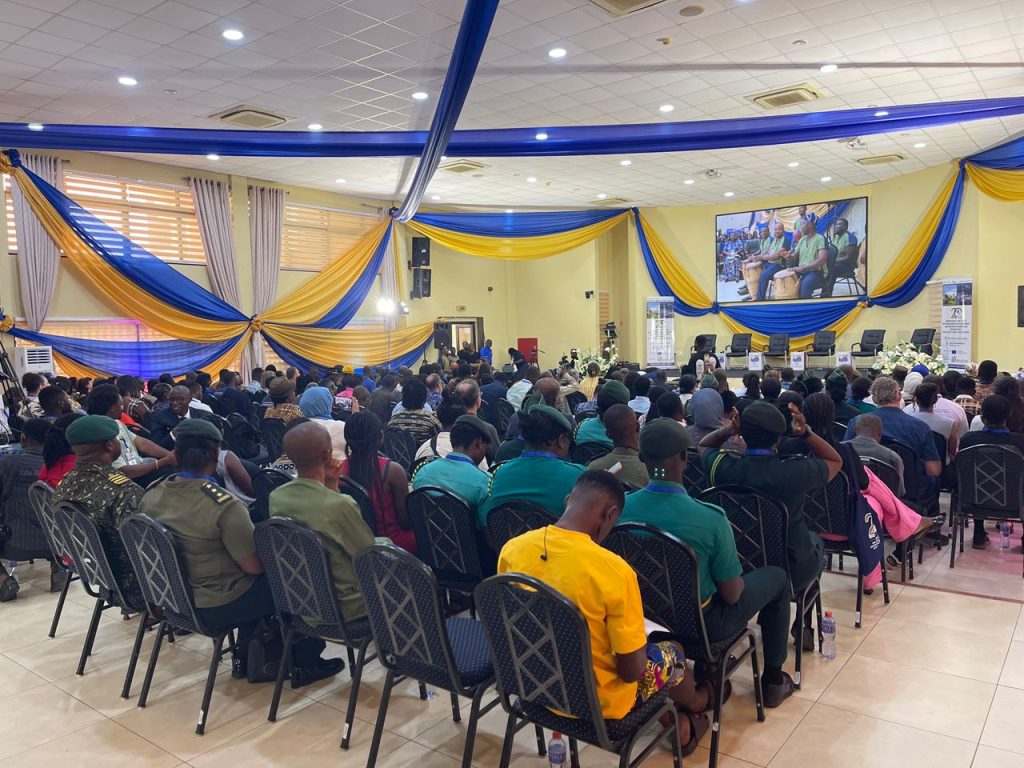
The Comptroller-General called for the action when speaking at the 2nd Centre for Migration Studies (CMS) @ 20 International Conference in Accra.
The conference was under the theme: “Bridging the Gap? Rethinking Engagement between Migration Research, Policies and Practices”.
Mr Amadu noted that key entry points, including the Accra International Airport and major land borders such as Aflao, Paga, Hamile and Elubo, form a complex mobility system that must be managed efficiently while upholding human dignity.
He expressed concern over the persistence of irregular migration, explaining that many migrants continued to use dangerous routes that exposed them to exploitation, abuse and even death.
He cited the risks associated with the Central Mediterranean Route, which has claimed thousands of lives in recent years.
He highlighted emerging migration trends, including climate-induced displacement, noting that flooding in Northern Ghana, coastal erosion and instability in the Sahel are already driving both internal and cross-border movements.
Mr Amadu noted a gap between academic research and practical application, explaining that frontline officers often lacked access to concise, actionable data needed for decision-making.
“To effectively manage migration, we need research that is accessible, timely and directly applicable to operations on the ground,” he added.
He called on institutions such as the CMS and partners including the International Organization for Migration to develop practical tools such as policy briefs, training modules and real-time data systems to support immigration officers.
Mr Amadu warned that increasing political instability, displacement crises and the activities of human trafficking networks demanded a more coordinated and data-driven approach to migration governance.
He expressed confidence that stronger partnerships between research institutions and immigration authorities would improve migration management and contribute to safer and more orderly movement across the region.
Mrs Rita Akosua Adjei Awatey, the Eastern Regional Minister, called for stronger integration between migration research and policy implementation, stressing that decisions affecting communities must be grounded in practical, real-time evidence.
She said the realities of migration were evident across the Eastern Region, with many young people moving from towns such as Koforidua, Nsawam and Akosombo to urban centres and abroad in search of better opportunities.
Mrs Awatey, who also served as the Special Guest of Honor, called for the establishment of structured collaboration between researchers and policymakers to ensure that evidence was translated into actionable strategies.
She urged that greater attention should be given to internal migration, digital influences on migration decisions, and the need for stronger reintegration systems for returnees.
Professor Mary Boatemaa Setrana, the Director of the CMS, University of Ghana, called for structural reforms to bridge the gap between migration research and policy, stressing that the challenge went beyond communication to deeper issues of power and representation.
She noted that a significant portion of research on West African migration was still driven by scholars based outside Africa, describing it as a weakness in the global knowledge production system rather than a failure of African scholarship.
She emphasized the need for African-centered research to play a stronger role in shaping migration policies, adding that governance frameworks must reflect the lived realities of migrants on the continent.
“I urge both researchers and policymakers to engage more meaningfully, since bridging the gap requires scholars to communicate evidence effectively while maintaining independence, and policymakers to be open to evidence, even when it challenges existing positions,” she added.
GNA
Edited by Benjamin Mensah