By Eunice Hilda A. Mensah
Accra, March 04, GNA – Plan International Ghana has launched the second phase of its Integrated Package for Sustainable Community Development (I-PADEV) Project, to enhance water, sanitation, and hygiene (WASH), for vulnerable children and communities.
It would also reinforce the impact of the first phase of the project to enhance education, health and livelihood outcomes for vulnerable children and women in selected communities within the Oti and Upper West regions.
Delivering the keynote address, Mr Frederick Tei-Nobi, the Acting Country Director of Plan International Ghana, said the launch followed the successful completion of the first phase project in December 2025.
He described the new phase as another important journey strengthened by partnership, shared commitment and a common vision to protect and uplift vulnerable populations.
Mr Tei-Nobi stated that the I-PADEV Phase II Project would directly benefit 14,766 people across 16 communities in the Guan District of the Oti Region and the Wa East District of the Upper West Region.
An additional 28,000 people are expected to benefit indirectly.
He said the €1.36 million initiative, spanning 32 months, sought to increase access to safe drinking water, improve sanitation and hygiene practices, and advance gender-responsive parenting and early childhood care services.
The project would also integrate economic empowerment opportunities for young women.
According to the Acting Country Director, inadequate WASH facilities remained a significant barrier to girls’ education and women’s empowerment.
Citing statistics, he noted that only 25 per cent of Ghanaians had access to basic sanitation facilities, with 18 per cent still practising open defecation.
“It is girls and women who bear the greatest burden when WASH facilities are lacking,” he stressed.
Mr Tei-Nobi emphasized that Plan International Ghana placed school WASH at the centre of its interventions.
Under Phase II, 16 schools and communities, he said would receive climate-resilient water systems, including solar-powered mechanized water facilities and hand pumps.
Water quality testing, water safety planning and training of Water and Sanitation Management Teams would also be conducted.
On sanitation, he said the project would implement Community-Led Total Sanitation (CLTS) in all 16 project communities, provide support for household latrine construction, and train national leaders and district-level officers in behaviour change approaches.
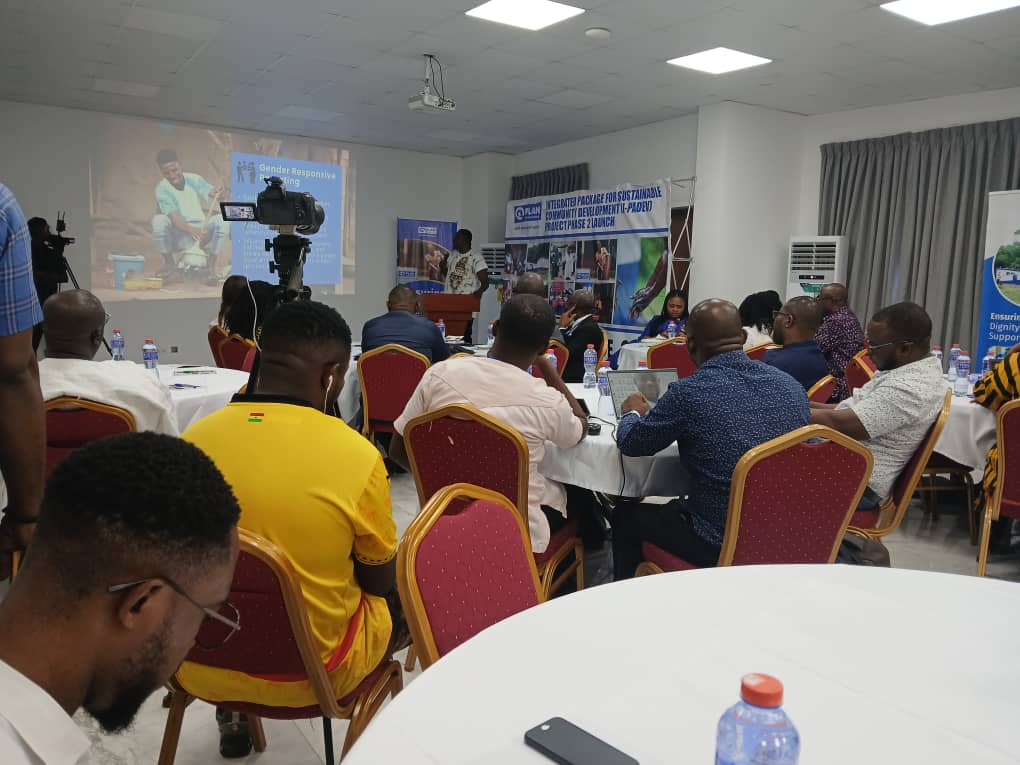
Mr Samson Akwetey, the Acting Director of Environmental Health and Sanitation Practices, Ministry of Local Government, Chieftaincy, and Religious Affairs, in a speech delivered on his behalf, said their monitoring team witnessed first-hand the impact of the first project in the beneficiary regions.
“We saw communities taking ownership of their health, real-father’s clubs promoting equality within their households, village savings and loans, empowering women to finance their own sanitation needs, dignity in education, girls managing menstruation without interrupting their schooling. The evidence from phase one compelled a clear recommendation,” he said.
He said the goal of the project was to improve health and enhanced outcomes with a fierce focus on empowering girls in the Oti and Upper West regions.
While celebrating the new chapter, he advised that all remembered the guideposts discovered during the previous monitoring, adding: “We must prioritize the long-term maintenance of water facilities.
“We must ensure consistent hand washing and proper solid waste management become permanent.”
Mr Akwetey called on municipal and district assemblies to enforce sanitation bylaws and sustain the innovations piloted, such as the “spare parts banks”.
He gave an assurance that the Ministry stood ready to provide technical expertise and support necessary to ensure their project was a resounding success.
Mr Adamu Sayibu, the District Chief Executive of the Wa East District Assembly, said the collective resolve was to advocate the girl child’s equality and the core objective of this project lied at the very core of their mandate as an assembly.
He said the long presence of Plan International Ghana had resulted in new interventions in the wash sector, community development and more especially child protection and welfare.
“We are fortunate to have you come again with another critical innovative intervention in the wash sector. This project goes beyond just upgrading infrastructure. It is about transforming groups and schools into robust and productive environments.
“Together we have the power not only to improve health but also make learning more enjoyable for our children with a special focus on our girl child, who through education can become the leaders of tomorrow,” he noted.
Mr Sayibu said the success of the project largely depended on their united efforts, direction and leadership to ensure universal access to water and sanitation, sustainable water management, hygiene promotion, community participation, gender equality and financial sustainability.
GNA
Edited by George-Ramsey Benamba