By James Amoh Junior, GNA
Accra, Jan. 23, GNA – The Sigma Gamma Rho Sorority, Incorporated, has donated a total of US $40,000 to support healthcare delivery, women’s welfare and vulnerable groups in Ghana, with a significant portion directed at relieving medical detention debt at the 37 Military Hospital in Accra.
The donation was announced at a press conference and special visit to the 37 Military Hospital, led by the International Executive Director of Sigma Gamma Rho Sorority, Incorporated, Dr Karen Williams, as part of the sorority’s ongoing engagement in Ghana, particularly in women’s health and wellness.
Dr Williams said the funds were distributed among four key organisations working in critical social and health sectors.
Of the total amount, $22,000 was presented to the 37 Military Hospital to help clear medical detention debt for mothers and children receiving care at the Neonatal Intensive Care Unit (NICU).
She explained that the initiative was aimed at easing the financial burden on families who were unable to settle hospital bills after receiving essential care.
She said the intervention formed part of the Medical Debt Relief Initiative under the sorority’s national Project Cradle Care, which focuses on improving maternal and child health outcomes, supporting access to quality healthcare for women and infants, and promoting healthier communities through advocacy and service.
Dr Williams noted that the sorority had also donated $5,000 to Team CSR Ghana to support the construction of a borehole in the Eastern Region to improve access to potable water, while $7,000 was given to Eco Period, a menstrual health organisation that supports women to produce reusable sanitary pads and provides menstrual health packs to girls.
In addition, Street Girls Aid, a local non-governmental organisation working with street-connected girls and young mothers, received support to enhance its programmes in childcare, vocational training and skills development.
“This is not our first time in Ghana, and it will not be our last,” Dr Williams said, adding that the sorority began its medical debt relief work in the country in 2023 and had previously supported similar efforts at the Korle Bu Teaching Hospital.
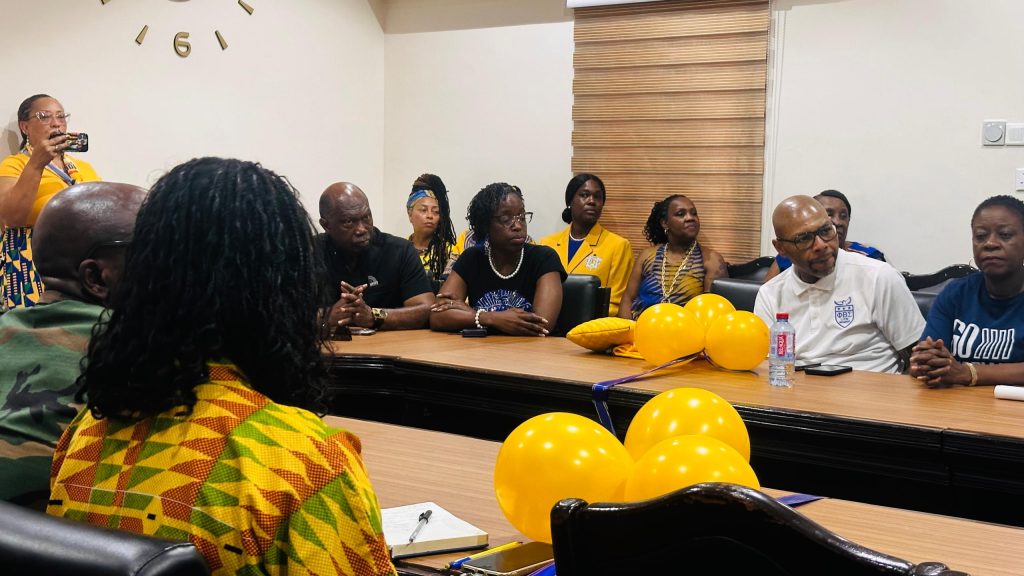
She said the visit and donations were also a response to calls for members of the African diaspora to return home and contribute to national development.
“We have answered the call. We are here with our members, and we are committed to continuing this work,” she stated.
Mrs Iris Ampofo-Barnes, the President of the Nul Lambda Chapter of Sigma Gamma Rho Sorority in Ghana, said the chapter was established in 2021 and had since maintained strong partnerships with local organisations across the country.
She recalled that in 2023, the sorority brought about 300 of its members to Ghana for a “birthright journey,” during which several institutions and organisations benefited from donations and community support initiatives.
Mrs Ampofo-Barnes said the sorority’s work extended beyond Ghana to other West African countries, including Liberia, Nigeria, Sierra Leone and the Democratic Republic of Congo, with plans underway to expand activities to Cape Verde, particularly in the area of menstrual health education.
Brigadier General Richard Naab, receiving the cheque on behalf of the 37 Military Hospital, the Head of the Obstetrics and Gynaecology Division, expressed appreciation to the sorority for its support.
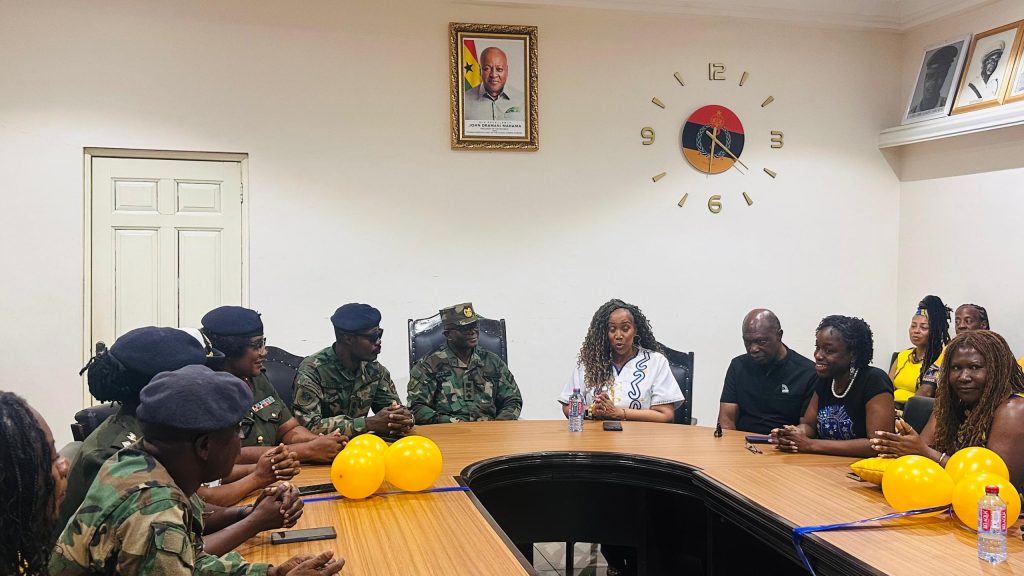
He said the donation would go a long way to relieve mothers and families burdened by medical bills and improve access to critical maternal and neonatal care at the facility.
Ms Irene Engmann, the Deputy Director of Street Girls Aid, one of the beneficiaries, expressed gratitude to Sigma Gamma Rho Sorority and its partners for the donation, describing it as timely and impactful.
She said the funds would support vocational and life skills training for street-connected girls, provide stationery for children enrolled in the organisation’s early childhood care programme, and strengthen efforts to reintegrate young mothers and their children into society.
Ms Engmann noted that Ghana had more than 90,000 street-connected children in Accra alone, with limited facilities catering specifically to girls, making such support crucial to breaking the cycle of vulnerability.
GNA
Edited by George-Ramsey Benamba