A GNA Feature by Kamal Ahmed
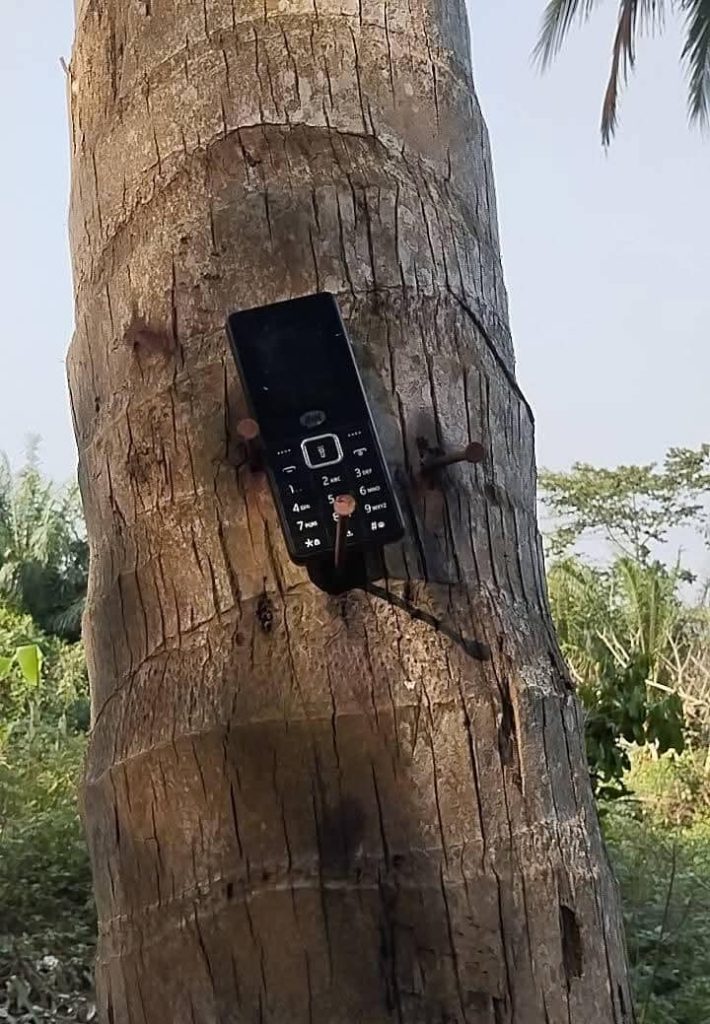
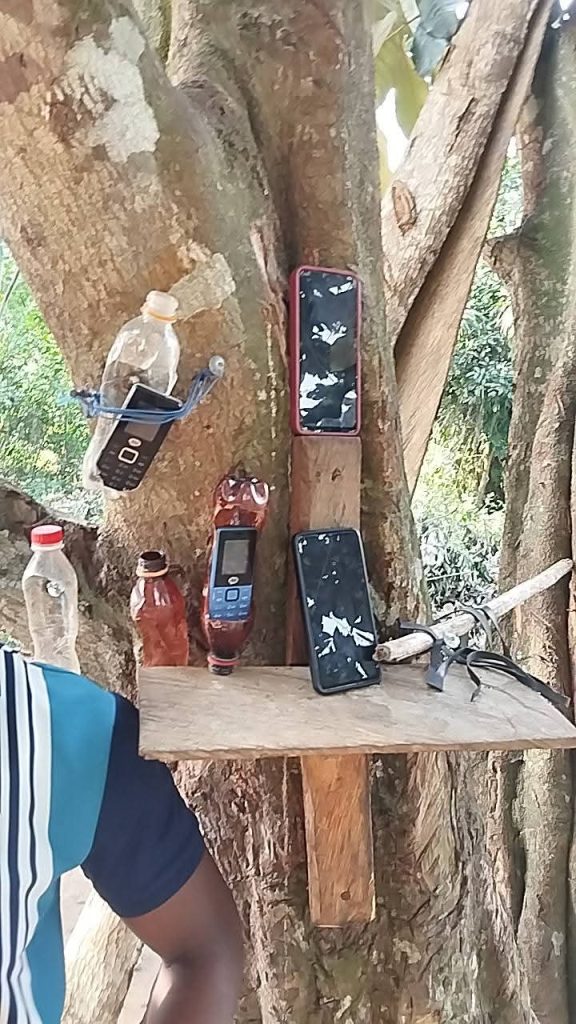
Yilo Krobo (E/R), Jan. 22, GNA – At daybreak in parts of the Yilo Krobo area in the Easter Region, mobile phones do not sit safely on bedside tables or in pockets. They hang from tree branches, tied with strings, balanced on nails, or placed in makeshift holders high above the ground.
For farmers and traders, climbing trees or leaving phones dangling under the open sky has become a daily necessity — a ritual dictated not by choice, but by survival.
In communities such as Wurapong, Haese, Akpamu, Akpo, Brukum, Aboa, Samlesi, Perpertifi, Akorwu Banah among others, reliable mobile telephony networks remain a rare commodity. To make or receive a call, residents must first locate “the spot,” often a lone tree that towers above rooftops and farmlands.
A single step away, and the connection disappears.
“I leave my phone there and go to the farm,” said Mr. Teye Odonkor, pointing to a tree crowded with phones. “If someone calls, I run back. Otherwise, I won’t hear anything.”
Missed Calls, Missed Opportunities
What appears as ingenuity is, in fact, a symptom of a deeper problem. Communication drives trade, access to services, and emergency response. Without reliable mobile coverage, economic activity in these farming communities is quietly stifled.
Traders struggle to confirm prices before harvests. Extension officers cannot provide timely advice and emergency calls are often delayed or missed entirely.
For producers of perishable crops like tomatoes, peppers, cabbage, and garden eggs, a failed call can mean wasted harvests and lost income.
“When buyers cannot reach us, they go elsewhere,” said Miss Veronica Nyegor, a vegetable farmer. “Sometimes we harvest and wait, but nobody comes. If we had network, we would know who is coming and when,” she added.
Exploited by Middlemen
Agriculture depends heavily on timely information — weather forecasts, market prices, transport arrangements, and access to inputs. Without network coverage, farmers must rely on middlemen who exploit the gap, offering lower prices with little fear of competition.
Mobile money services, now central to rural trade, are also unreliable under weak network conditions. Failed transactions and delayed confirmations force farmers to carry cash to nearby towns, increasing risk and reducing efficiency. Livestock farmers face similar challenges, as delayed veterinary services can result in the loss of animals that sustain household incomes.
Improvised Communication Hubs
Phones hanging from trees have become a symbol of both resilience and neglect. Some communities share “network trees” as informal hubs. Yet the system is fragile: rains damage phones, batteries drain quickly as devices hunt for signal, and theft remains a constant threat.
“This is how we survive,” said Mr. Odonkor. “But it’s not a real solution. Every day we worry whether our phones will survive or if someone will call us at the wrong time.”
Hope for Connectivity
Dr. Albert Tetteh Nyakotey, Member of Parliament for the Yilo Krobo Constituency, has acknowledged the challenge, assuring residents that steps are underway to improve network coverage. He made the remarks during a sod-cutting ceremony for a borehole project at the Akpamu Health Centre.
A call to Action
For residents, improved network coverage would do more than enable phone calls. It would stimulate economic activity, reduce post-harvest losses, improve access to agricultural services, and integrate rural communities fully into the digital economy.
Until then, the trees will continue to bear the burden of communication, standing quietly as witnesses to a reality where progress waits for a signal strong enough to reach the ground
GNA
Edited by Benjamin Mensah