By Benjamin A. Commey
Accra, Dec. 18, GNA – The Government has stepped in to address persistent disruptions in Ghana’s tomato supply chain, which have adversely affected farmers’ livelihoods and the steady supply of tomatoes to urban markets.
The intervention follows weeks of standoff between tomato growers, particularly in Tuobodom in the Bono East Region, a major tomato-producing hub, and national tomato traders and transporters.
On Wednesday, Mrs. Elizabeth Ofosu-Adjare, the Minister of Trade, Agribusiness and Industry, convened a meeting with key stakeholders, including the Federation of Tomato Growers Associations, the Ghana National Tomato Traders and Transporters Association, and the Tuobodom Tomato Growers Association.
The engagement sought to find practical solutions to the impasse disrupting the movement of tomatoes from farms to markets nationwide and to restore stability within the sector.
It formed part of broader government efforts to stabilise agricultural value chains, reduce dependence on imports, and support domestic production under Ghana’s industrial and agribusiness development strategy.
Stakeholders at the meeting cited longstanding challenges undermining the industry, including pricing disputes, high transportation costs, disagreements over measurement, post-harvest losses, and limited access to reliable markets.
These issues, they noted, had disrupted distribution, reduced farmers’ incomes, and constrained the consistent supply of tomatoes to urban centres.
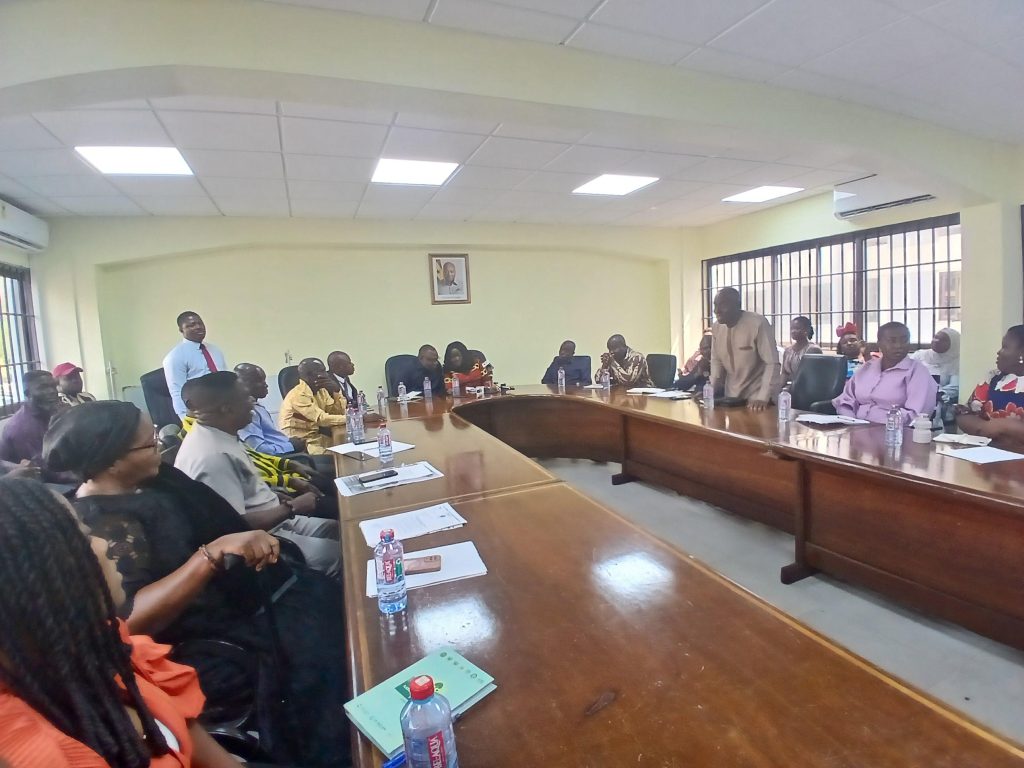
Mrs. Ofosu-Adjare reaffirmed the Government’s commitment to a collaborative approach that balanced the interests of farmers, traders, and transporters.
She stressed that improved cooperation across the value chain was critical to restoring confidence, ensuring fair trading practices, and strengthening domestic agribusiness.
The Minister also highlighted the broader economic implications of the disruptions, noting that weak coordination within the sector had forced traders to rely on tomato imports from neighbouring countries such as Burkina Faso, despite Ghana’s significant local production capacity.
Representatives of the growers, traders, and transporters welcomed the engagement, describing it as a timely intervention after years of unresolved tensions.
They expressed optimism that sustained dialogue would lead to practical measures to improve pricing structures, transportation arrangements, and market access.
Special attention was drawn to the need for targeted interventions in key tomato-producing and trading centres, particularly Tuobodom in the Techiman North District, which serves as a major aggregation hub.
Mr. Charles Takyi, Chairman of the Tuobodom branch of the Tomato Growers Association, called for a permanent solution to the recurring disputes, noting that similar standoffs had occurred at least 16 times in recent years.
He also appealed to the Government to support farmers with drought-resistant tomato varieties to enable all year-round production and to meet market specifications.
Madam Lydia Afoley Anum, General Secretary of the Ghana National Tomato Traders and Transporters Association, underscored the need for a standardised grading system to ensure fairness in pricing.
She noted that improper grading remained a major concern for traders and often led to disputes within the supply chain.
Also present at the meeting were Mr. Eric Osei Tuffour, National Chairman, Ghana National Tomato Traders and Transporters Association, Mr. Adusei Menash, Federation of Tomato Growers Associations and Mr. Kwasi Nyarko, Secretary, Tomato Growers Association, Tuobodom branch.
GNA
Edited by George-Ramsey Benamba