By Eunice Hilda A. Mensah
Accra, Nov.21, GNA – Mr Constant Tchona, the Country Director, Plan International Ghana says his nongovernmental organisation has achieved 90 per cent of the set target for its “She Leads” Programme, assuring to sustain the gains made.
The She Leads Programme is a five-year initiative that aims to empower girls and young women to be leaders and advocates for their rights.
The project which started in 2021 has built the capacity of girls and young women through training and created platforms for them to influence decision-making, advocate for gender-responsive policies, and tackle harmful norms.
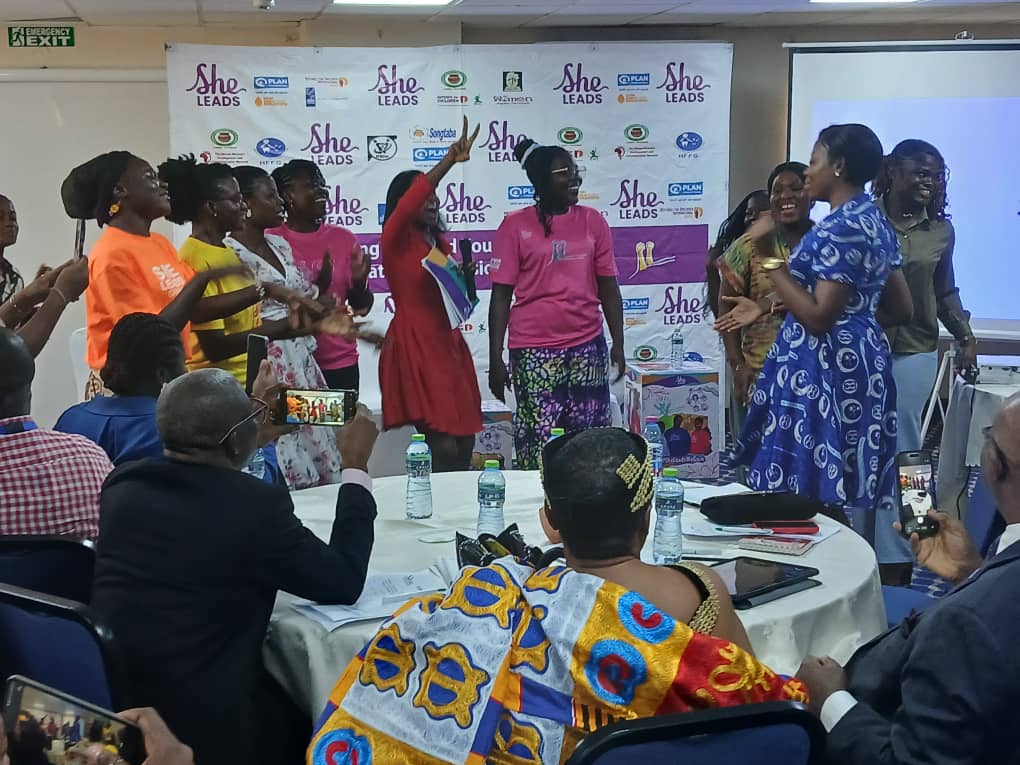
Mr Tchona gave the status in an interview with the Ghana News Agency at the close-out meeting of the “She Leads” Programme in Accra.
He said the programme did not only affect girls and young women, but the impact was seen and felt in businesses, on opinion leaders and boys in communities.
“It’s quite impressive to see the level of self-confidence that we’ve seen in the girls. I think leadership is also about being able to communicate powerfully about your ideas and the change you want to see.
“And the girls have really gotten that capacity building and self-confidence to inspire others around themselves and they can make decisions to change things around them and make a meaningful impact on their community. That’s quite powerful. We’ve seen the social norms moving, changing,” he said.
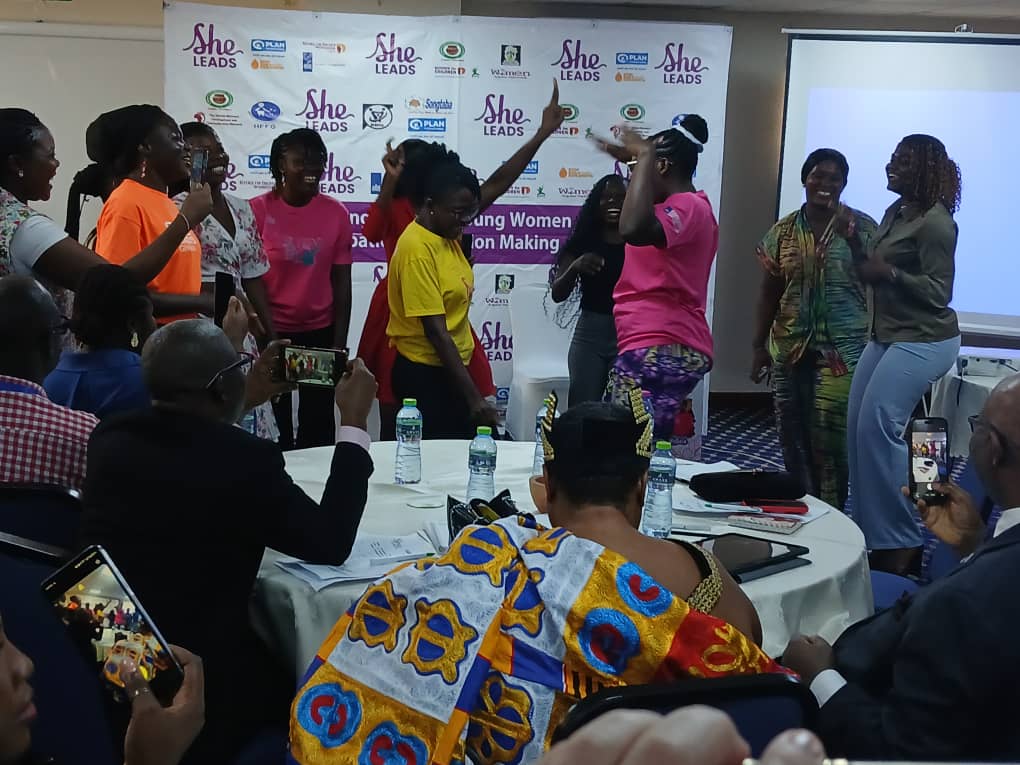
Mr Tchona illustrated: “For example, when the misconception about women’s roles in community begin to shift in the communities, where men begin to realize that actually women are not coming there to push them out, you know, to take over the space, but they’re just coming to add their voice and their energy to change the community together, then we begin to see the change that we are advocating for.”
The Country Director called on policy makers, decision makers, government agencies, donors and the private sector to invest in the movement of girls and young women, saying that was a fast way of implementing the Affirmative Action Act.
“And hopefully we’ll begin to increase the number of female leaders in public spaces. Then the 30 per cent, 40 per cent and even the 50 per cent that we have in the Affirmative Action Act becomes a reality,” he added.
Professor George Oppong Ampong, the Executive Director, Defence for Children International Ghana, told the girls and young women that the project was about them, and therefore if they existed, then the programme must also exist to achieve more and greater impacts.
He said he was satisfied with the achievements made by the programme because girls’ rights was of great concern as they were at a disadvantage in many ways.
“So we feel like gender equality has been a cross-cutting issue for all our programming. And for that matter, this project sought to integrate into the mission of Defence for Children International.
“And by achieving the goals of this project, invariably we have achieved the goals of the organisation,” he noted.
Mr Jos Heijningen, of the Plan Netherlands, who joined the meeting virtually, said he believed in domesticating every project and building relationships to succeed.
He said Ghana’s network for the She Leads Programme was highly commendable as compared to that of other countries, adding that the collaboration and cooperation of small and bigger institutions into a network contributed to its success.
Change, he said started from a small level, therefore he encouraged the participants of the programme to sustain the gains made on confidence and public speaking.
Ms Ellen Ambags, DCI Netherlands, FEMNET, commended Plan International Ghana and its partners for encouraging the girls and young women to plan and develop interventions and collecting data to aid the successful execution of the programme.
She Leads, she said was a huge global programme and therefore said it was prudent to sustain it with consistent impact.
“We have learned from Ghana that it is possible. Even though the girls and young women are far apart from each other with different realities, they find similarities in their struggles. There is also consistency in what they do and their social movement is brilliant,” she said.
Ms Ambags advised them to continue with the ‘amazing’ project, adding that She Leads was never about the project but the impact.
GNA
Edited by George-Ramsey Benamba