By Hafsa Obeng, GNA
Accra, Sept. 27, GNA – The Regional Maritime University (RMU) has taken a significant step toward improving graduate employability by signing a Memorandum of Understanding (MOU) with Samana HR Ghana, in collaboration with the National Association for Heavy-Duty Equipment Operators Ghana (NAHEOG).
The agreement, signed as part of activities marking RMU’s 8th Graduation Ceremony, is aimed at creating a clear pathway for graduates, particularly those from skill-based training programmes, to secure jobs in local and international markets, especially within the oil, gas, and maritime industries.
Speaking at the signing ceremony, Dr. Jethro Wilbert Brooks Jnr., Acting Vice-Chancellor of RMU, reaffirmed the university’s long-standing commitment to practical industry-focused training.
“The University’s core mandate is education and training. Maritime education is allied to numerous skill-based courses. For over six decades, we have been equipping students with the knowledge and skills necessary for the industry,” he said.
He said, “Through this MOU, our graduates, particularly those from skill training programmes such as FK Training, will have the opportunity to gain employment and valuable work experience immediately after graduation.”
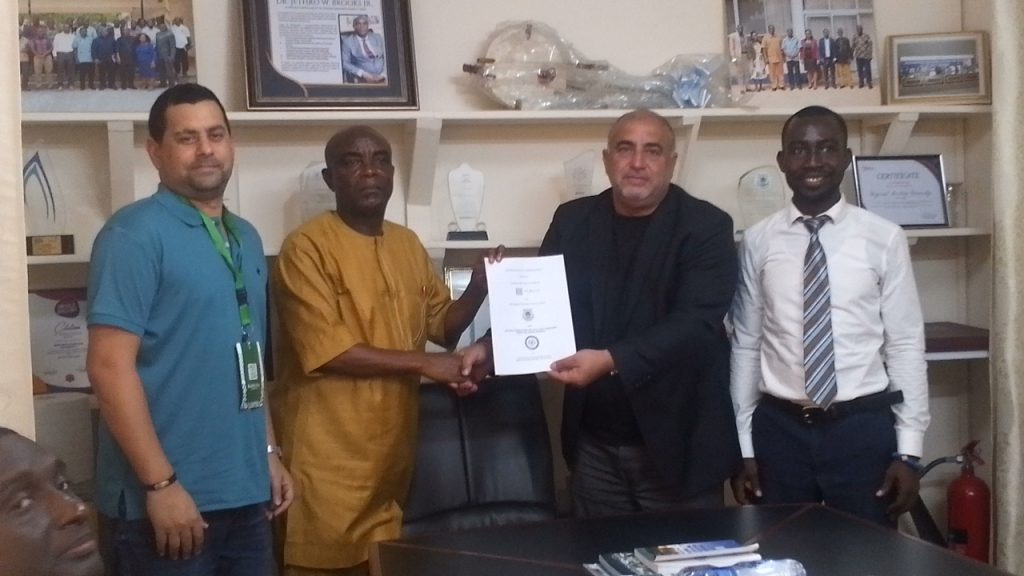
Dr Brooks Jnr. said Samana HR Ghana, a workforce solutions provider with a strong international presence, particularly in Saudi Arabia, was expected to play a key role in placing graduates in the global workforce.
Mr. Ahmed Naaman, Director of Samara HR Ghana, described the partnership as a timely intervention to meet growing demands for skilled labour in the oil and gas sector abroad.
“Samana HR Ghana is mandated to provide skilled personnel to the Kingdom of Saudi Arabia, our major market,” he said.
He said, “By signing this MOU with RMU, we aim to provide job-ready graduates for employment in the oil and gas sector abroad. Furthermore, we will work closely with the university to certify and train operators, ensuring they meet the required standards before traveling for employment.”
He added that recruitment would begin shortly, with a focus on graduates who possessed the required certifications and skills as endorsed by RMU.
Mr Naaman said under the agreement, the three institutions would work together to absorb RMU graduates into the workforce immediately after graduation, provide certification and operator training in partnership with RMU, deploy skilled personnel to international markets, particularly Saudi Arabia, and ensure that graduates are job-ready and meet international standards.
“This collaboration underscores a growing effort among stakeholders to bridge the gap between higher education and employment, offering RMU students a more seamless transition into the professional world.”
The partnership also aligns with Ghana’s broader agenda to increase youth employment, promote technical and vocational education, and expand the country’s presence in the international labour market.
GNA
Christian Akorlie