By Muyid Deen Suleman
Kumasi Sept. 08, GNA – The Muslim Health Workers Association of Ghana (MHWAG), in collaboration with the Muslim Health Students Association-Ghana (MUHSAG) from the Kwame Nkrumah University of Science and Technology (KNUST), has organize a free medical screening for women at Kejetia market in Kumasi.
Over four hundred market women benefited from the free medical outreach programme.
The screening exercise, funded by “Project for Peace”, a US-based institution, served as an advocacy platform encouraging market women to prioritize regular health check-ups.
Project for Peace is a global initiative that inspires young adults to devise innovative, community-centered, and scalable solutions to the world’s most pressing challenges.
The exercise, titled “Healthy Futures for Peace,” sought to empower the market women, enabling them to fortify their communities.
The Muslim health professionals, predominantly drawn from Komfo Anokye Teaching Hospital (KATH), diagnosed and provided complimentary medication for various ailments, including hepatitis B, malaria, hypertension, eye screenings, dental assessments, and worm infestations.
Participants whose conditions were deemed serious were referred to hospitals for further evaluation and treatment.
Medicines valued at thousands of dollars were dispensed to those requiring treatment, alongside counseling on healthy lifestyle practices.
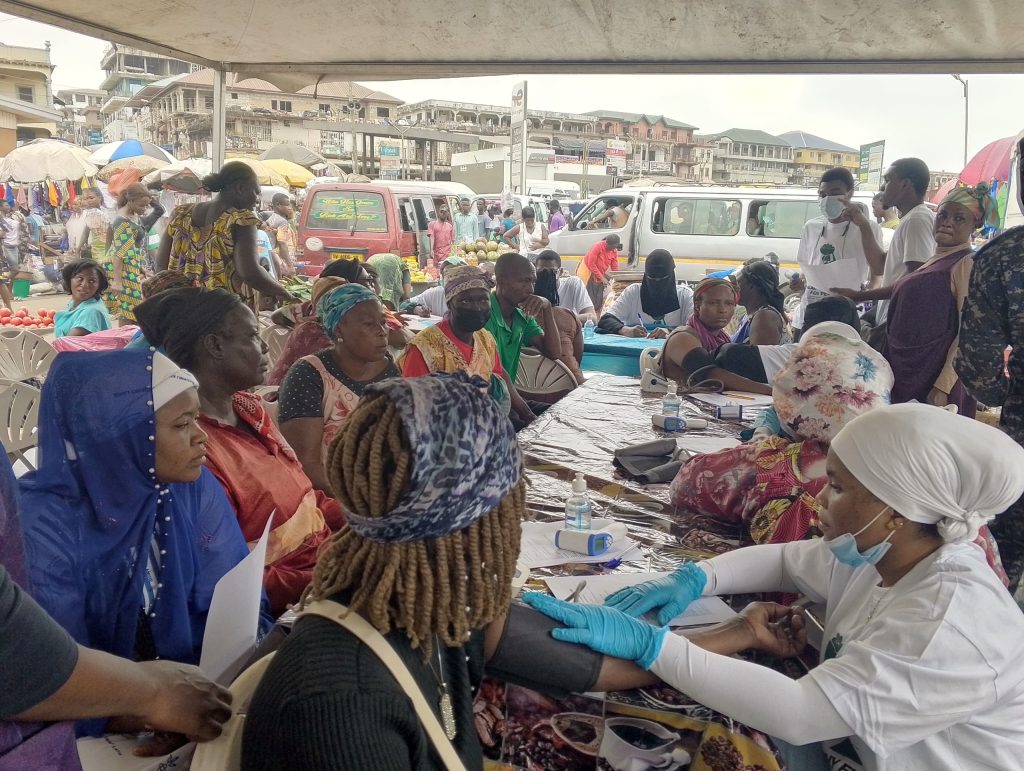
Dr. Abdul Aziz Karim, the Project Coordinator and a pharmacist, remarked in an interview with the GNA that, many women in the market encountered significant challenges in accessing medical facilities for check-ups due to financial constraints and that, Project for Peace deemed it imperative to deliver healthcare services directly to their doorstep.
He urged Ghanaians to seize the opportunity of free health screenings for their own benefit, particularly when time constraints hindered hospital visits.
Hajia Nura Abukari Sadick, a medical professional and member of the Muslim Health Workers Association team, also encouraged women to adopt the habit of regular health check-ups.
She admonished the youth to refrain from consuming stimulants such as “Red” and tramadol for their overall well-being.
Several women who benefited from the screening expressed profound gratitude to the Muslim Health Workers Association of Ghana for the screening and encouraged them to continue with their good works.
The project received support from Vassar College in the United States of America (US).
GNA
Edited by Kwabia Owusu-Mensah