By James Amoh Junior, GNA
Accra, July 17, GNA – Ghana is in advanced discussions with the Republic of Serbia to secure a portion of 100,000 work permits the European country plans to issue this year.
This forms part of a proposed labour mobility agreement aimed at creating job opportunities for young Ghanaians and deepening bilateral ties.
The announcement was made during a joint press briefing in Accra by Ghana’s Minister for Foreign Affairs, Mr Samuel Okudzeto Ablakwa, and Serbia’s Foreign Minister, Mr Marko Đurić, who is on a three-day official visit to Ghana.
The Labour Mobility Agreement aligns with Ghana’s broader employment strategy and the push for international opportunities for the country’s growing educated youth population.
It also supports Serbia’s efforts to maintain productivity and economic growth by addressing the human resource gap left by its declining birth rate and shrinking workforce.
The Serbian minister’s visit, which includes meetings with the Speaker of Parliament and the Ministers of Agriculture, Defence, Youth and Sports, and Tourism, is a major milestone in the growing Ghana-Serbia partnership.
The two sides are expected to formalise several agreements in the coming months, including the labour mobility MoU.
Mr Ablakwa noted that the discussions were timely and strategic, given Ghana’s youthful population and the high demand for skilled and semi-skilled labour in Serbia, which is currently grappling with an ageing workforce.
“Serbia has an ageing population and will require a labour-mobility agreement, taking full advantage of Ghana’s very young population, with a median age of 20,” he said.
Mr Ablakwa said, “The Honourable Foreign Minister has indicated that this year, Serbia plans to grant 100,000 work permits, and Ghana has expressed interest in taking full advantage of that so that we can have thousands of our young people work in Serbia.”
He added that Ghana is eager to be the second African country, after Egypt, to formalise a labour mobility agreement with Serbia.
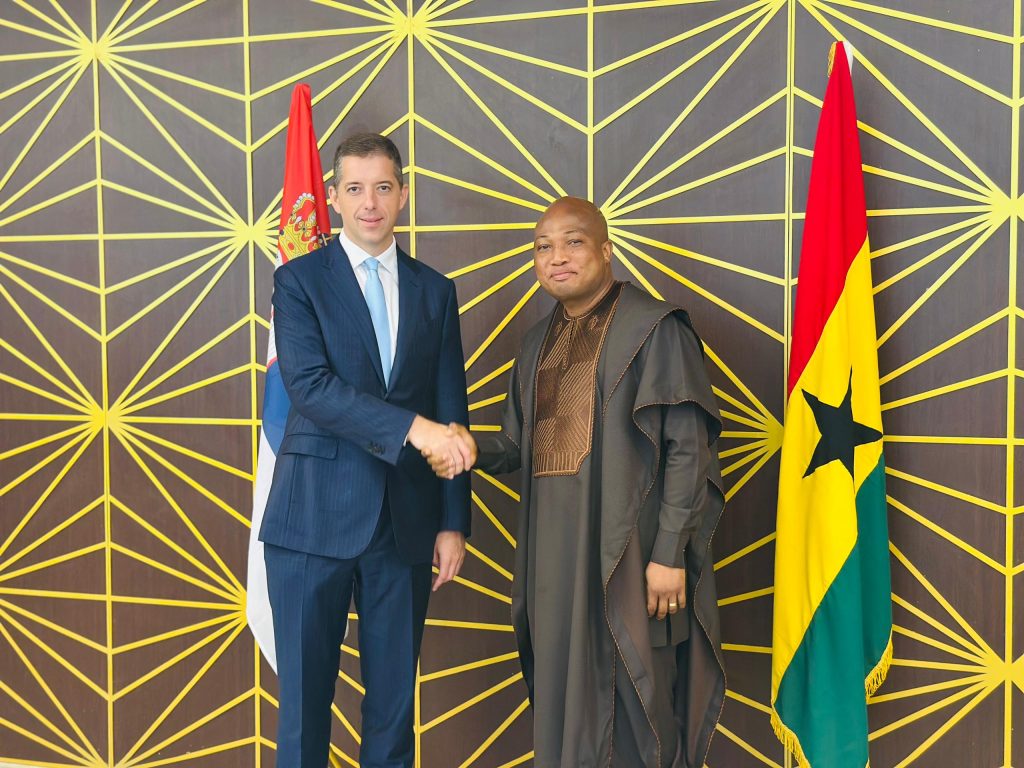
“This is how we deepen people-to-people engagements and create economic opportunities for all our people at all levels,” Mr Ablakwa added.
The Labour Mobility Agreement is expected to cover sectors such as construction, healthcare, ICT, agriculture, and services, industries that are in growing need of young, energetic and skilled labour in Serbia and the surrounding region.
Ghana’s foreign minister underscored the mutual benefits of the deal, stating that it would help reduce unemployment in Ghana while meeting Serbia’s labour needs.
He said, “This is about opportunity and dignity for our young people. We are committed to ensuring that any such arrangement will uphold the rights, safety, and welfare of Ghanaian workers abroad.”
Beyond labour mobility, the two countries are also exploring cooperation in education, with Serbia offering scholarships to Ghanaian students under the “World in Serbia” initiative.
Minister Đurić confirmed the labour mobility plan, stating that Serbia’s demographic challenges necessitated proactive engagement with countries that had a surplus of young human capital.
“With an ageing population, there is a growing need, a growing requirement, for us to exchange and build bridges between our people. So we also discussed people-to-people connectivity and we will be working towards granting greater mobility of the labour force between our two countries,” he said.
Mr Đurić noted that such exchange programmes and labour partnerships would ensure that the Ghana-Serbia relationship evolved beyond diplomacy into a practical and productive alliance.
GNA
Edited by Christian Akorlie