By Priscilla Oye Ofori
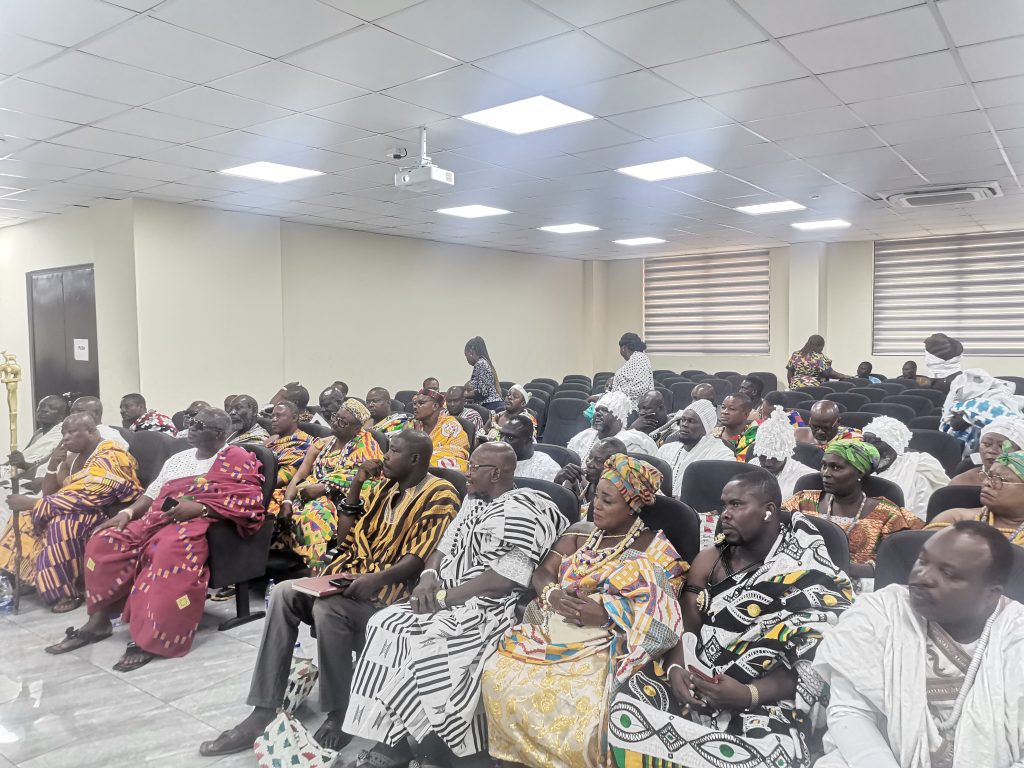
Accra, July 8, GNA – The Greater Accra Regional Coordinating Council (GARCC), through the Department of Gender, has engaged Ga Traditional leaders on ending harmful practices that women and girls are subjected to in the name of culture.
Such harmful practices include child marriage, widowhood rites, inheritance, breast ironing, witchcraft accusations, and lately female genital mutilation (FGM) due to migration, among other forms of gender-based violence.
Funded by the United Nations Population Fund (UNFPA), the engagement was to sensitise participants on their role in eliminating all forms of practices that caused harm to women and girls.
It brought together chiefs, queen mothers, and priests from the Ga Traditional Council to raise awareness about those harmful practices and develop strategies to eliminating them and promote human rights and positive cultural values.
Madam Lilian Baeka, the Chief Director, GARCC, in a speech read on her behalf, said harmful practices hindered both social and economic progress and perpetuated discrimination and encouraged traditional leaders to evolve cultural norms that “uplift and do not oppress.”
She called for collaboration between the Ministry and RCC to reinforce positive customs and eliminate regressive ones.
Referencing the Maputo Protocol, Madam Juliana Abbeyquaye, the Eastern Regional Director, Department of Gender, said: “Women shall have the right to live in a positive cultural context and to participate at all levels in the determination of cultural policies.”
She criticised traditional norms that reinforced male dominance and gender inequality, describing some as re-emerging or evolving in ways that denied women and children the right to consent.
Madam Abbeyquaye urged traditional authorities to take a stand against such practices and called for assessments to distinguish cultural practices that supported development and preserve those values through education and community interpretation.
Madam Matilda Banfro, the Greater Accra Regional Director of Gender, noted that harmful practices were deeply embedded in tradition, religion, and societal norms, which made them difficult to overcome.
While traditional leaders were well-placed to influence change, a lack of active engagement and accountability contributed to the persistence of those issues.
Reports of FGM in the region were largely linked to migrant communities, Madam Banfro noted, adding: “It is true, we have a lot of FGM going on within the region, but it looks like it is not the Gas themselves, but then the strangers we have on our lands, they are doing it.”
Tatse Nii Laryea Akwetei X, Nungua Katamanso Mantse, lamented the failure of institutions to promote moral development at the grassroots and urged fellow traditional leaders to be innovative and learn from positive examples in other cultures.
GNA
Edited by Agnes Boye-Doe