Accra, July 6, GNA – Trade unions have been urged to recognise gender struggles as a comprehensive agenda to improve working conditions for all workers, rather than treating them as separate and isolated women’s issues.
The unions must, therefore, prioritise women’s interests and gender concerns in their Collective Bargaining (CB) agendas to help push back patriarchy in the workplace.
Madam Patricia Nyman, the Women’s President of UNI-Africa, a regional organisation advocating the welfare of service sector workers, said collective bargaining required a “gendered perspective” that integrated gender issues which, while of particular importance to women, also benefitted men.
“These include parental rights, paid maternity leave and protection, paternity leave, healthcare facilities especially for pregnant women, breastfeeding breaks and facilities, equal opportunities in training and promotions, and equal access to benefits like housing, medical aid, and long service allowances,” she said.
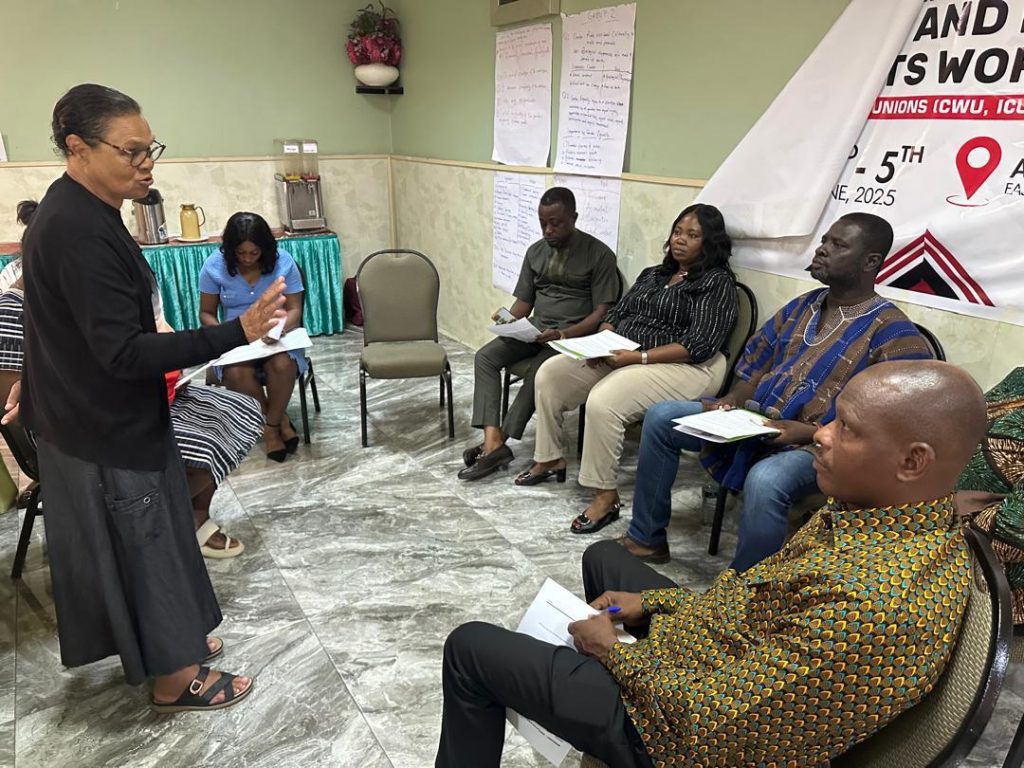
Madam Nyman was speaking at a workshop in Accra on Gender Equality, Collective Bargaining, and Parental Rights, organised by the Trades Union Solidarity Centre of Finland (UNI-SASK).
The workshop brought together three Ghanaian unions – the Communication Workers Union of the Trades Union Congress (TUC), the Industrial and Commercial Workers Union, and the TUC Security Union – to enhance their negotiation skills.
“Women’s voices are not being heard on issues that affect them, and this can impact recruitment and the organising of new members,” Madam Nyman said.
Collective Bargaining is one of the core responsibilities of trade unions, intended to improve members’ working conditions through negotiations with employers.
“However, women and gender issues are often not prioritised or are completely absent from the CB agenda. This means women, who make up a large constituency of unions, are excluded from the life of the union. This raises questions about how mandates are obtained from members,” she said.
Madam Nyman expressed UNI-Africa’s readiness to welcome measures such as reserved seats for women at the negotiation table, enabling them to express their needs and push for progress, particularly those with a track record of improving conditions for women.
“We recognise that women are the agents of their own liberation and must lead the gender struggle. That is why the inclusion of women in collective bargaining is so important,” she stated.
Madam Nyman, also the National Gender Coordinator of UNI-Africa, urged unions to commit themselves to eliminating discrimination based on sex, gender, pregnancy, marital status, and employment status.
She called on unions to advocate gender policies that advanced women’s careers while recognising their dual roles in balancing work and family life.
Ms Leocadie Bodjouo, UNI-Africa Regional Representative for Women, echoed the need to dismantle gender-based barriers in both professional and domestic settings to ensure equality and shared responsibility.
Women’s rights were union rights and must be recognised as critical to achieving equality at the workplace, she said.
Participants, especially male unionists, pledged their collective support to advance the cause of women and encouraged their female colleagues to step forward and take advantage of available opportunities to contribute effectively to stronger collective agreements.
They noted that parents had rights and responsibilities, while the rights are more of privileges the parents enjoyed, the responsibilities were obligations they must fulfil to ensure their children grew to become better people in the society.
The workshop formed part of an ongoing SASK project aimed at building the capacity of unions in negotiation skills.
Funded by Finnish unions, the project began in 2022 and runs until 2025. It aims to enhance the skills of UNI-Africa affiliates in Ghana, Kenya, and Zimbabwe to fulfil their collective bargaining mandates more effectively.
GNA
Edited by Agnes Boye-Doe