By Anthony Adongo Apubeo, GNA
Bongo (U/E), Nov. 11, GNA – World Vision Ghana, a Christian relief, development and advocacy organisation, has extended its Farmer-Managed Natural Regeneration (FMNR) PLUS project to the Bongo District, targeting the restoration of 100 hectares of degraded land over the next two years.
The third phase of the project will be implemented in 10 communities in Bongo, building on the achievements of the first two phases undertaken in 30 communities in the Binduri District between 2022 and 2026.
The initiative, with support from the Knauer Family and Company of Germany, seeks to strengthen climate-resilient livelihoods and promote inclusive landscape restoration in Bongo and Binduri to address environmental degradation, declining soil fertility and the effects of climate change on agricultural productivity.
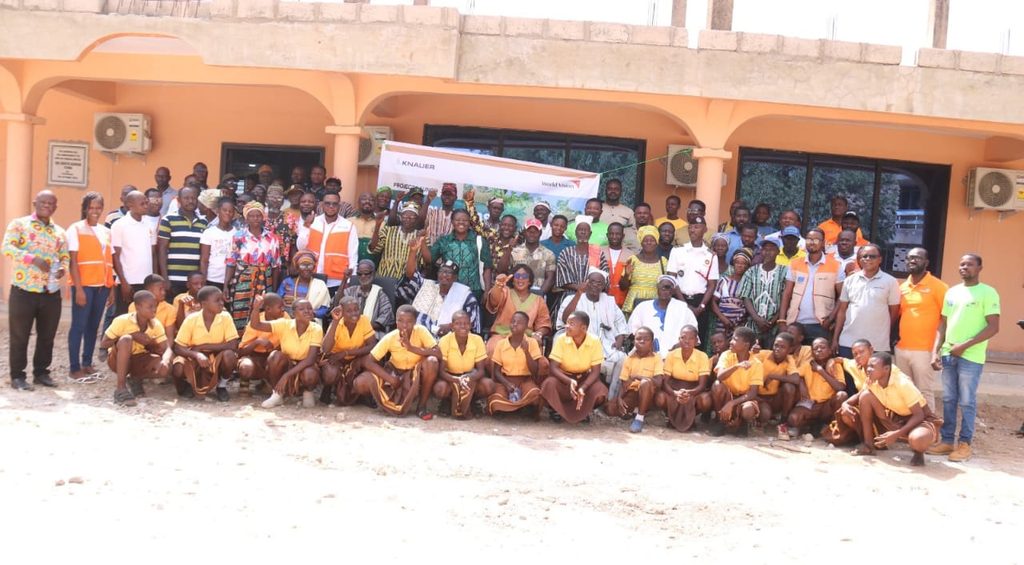
During the launch of the project in Bongo, Mr Joshua Baidoo, Acting National Director of World Vision Ghana, in a speech read on his behalf by Mr Rexford Yamdorg Bugre, the Northern Regional Operations Manager, World Vision Ghana, said the third phase would directly benefit approximately 2,500 people and indirectly reach another 5,000 in the Bongo District.
He said the project would also sustain interventions in Binduri, where about 2,000 direct participants and 4,000 indirect beneficiaries would continue to receive support.
Mr Baidoo said farmers would be trained in natural regeneration, sustainable natural resource management and climate-smart agricultural practices to restore degraded ecosystems, improve soil fertility and strengthen food security.
“At the heart of the project is the Farmer Managed Natural Regeneration approach, a simple yet powerful model that has transformed landscapes and livelihoods across Ghana and many other parts of the world.
“FMNR demonstrates that restoring trees and natural vegetation can improve soil fertility, increase agricultural productivity, strengthen drought resilience, enhance biodiversity and improve household wellbeing,” he said.
The project would also introduce Savings for Transformation (S4T) groups to enable community members to save, access small loans and invest in income-generating activities to improve their livelihoods.
Other interventions would include bushfire prevention campaigns, radio programmes, community sensitisation, enforcement of local environmental by-laws and the establishment of environmental clubs in schools.
The project would also promote energy-efficient mud stoves and Gyapa stoves to reduce household fuel consumption and pressure on forests, while supporting communities to develop disaster risk reduction plans and early warning systems.
Mr Baidoo said the initiative placed women, young people and vulnerable groups at the centre of its interventions, stressing that environmental restoration must go hand in hand with sustainable livelihoods.
“Environmental degradation is therefore not merely an environmental challenge; it is a human challenge,” he said.
Naba Baba Salifu Atamale Lemyaarum, the Paramount Chief of the Bongo Traditional Area, said the effects of climate change were increasingly evident, citing rising temperatures and changing weather patterns.
He said erratic rainfall had affected agricultural production and attributed the situation partly to the loss of forest cover and environmental degradation.
He expressed confidence that the project would help restore degraded lands and forest reserves while improving livelihoods in beneficiary communities and urged the stakeholders to support the intervention to succeed.
Ms Diana Asoketarige Ayamga, the Bongo District Chief Executive, welcomed the intervention, saying it would equip farmers with better practices to manage their lands and protect the environment.
She pledged the Assembly’s support for the successful implementation of the project and urged stakeholders and community members to work together to achieve its objectives.
GNA
Edited by Caesar Abagali/Benjamin Mensah
Reporter: Anthony Adongo Apubeo
Reporter’s email address: [email protected]