By Anthony Adongo Apubeo, GNA
Sandema (U/E), Nov. 28, GNA – Trent University of Canada and its local and international partners have organised a two-day outreach programme to equip smallholder farmers in Builsa North with sustainable farming practices to build climate resilience and improve agricultural productivity.
The programme, under the “Food System Resilience in a Changing Climate: A Community-University Knowledge Mobilisation in Ghana and Malawi” project, seeks to improve farmers’ access to climate-resilient seeds, promote agroecological practices and reduce post-harvest losses to enhance food and nutrition security.
It also seeks to bridge the gap between agricultural research and rural farming communities by translating scientific knowledge into practical solutions that farmers can adopt to improve productivity and safeguard their livelihoods.
The project is being implemented by Trent University in collaboration with George Washington University, Mzuzu University, the Council for Scientific and Industrial Research-Savanna Agricultural Research Institute (CSIR-SARI), the Foundation for Integrated and Scientific Research and Development (FISRAD), Regional Advisory Information and Network Systems (RAINS) and Builsa Radio, with funding support from the Social Sciences and Humanities Research Council (SSHRC).
The engagement brought together researchers, agricultural officers, development organisations and farmers to exchange knowledge on seed security, sustainable agricultural production and post-harvest management.
Speaking at Sandema during the training, Professor Daniel Amoak, an Assistant Professor at Trent University, said the initiative was designed to address the longstanding disconnect between research institutions and farmers, particularly those in hard-to-reach communities who often had limited access to current research findings and agricultural extension services.
“Our goal is to get the insights that we have gained over the years through research back to what we term last-mile communities, the hard-to-reach smallholder farming communities whose ecological knowledge our research has been grounded in,” he said.
Professor Amoak identified inadequate access to quality seeds as a major challenge confronting smallholder farmers amid changing climatic conditions, noting that access to appropriate planting materials was critical to building resilient food systems.
He said the project was also promoting agroecological practices, including intercropping and legume integration, to improve agricultural sustainability and help farmers adapt to climate variability.
He explained that reducing post-harvest losses was equally important to ensure that farmers retained sufficient produce for household consumption and livelihoods until the next farming season.
Professor Amoak said the project would extend beyond the two-day outreach programme to include practical visits to farmers’ fields to learn from their experiences and document indigenous agricultural practices.
The researchers would also collaborate with community radio stations, including FISRAD Radio in Sandema, to disseminate the knowledge gathered during the engagement to more than 100,000 households.
He encouraged farmers to strengthen informal seed systems, including seed sharing and the preservation of locally adapted varieties, to improve community-level seed security.
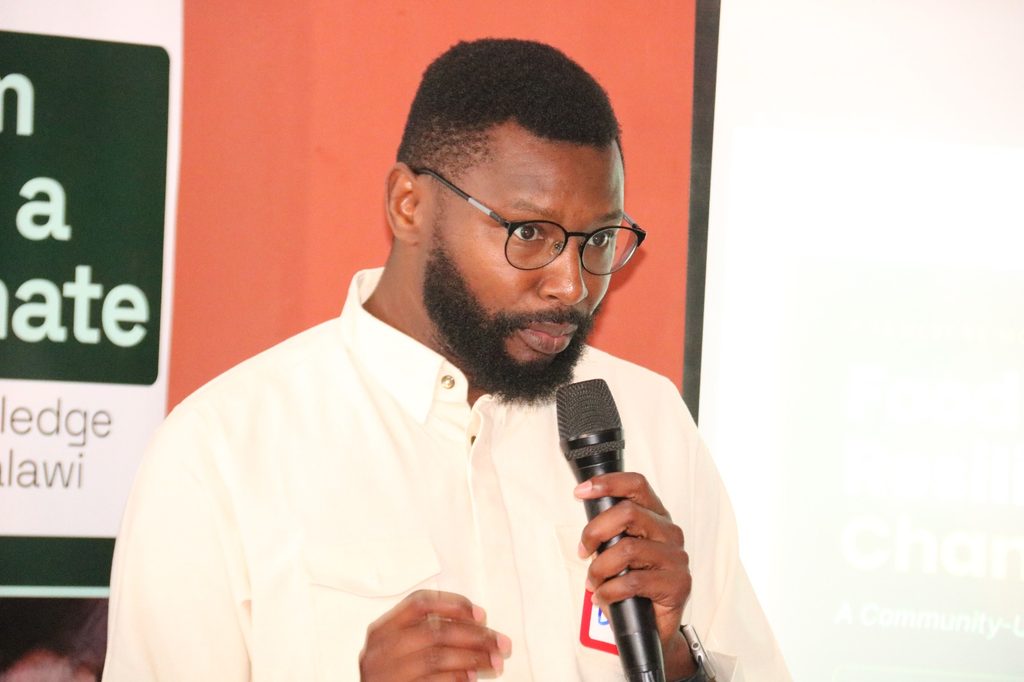
Dr Desmond Sunday Adogoba, a Research Scientist at CSIR-SARI, said the institute had developed and released several improved crop varieties with high-yielding potential and tolerance to drought, heat stress and other environmental challenges.
He explained that the improved varieties were intended to complement, rather than replace, indigenous seeds, some of which possessed valuable traits that could be preserved and used in future crop-breeding programmes.
Dr Adogoba urged farmers to plan their farming activities ahead of the next season by determining the quantities of seeds required, the acreages to cultivate and the resources needed to support production.
Dr George Chidimbah Munthali, a Researcher and Lecturer at Mzuzu University in Malawi, said agroecology was essential to building sustainable food systems because it helped improve soil health and agricultural productivity in both the short and long terms.
He said lessons from Malawi, including farmer training in the preparation and application of organic manure and liquid manure, could offer useful approaches for strengthening sustainable agriculture in Ghana.
Mr Solomon Akogti, the Builsa North Municipal Chief Executive, said unpredictable rainfall, declining soil fertility, limited access to climate-resilient seeds and post-harvest losses continued to threaten agricultural productivity and household incomes in the municipality.
He said the initiative was timely and encouraged farmers to actively participate in the knowledge-sharing activities to ensure that research findings translated into practical improvements in their farming activities.
Mr Sualihu Abdul-Gafaru, Builsa North Municipal Management Information System Officer at the Department of Agriculture, said climate change had resulted in flooding and extreme drought, leading to poor yields.
He said the training would help farmers adapt to changing climatic conditions in the coming farming season.
Some farmers who participated in the programme welcomed the initiative and called for regular engagements to improve their knowledge and farming practices.
GNA
Edited by Caesar Abagali/Audrey Dekalu
Nov. 28, 2026
Reporter: Anthony Adongo Apubeo
Reporter’s email: [email protected]