A GNA Feature by Edward Acquah
Accra, Nov. 15, GNA- For Ms Hariratah Ibrahim Doudu, the road to leadership has never been an easy one. Growing up in a modest family of 24 siblings, she learnt early that opportunities were not always readily available and that determination was often necessary to overcome life’s challenges.
The loss of her father after completing senior high school presented another difficult moment. But rather than allow the setback to define her future, Doudu drew strength from it, becoming more determined to pursue her ambitions and inspire other women to take up leadership positions.
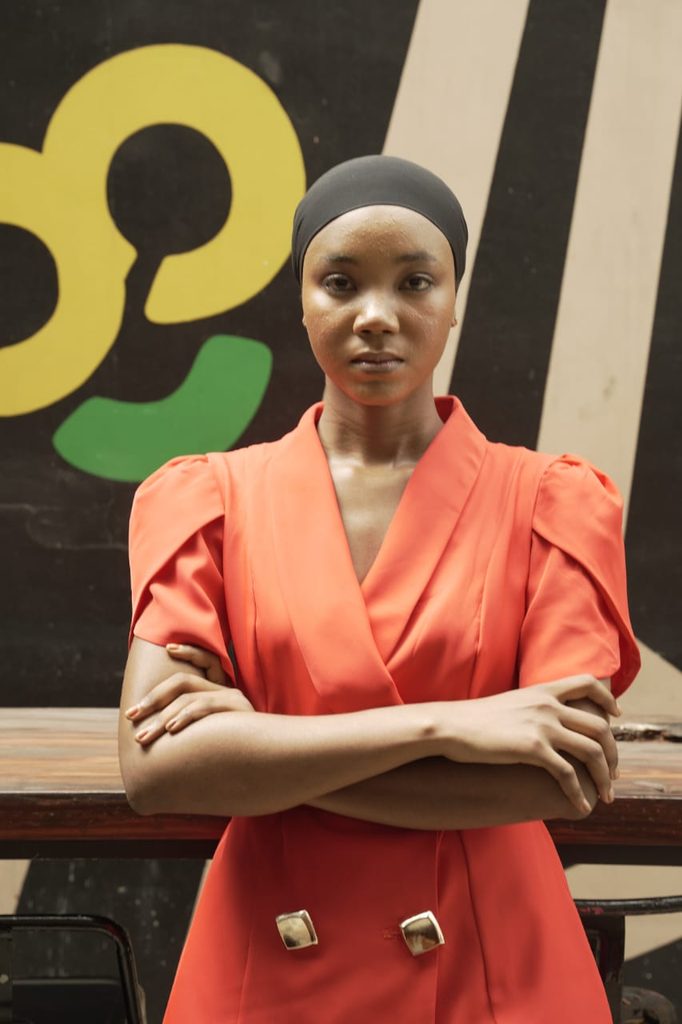
Today, she is the Vice President of the Student Representative Council (SRC) of the Ghana School of Law, having overcome several challenges to break into student leadership.
Her journey, however, is far from complete. Hariratah hopes to move beyond student leadership and contribute to national development through politics and public service.
But as she looks towards that ambition, she is confronted by a political environment in which money increasingly determines who gets the opportunity to lead.
She says the high cost of contesting elections, particularly the financial demands associated with campaigning and securing votes, continues to discourage women and other aspiring leaders who lack the resources to compete.
“It came to me as a surprise when I realised that you need so much money to go into student leadership. I always thought, oh, you just tell people your ideas and your dreams and the solutions that you have in mind, and then they’ll go with you. But no. It involves a lot,” she told the Ghana News Agency.
The story of Hariratah reflects the experience of many Ghanaian women with the ability and ambition to participate in national political leadership but whose prospects are weakened by the increasing monetisation of the country’s electoral process.
A 2021 study by the Ghana Centre for Democratic Development (CDD-Ghana) estimated that a presidential candidate would need about US$100 million to have a viable chance of winning an election, while a parliamentary aspirant would require approximately GH¢4 million.
The parliamentary estimate included about GH¢2 million for building support in the constituency and contesting party primaries, and another GH¢2 million for the general election campaign.
The figures point to a deeper problem in Ghana’s political system, where financial resources can become more decisive than competence, ideas and the willingness to serve.
The situation is particularly worrying for women, who continue to face economic and social barriers to political participation.
Data from the Inter-Parliamentary Union (IPU) show that women occupy only 40 of the 276 seats in Ghana’s current Parliament, representing about 14.5 per cent. This means that men hold more than 85 per cent of the seats in the country’s law-making body.
Although the number of women in Parliament has increased over the years, the representation remains low, pointing to a persistent structural problem that continues to limit women’s access to political power.
A costly political journey for the youth
The financial barriers are not limited to women. Young people seeking to enter politics also face a system that often demands resources beyond their reach.
Ghana has a youthful population, with people aged 15 to 35 accounting for 38.2 per cent of the population, according to the 2021 Population and Housing Census.
Yet their presence in the country’s highest decision-making institutions remains limited.
The IPU’s parliamentary age data, compiled at the start of the current legislature in January 2025, recorded 46 Members of Parliament aged 40 or younger.
A study by Obaa Akua Konadu-Osei, titled The Cost of Politics for Ghana’s Aspiring Young Parliamentarians, published by the Youth Democracy Cohort, offers further insight into the challenges facing young people seeking political office.
Based on interviews with 12 aspiring parliamentary candidates aged between 21 and 40 from the National Democratic Congress (NDC) and the New Patriotic Party (NPP), the study found that financial demands associated with campaigning were a major obstacle to political participation.
These included nomination fees, transportation, publicity materials, community engagements, gifts and demands for financial assistance from delegates and constituents.
One participant captured the influence of money on electoral outcomes, saying: “You can be the one with the best ideas, you can be the one with the best strategy; if this is not supported by money you share on D-day, you can’t win.”
The study also found that women faced additional challenges in raising campaign funds, partly because of social expectations surrounding their sources of financial support. It noted that women were often more cautious about relying on wealthy political patrons because of the pressure to maintain a good public image.
Similar concerns were raised by young people in a recent documentary titled We Shall Lead: Voices Shaping the Future of Africa,”
Which examines the participation of young people and women in politics and public life.
The documentary was part of the European Union Women and Youth Democratic Engagement (WYDE) Political Parties Project, which seeks to strengthen the participation of women and young people in democratic processes.
Mr Sherif Ghali, Chief Executive Officer of the Ghana Chamber of Young Entrepreneurs and President of the Ghana Youth Federation, told the GNA that the high cost of politics is shutting out young people who have the knowledge and capacity to contribute to national development.
“Politics in Ghana have been priced so high that the young person who has the knowledge, who has the tenacity, who has the enthusiasm to play a critical role, is priced out. Simple because they may not be able to raise the needed funding to get people to vote for them.”
He said young people were often mobilised to participate in political rallies, wear party colours and promote political parties, but were rarely given opportunities to occupy positions where decisions were made.
“We use them as rally participants. We use them for images. We use them as signposts, to wear party colours and all of that, to showcase our party. But when it comes to giving them the job, because they are not there, they can’t get it,” he said.
Mr Ghali said young people without the financial resources to contest party primaries often remained at the grassroots, regardless of their competence or leadership potential.
He identified nomination fees, campaign expenses and the delegate system as some of the factors making political participation expensive, arguing that aspiring candidates were often expected to provide financial incentives to delegates to secure their votes.
“The delegate system is killing young people because the few people you have to vote for, you must make sure you give them something, even though you will not win,” he said.
He called for reforms to the electoral and political party systems, including a review of the delegate system and deliberate representation of young people in Parliament, public boards and other decision-making institutions.
He said such measures should be backed by constitutional provisions rather than depending on the goodwill of individual political leaders.
“We need to change the system. The system whereby elections price out young people who could have done the work is too costly to do in Ghana,” he said.
Beyond promises to meaningful inclusion
Ghana has taken steps towards addressing the underrepresentation of women in political and public life through the passage of the Affirmative Action (Gender Equity) Act, 2024 (Act 1121).
The legislation provides a framework for promoting gender equality and increasing women’s representation in decision-making positions. However, translating the law into meaningful representation remains a challenge, with concerns about the pace of implementation and the need for institutions to meet its objectives.
The election of Professor Naana Jane Opoku-Agyemang as Ghana’s first female Vice President in 2024 was another significant milestone in the country’s political history. Her election has provided a powerful example of women’s capacity to occupy the highest levels of national leadership.
For many women seeking to follow that path, however, the ultimate goal remains to see a woman elected President of Ghana.
For Doudu, who has already crossed the first barrier into student leadership, the ambition to serve at the national level remains alive. But in a political environment where financial resources increasingly determine access to leadership, that ambition could remain beyond reach.
Her message to young women who are hesitant to take the first step is simple: “Do it anyway. Do it scared, do it tired, do it anyway.”
For Ghana, the bigger challenge is to build a political system in which those with the ability to lead are not priced out before they get the chance to serve.
GNA
Edited by Linda Asante Agyei