By James Amoh Junior, GNA
Accra, Nov. 24, GNA – President John Dramani Mahama and Dr Frank-Walter Steinmeier, President of Germany, have called for stronger economic cooperation between Germany and Africa, with increased trade, investment, technology transfer, and industrial development.
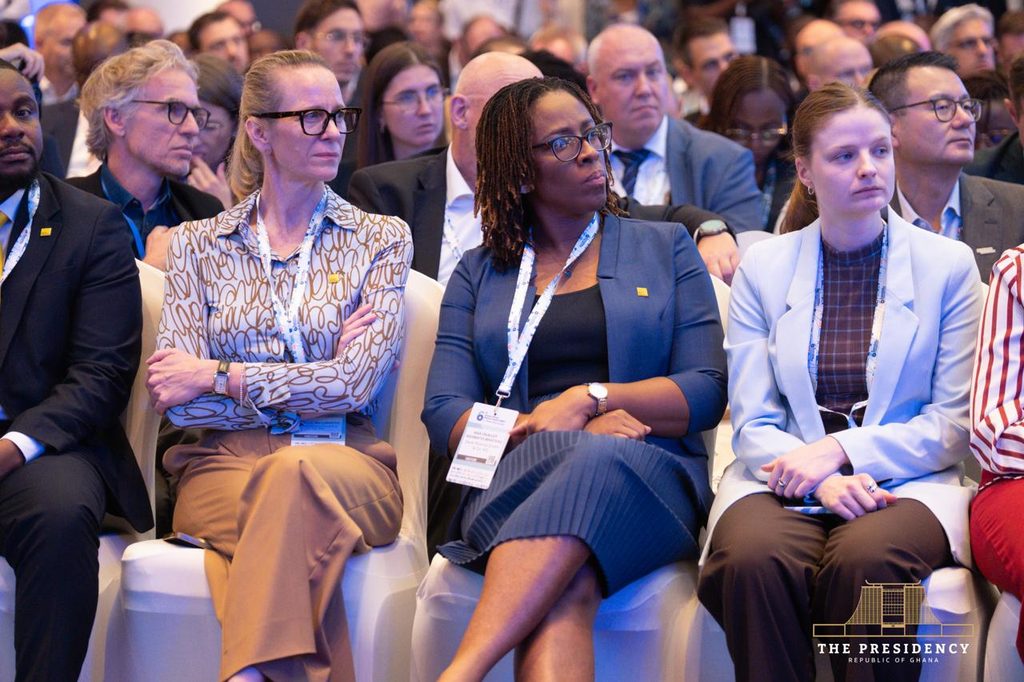
They made the call at the opening of the 2026 German-African Business Summit (GABS) in Accra, which brought together political leaders, policymakers, business executives, investors and development partners from Germany and across Africa to explore investment opportunities and strengthen economic relations between the two regions.
The German-African Business Summit is Germany’s premier business and investment event on the African continent.
The 2026 edition, jointly organised by the Sub-Saharan Africa Initiative of German Business (SAFRI), and the Delegation of German Industry and Commerce in Ghana, is the sixth summit.
The summit focuses on key sectors, including energy, infrastructure, manufacturing, agriculture, logistics, finance, and digital transformation.
President Mahama said Africa and Germany must move beyond traditional development assistance towards mutually beneficial economic partnerships anchored in trade, industrial cooperation, investment, technology transfer, and value addition.
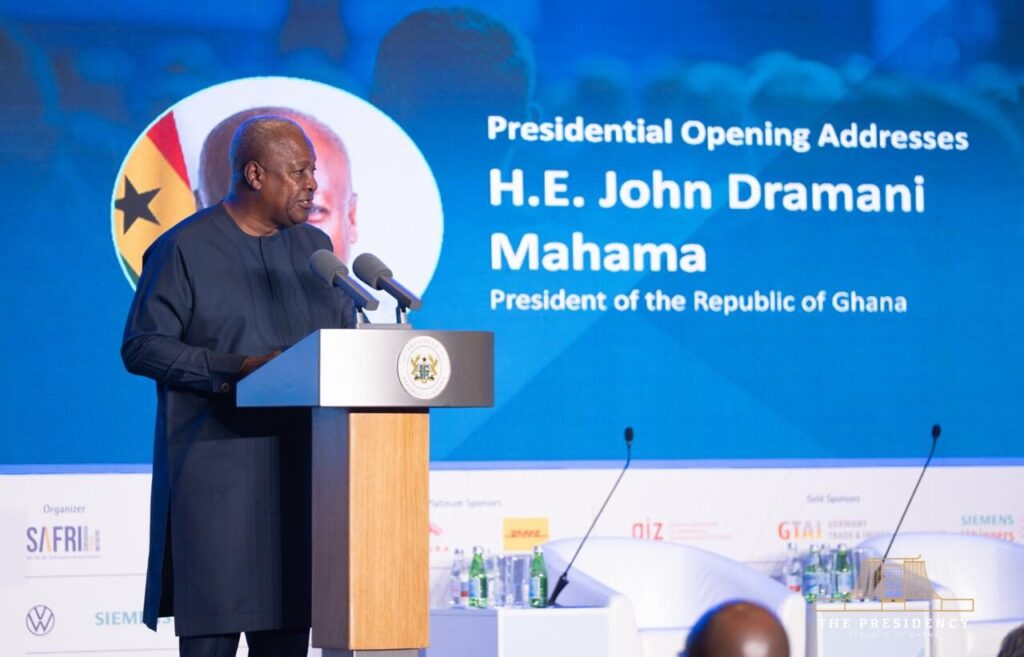
He said the changing global economic landscape, characterised by geopolitical uncertainty, technological transformation and shifting supply chains, presented an opportunity for Africa to reposition itself as a competitive destination for investment, manufacturing, and innovation.
President Mahama said Africa had the natural resources, youthful population, and expanding consumer markets to support sustainable industrial development, but needed to transform its resources into productive enterprises capable of creating decent jobs and generating lasting prosperity.
“We must process what we produce. We must manufacture what we consume, and compete effectively in regional and global markets,” he said.
He noted that Germany’s expertise in engineering, advanced manufacturing, technological innovation, and vocational training offered considerable opportunities for cooperation with African economies seeking to expand their industrial capacities.
The President, therefore, urged German companies to combine their technology, expertise, and investment with Africa’s natural resources, entrepreneurial capabilities, and growing markets to establish commercially viable enterprises.
He said Ghana was positioning itself as a strategic entry point into the African market, particularly with the establishment of the African Continental Free Trade Area (AfCFTA), whose Secretariat was hosted in Accra.
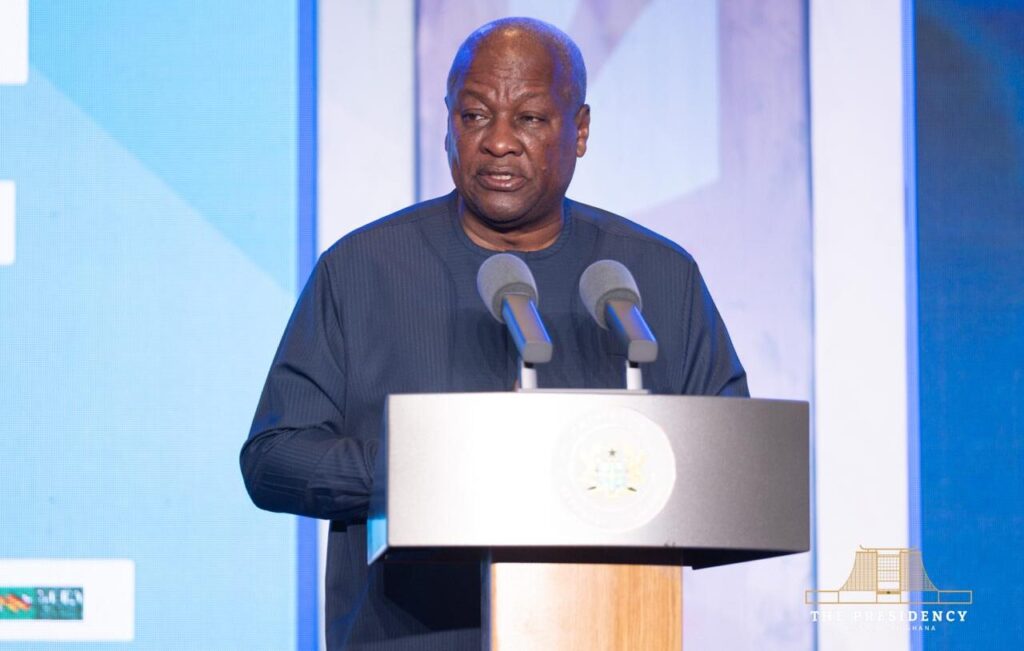
The AfCFTA provides access to a continental market of approximately 1.4 billion people, with a combined Gross Domestic Product exceeding US$3.5 trillion.
Mr Mahama, therefore, urged German investors to consider Africa not as a collection of isolated national markets but as an increasingly interconnected investment, and production destination.
He cited Ghana’s improving economic indicators as evidence of the country’s renewed stability, and attractiveness to investors.
The President said the economy expanded by six per cent in 2025, while year-on-year growth also reached six per cent in the second quarter of 2026.
Inflation, which stood at 23.8 per cent in December 2024, had declined to 5.2 per cent by September 2026, while international reserves increased from US$8.9 billion in December 2024 to approximately US$12.94 billion in June 2026.
He said the country’s Gross Domestic Product had surpassed US$100 billion, making Ghana the eighth-largest economy in Africa, and the second largest in West Africa.
The President announced that Ghana intended to invest US$10 billion between 2027 and 2030 under its New Economy Programme, focusing on agriculture, agro-processing, manufacturing, energy, infrastructure, pharmaceuticals, tourism, creative industries, digital innovation, and mineral beneficiation.
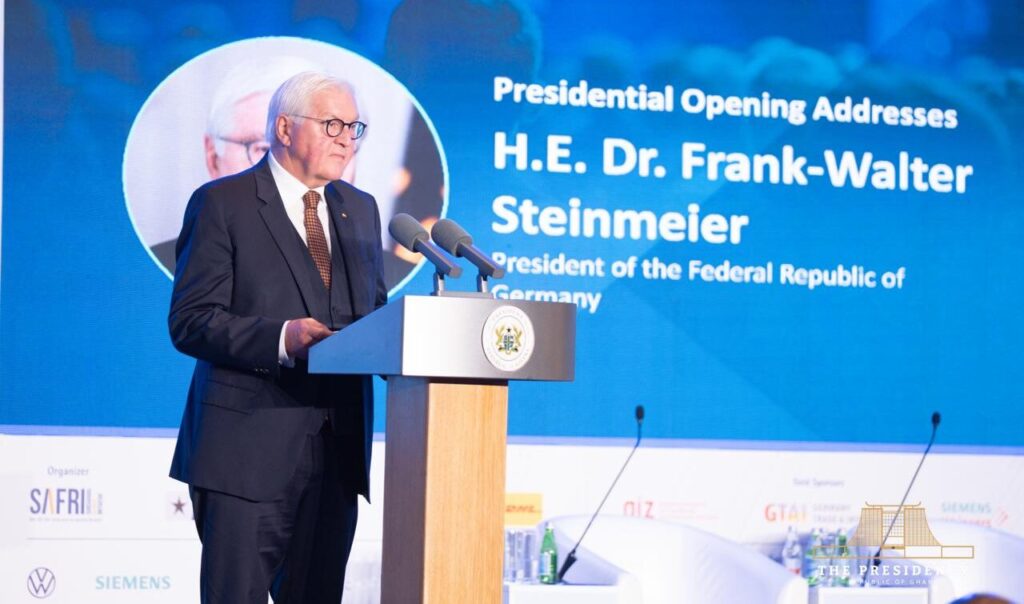
President Steinmeier, in his remarks, said Germany and Africa needed one another more than ever, particularly in addressing global challenges, including climate change, poverty, food insecurity and the rapid transformation driven by artificial intelligence.
He said his numerous visits to Africa over the past two decades had reinforced his conviction that the continent possessed enormous entrepreneurial potential, particularly among its young people.
He urged German businesses to take advantage of the investment opportunities across Africa, noting that geopolitical developments had exposed the need for Germany to diversify its traditional export markets and strengthen economic partnerships.
President Steinmeier said trade between Germany and African countries increased by approximately 10 per cent in the previous year to reach a new record but maintained that significant untapped opportunities remained.
He encouraged African governments to pursue necessary economic reforms, facilitate trade, and strengthen regional integration to create an enabling environment for businesses.
He described the AfCFTA as an important step towards achieving greater economic integration and prosperity on the continent.
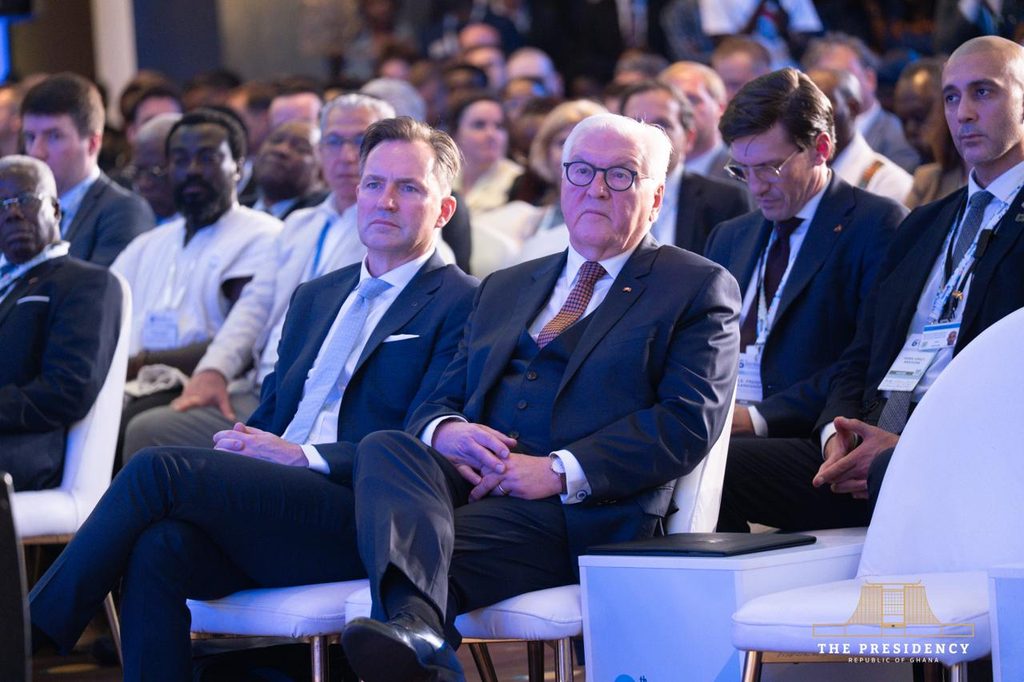
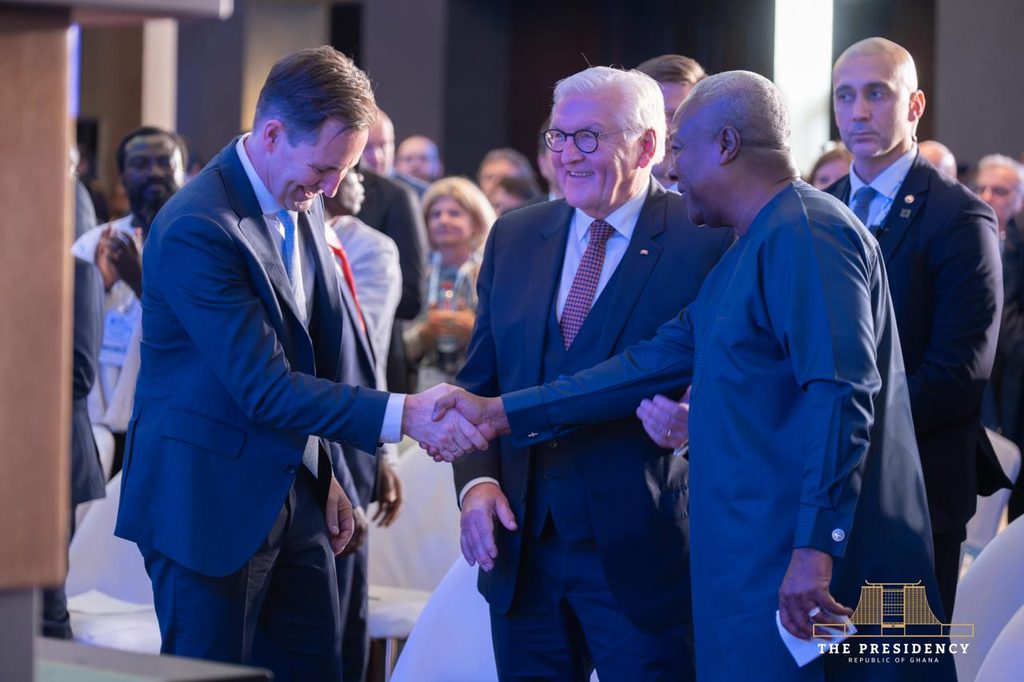
President Steinmeier, whose tenure as Germany’s Federal President was approaching its end, said reliable partnerships were essential not only for economic cooperation but also for strengthening the international rules-based order.
He called for greater African representation and a stronger voice for the continent in international organisations, particularly the United Nations.
Mr Thomas Schäfer, Chairman of SAFRI, said relations between Africa and Germany had reached a decisive moment, requiring both sides to translate longstanding goodwill and diplomatic engagements into tangible business outcomes.
He said German companies were seeking new growth opportunities, resilient markets, and reliable partners, while African businesses were increasingly expanding across the continent and beyond.
He called for a fundamental shift in Germany’s approach to Africa, urging businesses to view the continent not merely through the lens of development assistance but as a major destination for trade, investment, and entrepreneurship.
GNA
Edited by Linda Asante Agyei
24 November 2026
Reporter: James Amoh Junior
Email: [email protected]