By Albert Futukpor
Tamale, Nov 10, GNA – The government has launched the Regional West Africa Resilient Rice Value Chain Development project (REWARD-Ghana) to strengthen rice production in the country.
The REWARD-Ghana, a five-year (2026-2030) project, seeks to ensure national food self-sufficiency and reduce import bills through increased productivity and production, market development in rice value chain, and create gainful employment especially for women and young people.
The $18.8 million project, funded by the African Development Bank (AfDB), also seeks to develop sustainable and climate-resilient rice production systems to increase yields, develop rice processing clusters, agribusiness and market links to facilitate trade and strengthen market competitiveness, and support policy and regulatory reforms within the sector.
It is being implemented in seven Metropolitan, Municipal and District Assemblies (MMDAs) in four regions noted for rice production in the Northern Savannah Ecological Zone.
The MMDAs include Tamale, Mion, and Savelugu in the Northern Region, Nandom and Wa Municipal in the Upper West Region, Mamprugu-Moagduri in the North East Region, and West Gonja in the Savannah Region.
Anchor farmers, smallholder farmers, mechanization service providers, aggregators, off-takers, commercial and small-scale processors amongst others are expected to benefit from the project.
Mr Eric Opoku, Minister for Food and Agriculture, who launched the project in Tamale on Monday, said it formed part of the government’s efforts under the Feed Ghana Programme to achieve national rice self-sufficiency by 2028 with a target of 3.31 million metric tonnes of paddy rice.
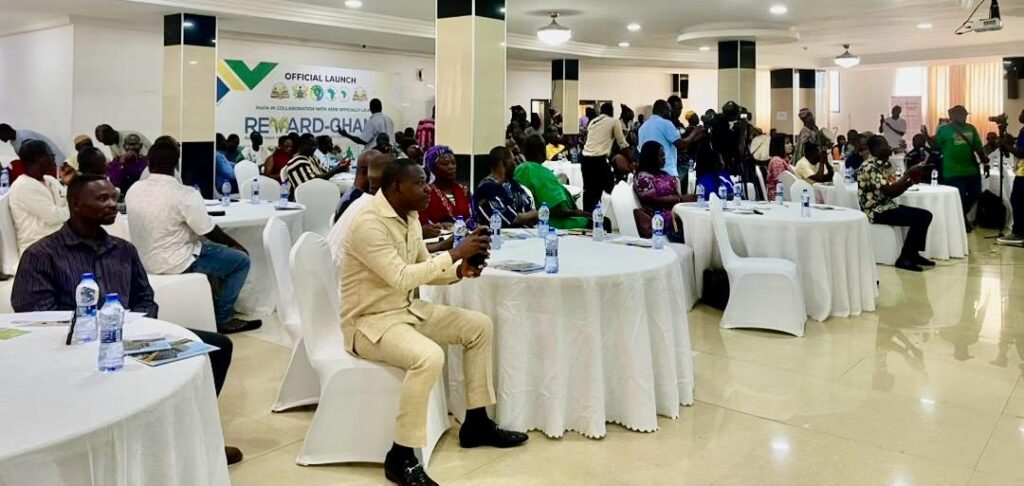
The launch was attended by public officials, traditional authorities, farmer associations, development partners, researchers amongst other stakeholders.
Mr Opoku said domestic milled rice production increased from approximately 685,000 metric tonnes in 2022 to 960,000 metric tonnes in 2025 but currently met only about 56 per cent of national consumption requirements leaving the remaining 44% to be supplied through imports.
He said the country spent an estimated US$500 million annually on rice imports, hence need to expand local production and processing to reduce the import bill.
He said the REWARD-Ghana would support the development of 3,200 hectares of land for rice cultivation and provide improved seeds, agricultural inputs and machinery to enhance productivity.
The machinery to be deployed would include rotary tillers, seed drills, rice transplanters, boom sprayers, and mini crawler to combine harvesters.
Mr Opoku said existing rice processing facilities would also receive complementary equipment including colour sorters, destoners and improved parboiling vessels to enhance the quality and competitiveness of locally processed rice.
He urged the project implementation team to ensure transparency, accountability and timely delivery, and said its success would be measured by improvements in yields, reduced production costs, lower post-harvest losses, and increased farmer incomes.
He also urged private investors to take advantage of opportunities in seed production, mechanisation services, processing, packaging, storage, and distribution to strengthen the domestic rice industry.
Mr Ali Adolf John, Northern Regional Minister said the region had significant potential for rice production but required appropriate support, agricultural services and reliable market opportunities to realise it.
He emphasised the need for close collaboration amongst regional and district authorities, traditional leaders, farmer-based organisations, processors, traders, and private-sector actors to ensure effective implementation of the project.
Dr Damian Ihedioha, Division Manager, Agriculture and Agro-Industry Department, AfDB said the project was expected to translate the objectives of the Feed Ghana Programme into practical outcomes for farmers and businesses.
He said the project would strengthen the entire rice value chain from production and harvesting to storage, processing, milling, packaging, and market access.
He urged project managers to align activities with the agricultural calendar and involve farmers, communities, local authorities, and private businesses in decision-making.
Mr Ebenezer Kwesi Botchey, Head, AfDB Unit at the Ministry of Finance said the project would support increased rice production, improve processing and strengthen market connections.
He said more than 20,000 smallholder farmers were expected to benefit directly from the project with women and young people forming an important part of its implementation.
GNA
Edited by Eric K. Amoh/Kenneth Odeng Adade
Reporter: Albert Futukpor
Email: [email protected]