By Caleb Kuleke, GNA
Ho, Nov. 14, GNA – A wide array of innovative, homegrown technologies took centre stage during Ho Technical University’s (HTU) Food, Agriculture, and Technology Sustainability (FATAS) Conference.
Among the impressive lineup of machinery on exhibition were a solar-powered lawnmower, a plastic extruder, an industrial tomato blender, a heavy-duty transmission jack, a tyre debeader, a biometric socket, an automated fish farm, and a smart traffic management system
Remarkably, every single one of these practical machines was designed and built from scratch by students of the University, highlighting the institution’s strong focus on hands-on technical training.
Seizing the opportunity to demonstrate their engineering prowess, Mr Divine Yao Kordadza, an Electrical and Electronic Engineering student, teamed up with his colleagues to unveil four distinct prototypes.
Their showcase included a coin-operated solar phone charger, an automated fishpond monitoring system, a smart waste segregator, and a biometric socket identifier.
The biometric socket identifier introduces a unique layer of domestic security by requiring fingerprint authentication before supplying power to charge a device.
Unless a user’s fingerprint is pre-registered in the system database, the socket will not supply power, effectively preventing unauthorised devices from being charged.
Engineered to grant access strictly to registered users, the system automatically blocks power flow if an unrecognised fingerprint is placed on the sensor.
Speaking to the Ghana News Agency (GNA), Mr Kordadza revealed that the innovation was inspired by the need to curb electricity theft and prevent abuse of electrical outlets in homes.
He noted that the system was particularly useful for keeping curious children safe from tampering with live sockets when parents were away from home.
Another standout invention from the team is the smart waste segregator, which is designed in the form of a standard dustbin to streamline recycling efforts.
The unit is engineered to automatically sort refuse into distinct compartments for plastics and metals, ensuring that recyclable materials are never mixed.
According to the developers, operating the smart bin requires zero manual sorting from the user.
Once mixed waste is poured into the top chamber, internal sensors and mechanisms immediately detect the material type and channel it into the appropriate plastic or metal bin.
In the area of aquaculture, the group presented an automated fishpond monitoring system equipped with pH, turbidity, and temperature sensors, alongside an automated fish feeder.
This integrated setup is designed to take the guesswork out of fish farming and reduce fingerling mortality rates.
Mr Kordadza explained that the pH, which is the hydrogen sensor continuously tracks water acidity to ensure a healthy environment for young fish to thrive.
If the water becomes too acidic and the pH drops below safe levels, the system alerts the farmer to drain the pond and introduce fresh water.
Similarly, the turbidity sensor monitors water clarity and hygiene in real time. Whenever waste buildup makes the water too dirty, the system sends an instant alert to the farmer’s mobile phone, prompting them to flush out the contaminated water before diseases spread.
The built-in temperature sensor also tracks thermal fluctuations within the pond. By notifying the owner when water temperatures become too extreme, the device ensures timely water refills that promote optimal fish growth.
Addressing energy access challenges, the students also unveiled a solar-powered charging station tailored for rural and off-grid communities.
The unit harvests solar energy to provide reliable power for mobile devices in areas without national grid coverage.
To make the service sustainable and accessible, the solar charger is programmed with a coin-operated payment mechanism.
Users simply insert coins to unlock power flow, allowing them to charge their phones on demand without needing a human attendant.
Mr Kordadza highlighted the affordability of the system, noting that it is currently calibrated to provide six minutes of charging time for a single cedi coin.
He added that the team plans to deploy these units at busy lorry stations and bus stops to assist commuters and travellers who urgently need to power their devices while in transit.
Meanwhile, Mr Senanu Akpabli, a Civil Engineering student, walked the GNA through a newly developed mobile application designed to improve construction safety.
The concrete mix app, named CivilQNTIFY aims to eliminate structural failures caused by poorly mixed building materials.
Mr Akpabli observed that many small-scale builders and clients often skip laboratory material testing due to high costs.
His application bridges this gap by helping builders ensure their concrete mixtures meet standard industry quality without incurring expensive testing fees.
Using the app, contractors can easily input their desired structural strength to calculate the exact concrete mix ratios required for a specific project.
This precision guarantees that the hardened concrete will achieve its intended load-bearing capacity after casting.
Mr Akpabli emphasized that the app is an essential tool for informal artisans and masons who learned their trade on the job rather than through formal technical education.
By providing exact water, cement, and aggregate ratios, the app empowers local builders to construct safer, more durable buildings and public facilities.
The two-day conference, held on the theme: “Innovation for Resilient Futures: Integrating Food Systems, Technology and Sustainable Agriculture,” brought together researchers, policymakers, industry players, farmers, development partners, students and other stakeholders from Ghana, Africa and beyond.
The conference seeks to promote knowledge exchange, build capacity and strengthen collaboration among academia, industry and government while showcasing innovative technologies and best practices for improving food security and environmental sustainability.
Various speakers emphasised the need to explore practical solutions to everyday challenges, especially in the agricultural sector for national development and sustainable growth.
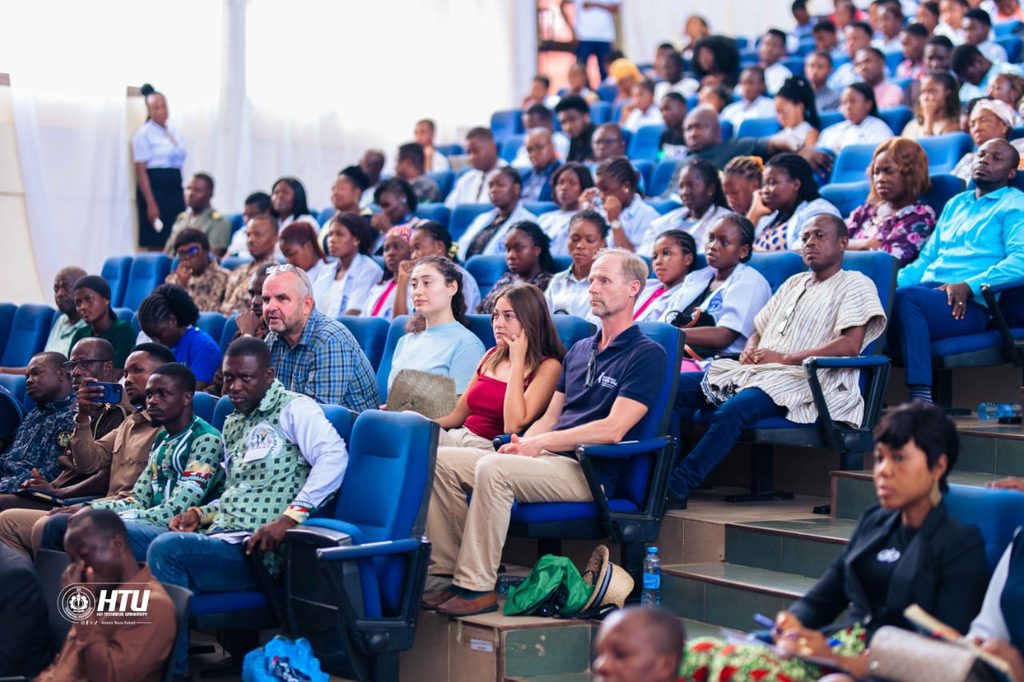
Prof John Ofosu-Anim, Vice-Chancellor of the Presbyterian University Ghana, who was the guest speaker, called for stronger collaboration among universities, research institutions, government, industry and farming communities to translate research into practical agricultural solutions.
He said agriculture employed about 24.3 per cent of Ghana’s workforce, representing an estimated 4.8 million people, and remained essential to food security, employment and economic development.
Prof Ofosu-Anim highlighted the Ghana National Research Fund, which had received an initial allocation of GHS100 million, as an important opportunity to support locally driven research.
He stated that the Ghana Agricultural Fund for Education and Transformation, launched with an initial GHS3.5 million and a target of GHS100 million by 2028, was an opportunity for improving research and innovations in the agricultural sector.
Professor Ben Honyenuga, Vice Chancellor (VC) of the Ho Technical University, noted that agriculture remained the primary employer for the majority of Ghana’s population.
The VC urged stakeholders to find innovative ways to make the sector attractive to the youth.
He explained that the conference aligned closely with the global development agenda, particularly Sustainable Development Goal (SDG) 2 on Zero Hunger.
It also supports SDGs 12, 13, and 17, which championed responsible production and consumption, climate action, and strategic partnerships for sustainable development.
Other speakers also underscored the need to equip farmers, especially smallholder farmers, with modern technology to boost food production.
They stressed that while modern technology was essential for improving farming and increasing yields, most peasant farmers lack the technical know-how to operate these tools, making adoption difficult.
They also called for the promotion of indigenous technologies to enhance agricultural production and food preservation, noting that traditional methods avoid harmful chemicals that could negatively affect the health of the citizens.
GNA
Edited by: Maxwell Awumah/Kenneth Odeng Adade