By Edward Acquah, GNA
Accra, Nov. 4, GNA- Former Prime Minister of Slovakia Eduard Heger has called on Ghanaian leaders to prioritise collaboration, consensus-building and national development to strengthen the country’s democracy.
He said effective leadership required leaders to prioritise the collective interest of the country and work across political and institutional divides to address national challenges.
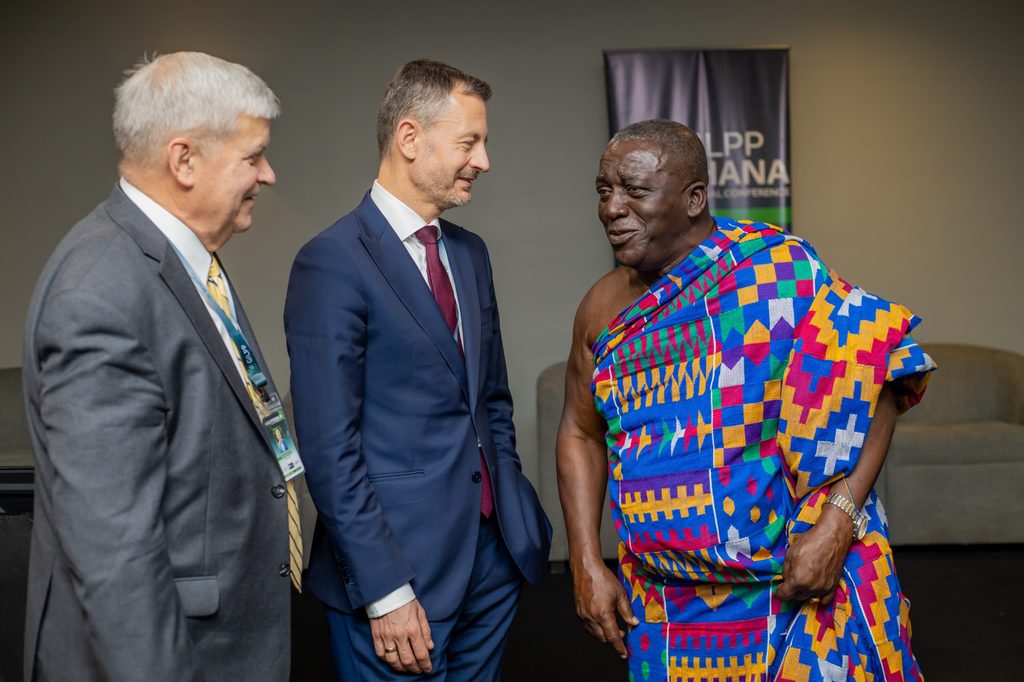
Mr Heger made the call at the 2026 Ghana Regional Conference of the Geneva Institute for Leadership and Public Policy (GILPP), held in partnership with the Council on Foreign Relations Ghana and the Konrad-Adenauer-Stiftung (KAS) Ghana, in Accra.
The conference, on the theme: “Collaborative Governance for Resilient Societies,” brought together policymakers, parliamentarians, diplomats, academics, traditional leaders, civil society representatives and youth leaders to discuss ways of strengthening governance and building resilient societies.
Delivering the keynote address on, “Leadership in Complexity,” Mr Heger said the increasing frequency of global crises, political polarisation and the disruptive effects of the digital era required a new approach to leadership and governance.
He cited the COVID-19 pandemic, the energy crisis following the Russia-Ukraine war and disruptions to global trade as examples of interconnected challenges that required countries to work together.
He said social media algorithms were also deepening political divisions by exposing users to similar opinions while limiting their engagement with opposing views.
Mr Heger said leaders must be willing to sacrifice personal ambition and ego for the common good while upholding values such as freedom, human dignity, human rights, the rule of law and democracy.
“Progress before perfection, vision for the good of the country before ambition, consensus before confrontation, humility before ego, and long-term results before short-term popularity,” he said, outlining principles he considered essential for effective leadership.
He urged participants to develop a shared vision for Ghana and believe in their ability to contribute to achieving it.
Mr Kojo Oppong Nkrumah, Member of Parliament for Ofoase-Ayirebi, said Ghana needed to focus on strengthening the systems and institutional practices required to translate its democratic gains into tangible economic benefits for citizens.
He said the country had experienced repeated economic crises because of weaknesses in planning, implementation and accountability.
Mrs Anna Wasserfall, Country Representative of KAS Ghana, said resilient governance required institutions capable of learning, adapting and responding to societal needs before challenges escalated into crises.
She said effective governance required collaboration among public institutions, academia, the private sector, civil society and citizens.
Dr Henry Deneen, President of GILPP, said the conference was organised to promote discussions on resilience, good governance and the principles necessary to sustain Ghana’s democracy.
He said the organisers were satisfied with the participation of stakeholders from different sectors and expressed hope of returning to Ghana for future engagements.
GNA
Reporter: Edward Acquah/Linda Asante Agyei