A GNA Feature by Eric Appah Marfo
Accra, Nov. 17, GNA – The birth of a child is a happy occasion among the Talensis in Ghana’s Upper East Region.
It is one to celebrate with family and the whole community as the new member of the society is welcomed with gifts and blessings. A Talensi child is brought up by the whole village.
But for Azure Nsoma, a new mother in Gbane, an illegal mining community in the Talensi District of the Upper East Region, the birth of her child did not bring the joy she had anticipated, but a desperate search for medical help.
Her newborn was diagnosed with a congenital heart defect, prompting her to seek assistance from several health facilities.
Her geographical reach is certainly limited by her low financial status and will only hope for miracle.
In nearby Datoku, Atia Salifu and his wife faced a similarly distressing experience when their first child was born with severe limb abnormalities, including missing limbs. The couple reportedly sought medical help at several facilities in vain.
The experiences form part of the folklore in Talensi, where the District Health Directorate had recorded at least six babies with congenital abnormalities over several years.
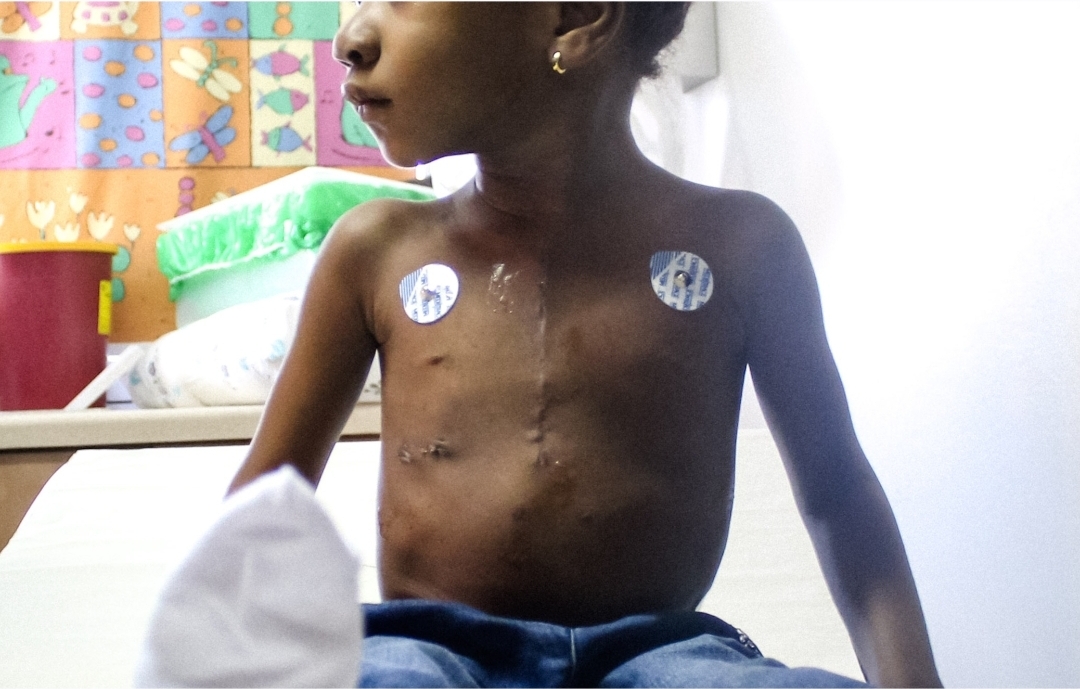
Dr Juliana Akugri Anam-Erime, the local District Director of Health Services, said the cases spring from communities with illegal mining activities.
Although the Directorate has not scientifically established a direct link between the abnormalities and galamsey, the polluted streams and a cursed environment say it all.
She expressed concern about residents’ possible exposure to chemicals, including mercury and cyanide.
These accounts raise a troubling question: could chemicals released through illegal mining be travelling beyond polluted rivers and soils to destroy the health of people, including unborn children?
One substance of particular concern is mercury, a toxic heavy metal used in many Ghanaian small-scale gold extraction processes. Its ability to stay in the environment and enter the food chain makes it a potential threat to communities dependent on rivers, fish and agricultural produce.
At an Ambassador’s Water Experts Programme symposium on mercury pollution organised by the US Embassy in Accra, scientists and environmentalists explained how the substance could move from mining sites into water bodies, sediments, aquatic organisms and food consumed by humans.

Dr Grace Armstrong of the United States Geological Survey’s Mercury, Metals and Microplastics Research Laboratory, explained that mercury was used to form an amalgam with gold-bearing materials. When the amalgam was heated to recover the gold, mercury vapour was released into the atmosphere.
The vapour can settle in nearby communities, soils and water bodies, while some may travel longer distances before being deposited.
In aquatic environments, microorganisms can transform mercury into methylmercury, a more toxic form that accumulates in aquatic organisms and moves through the food chain.
Smaller organisms absorb it, and concentrations can increase in larger fish that feed on them. Humans may consequently be exposed through consuming contaminated fish.
Professor Daniel Nukpezah of the University of Ghana’s Institute for Environment and Sanitation Studies said mercury could move between air, water, soil, sediments and living organisms, making its management particularly difficult.
He cited Minamata disease in Japan as an example of the severe consequences of mercury exposure.
Evidence from Ghana’s rivers
A 2024 baseline assessment conducted by Dr Armstrong and her team in selected communities in the Western Region examined river water, sediments, household drinking water, fish and agricultural products, including cocoa and cassava.
The study found mercury concentrations in sediments between two and 25 times higher than the United States stream sediment average. Some unfiltered river-water samples also recorded concentrations more than 55 times the US average.
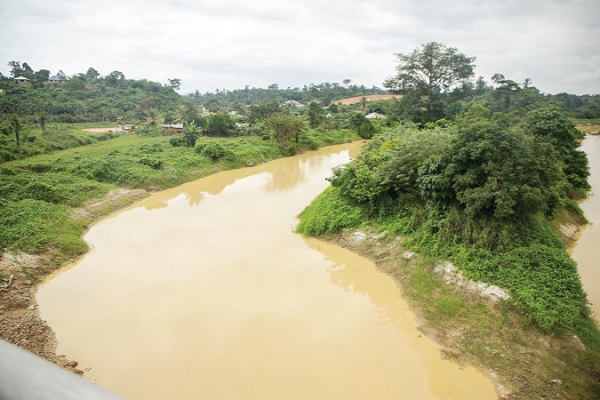
The US allows 2 ppb in drinking water and 1.0 ppm in commercial fish, but the typical clean river is only 0.003-0.005 ppb, and the typical fish sold on the market holds an average of 0.1 ppm.
However, filtered samples had mercury concentrations more than 10 times lower than their unfiltered counterparts, suggesting that much of the substance was associated with suspended particles.
Dr Armstrong cautioned that the assessment was limited to selected communities and was not representative of the entire country.
The findings also contained some reassuring observations. All household drinking-water samples collected from pipes, boreholes and wells were below the World Health Organisation’s cited drinking-water criterion of one part per billion.
Similarly, the fish samples were below the US Environmental Protection Agency’s consumption criterion. However, limited fish availability in some communities restricted the number of samples collected.
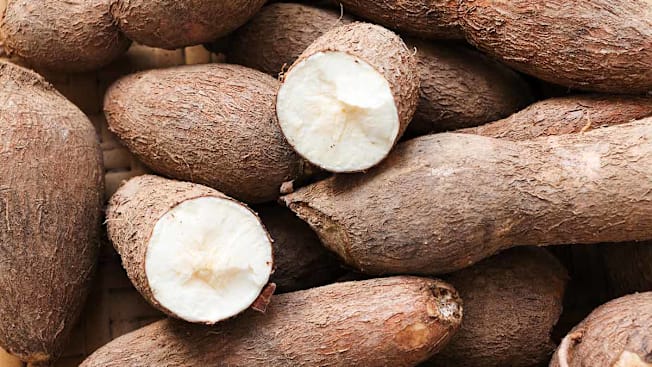
Mercury was detected in some cassava and cocoa samples, but Dr Armstrong described the findings as preliminary and requiring further investigation. They did not establish that the sampled food was unsafe for consumption.
The human health question
Dr Armstrong said mercury was a potent neurotoxin, particularly harmful to developing brains, and could also affect other organs and reproductive health, including pregnant women and unborn children.
A 2015 review of research on artisanal and small-scale gold mining in Ghana documented elevated mercury exposure among miners and community members through studies involving hair and urine samples.
A 2025 systematic review by University of Cape Coast researchers also reported associations between chemicals linked to galamsey and reproductive health problems, including reduced fertility, poor sperm quality, miscarriage and stillbirth. The findings point to possible risks but do not establish that mercury alone caused those outcomes.
In September 2025, Professor Paul Poku Sampene Ossei, a forensic histopathologist, reported that ongoing research involving more than 4,000 placentas had identified about 500 cases of spontaneous abortion which he associated with heavy-metal contamination.
The findings and methodology require further scrutiny before the cases can be conclusively attributed to galamsey or mercury exposure.
In June 2025 more than 70 children with cleft conditions had been documented in the Central and Western Regions within one week,according to media reports.
Health experts were investigating a possible connection with environmental pollution, but no causal link had been established.
These reports underscore the need for systematic health surveillance, including studies measuring heavy metals in biological samples from people living in mining-affected communities.
A cost beyond gold
The consequences of mercury pollution could extend beyond health to affect food security, livelihoods, water supply and public expenditure.
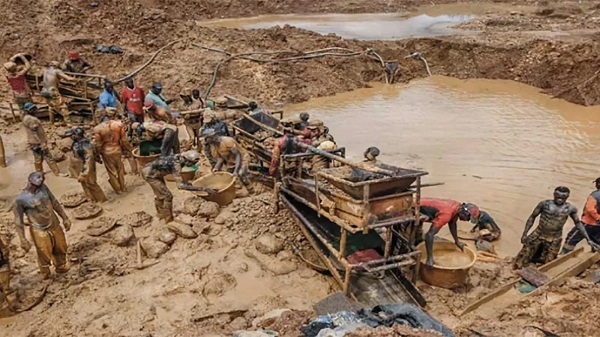
Madam Sarah Cobb of the US State Department’s Bureau of Oceans, International and Environmental and Scientific Affairs said the Water Resources Commission estimated that about 60 per cent of Ghana’s freshwater sources faced significant degradation.
The Reverend Dr Cephas Adjei Mensah, representing the Ministry of Environment, Science and Technology, said mercury pollution threatened public health, biodiversity, food security and future generations.
He called for stronger environmental monitoring, investment in mercury-free gold extraction technologies, effective regulation and alternative livelihoods for mining-dependent communities.
For Ghana, the challenge is not only to stop galamsey from destroying rivers and forests, but also to establish how far toxic substances released during mining are entering the food chain and affecting human health.
The evidence points to genuine mercury exposure risks in mining communities. What remains essential is a comprehensive assessment linking environmental contamination, human exposure and documented health outcomes. Until then, the danger may remain less visible than the destruction of rivers and forests, but its potential consequences cannot be ignored.
GNA
Reporter: Eric Appah Marfo [email protected]
Edited by Samuel Osei-Frempong