By Elizabeth Larkwor Baah
Accra, Oct. 28, GNA— SOS Children’s Villages (CV) in Ghana has called on District Assemblies to prioritise funding for community-level child protection activities in their 2027 budgets to ensure sustained support for vulnerable children.
This was made known during the first day of a two-day programme held in collaboration with Joynews and supported by Norway on “Protecting Children at Risk of Losing Parental Care” with implementing districts including Ada East, Ada West, Adaklu, Ekumfi and Sene West.
The programme seeks to strengthen collaboration between Community Child Protection Committees (CCPCs) and district assemblies to identify child protection needs, cost priority interventions and integrate them into district development plans and budgets, reducing dependence on temporary project funding.
Professor Lord Mensah, Head of Local Government Service who spoke on “Strengthening Local Government Systems for Sustainable Child Protection: From Community Priorities to District Plans, Budgets and Action”, said the local government sector recognises child protection as more than a social welfare concern, describing it as a development, governance and human capital issue, as well as a collective responsibility.
Prof Mensah who doubled as the Keynote Speaker said metropolitan, municipal and district assemblies (MMDAs) were strategically positioned to identify local needs, coordinate responses, mobilise resources and provide services to vulnerable children and families, saying that there was the need to move beyond policy commitments towards predictable financing, stronger accountability and increased investment in child protection systems.
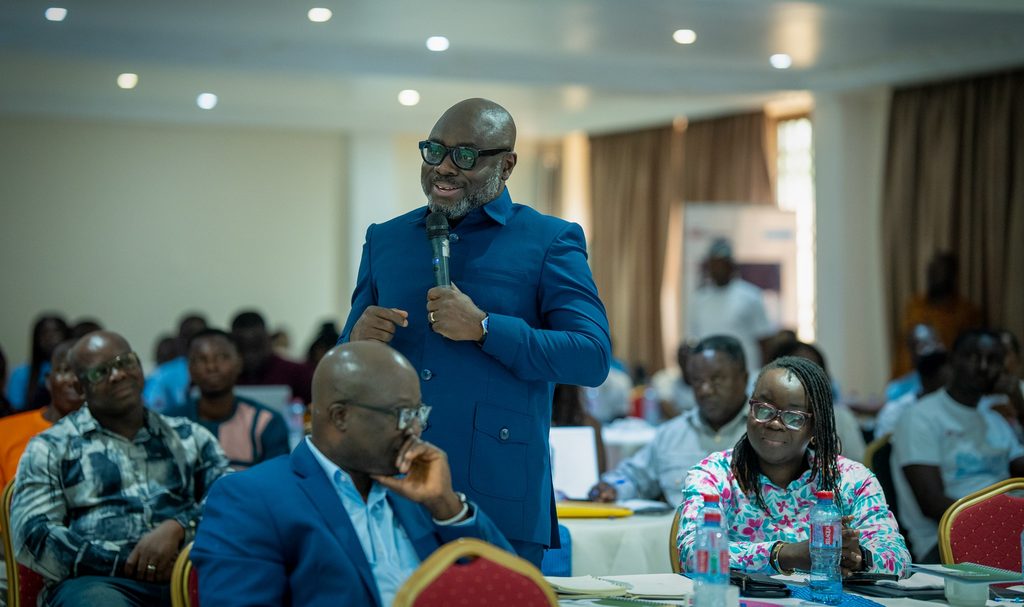
He commended the organisers for supporting districts to review the experiences of community child protection committees, identify priorities, develop activity plans and integrate them into Annual Action Plans and composite budgets while urging Social Welfare and Community Development Officers to ensure that child protection priorities were reflected in medium-term development plans, annual action plans and district budgets.
He emphasised that community concerns must inform district development plans, while district plans should influence budget allocations and ultimately translate into services and interventions that improve outcomes for children, adding that strong child protection outcomes, therefore, require evidence-based planning, with systems such as the Social Welfare Information Management System (SWIMS) providing reliable data.
Mr Alexander Mar Kekula, Country Director, SOS CV, Ghana, in his welcome address, highlighted the need to strengthen collaboration between CCPCs and MMDAs to ensure sustainable child protection action at the community level.
Mr Kekula emphasised that children are best protected when they grow up in caring families and supportive communities saying that community members and protection committees therefore have an important role in identifying and responding to situations that put children at risk.
He noted that children often lose parental care gradually due to poverty, neglect, violence and family crises that might go unnoticed, which makes early identification and intervention critical to preventing children from becoming exposed to further risks.
He said CCPCs in the five districts where SOS Children’s Villages operated have been sensitising communities, identifying children at risk, making referrals, addressing harmful practices and engaging families where children are vulnerable and were often the first, and sometimes the only, people to act when a child is in danger.
He raised concern that much of the child protection work continued to depend on project funding, and when such funding ends, activities such as community meetings and follow-up visits might also stop, leaving vulnerable children exposed, and called on the MMDAs to translate national child protection commitments into concrete district action by allocating predictable funding in their plans and budgets.
Ms Lucia Soleti, Chief Child Protection, UNICEF, who did a presentation on “Reflection on How Evidence on Child Protection Needs and Financing can Inform District Planning, Budgeting and Accountability” said Ghana has attained a maturity level in its child protection system, reflecting progress in establishing legal frameworks, policies, coordination structures and integrated social services.
Ms Soleti said despite this progress, gaps remain in ensuring that the child protection system was fully functional, equitable and sustainable.
“Although coordination mechanisms exist at the national, regional, district and community levels, Community Child Protection Committees (CCPCs) are not present in every community, limiting the reach of community-level child protection interventions,” she said.
She mentioned that inadequate financing remains a major challenge, with only 0.01 per cent of Ghana’s Gross Domestic Product (GDP) allocated to child protection, according to an analysis of the 2026 public budget, saying that low investment threatens the effective delivery and sustainability of essential child protection services.
She said the child protection workforce also faces significant capacity constraints, as only 49 per cent of government social workers are operating in the country, placing pressure on existing personnel who must provide services with limited resources, and stressed the need to increase government investment in child protection, strengthen integrated social services, expand the coverage of CCPCs and address existing gaps in the system.
The engagement also strengthened the capacity of relevant district assemblies to use the Social Welfare Information Management System (SWIMS) for child protection case recording, documentation and data use.
The five assemblies did a presentation on the state of child protection in their districts, emerging issues and priorities, while some social workers shared child protection experience and knowledge.
GNA
Edited by Laudia Anyorkor Nunoo/Benjamin Mensah
Reporter: Elizabeth Larkwor Baah, GNA
Email: [email protected]