By Iddi Yire, GNA
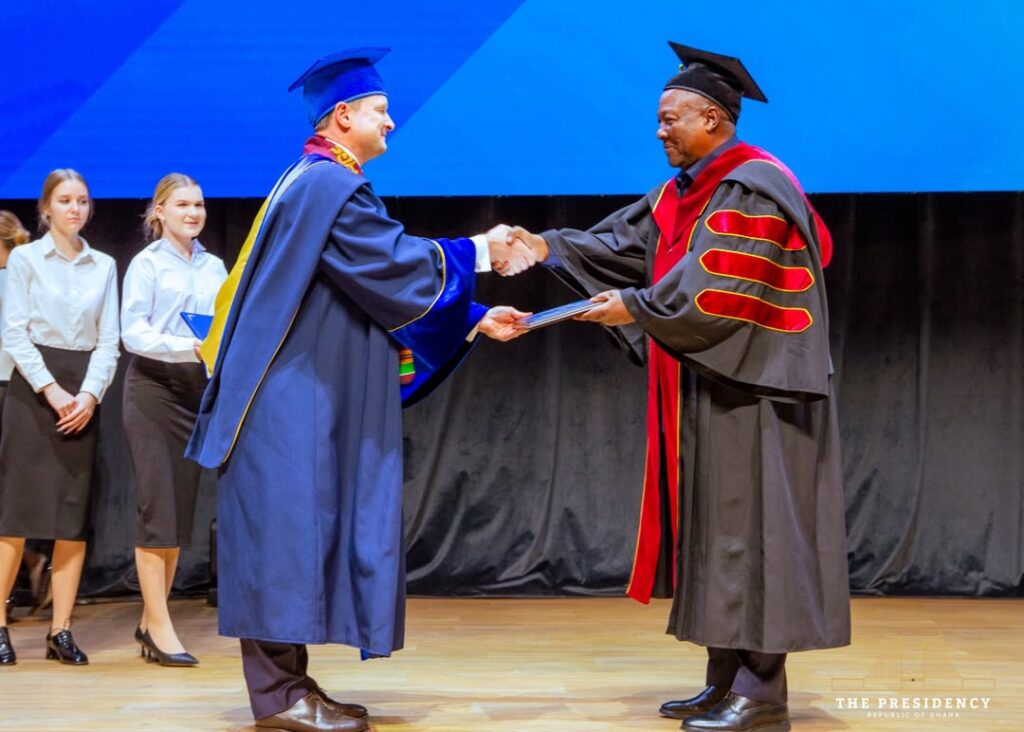
Accra, Oct 27, GNA – The Patrice Lumumba Peoples’ Friendship University of Russia (RUDN University) in Moscow on Tuesday conferred an honorary doctorate degree on President John Dramani Mahama.
The award ceremony, which was led by Professor Oleg A. Yastrebov, RUDN Rector, was in recognition of President Mahama’s commitment towards expanding access to education and strengthening Ghana-Russian relations in the area of education and scientific research.
President Mahama, who is an alumnus of RUDN is in Moscow for the Russia-Africa Summit.
President Mahama in his acceptance speech said, he accepted the honorary doctorate degree as encouragement to continue working for education and peaceful cooperation among people.
He said, he also received it as a reminder that leadership must remain open to continuous learning.
To the leadership, faculty, staff, and students of Patrice Lumumba University, the President offered his sincere thanks.
“I shall cherish this honour and the friendship it represents. I am pleased to be an honorary graduate of Patrice Lumumba University, and I will carry this honour with pride,” President Mahama said.
“May your institution continue to bring people together in the pursuit of knowledge.
“May the ties between Ghana and Russia create further opportunities for our young people, and may the learning achieved within these walls find its fullest expression in service to humanity.”
President Mahama said the Peoples’ Friendship University of Russia was a symbol of the solidarity and friendship shown by the people of the Soviet Union and Russia to countries newly emerged from colonialism in Africa.
He said the Institute over several decades opened its doors to thousands of African students, who drank from its fountain of knowledge and returned to help build their newly liberated nations.
He noted that the idea of a university devoted to friendship among peoples continues to speak directly to the needs of their time.
He said at RUDN, students from different nations and backgrounds could encounter one another as classmates, as colleagues, and, most importantly, as friends, adding that they learn that understanding another culture requires one to be curious, to be patient, and to exercise respect.
President Mahama reiterated that these relationships matter even more today because they live in a world troubled by conflict and mistrust.
He said academic cooperation keeps channels of conversation and dialogue open and that it allows people to work together on problems that no one country could solve alone—from public health and food security to energy and climate change.
“For Ghana, education is central to our development ambitions. Our young population must have the opportunity to acquire knowledge and use it productively,” President Mahama said.
President Mahama underscored that a talented young person should not lose the chance to study because their family couls not afford the cost.
He said over the years, progressive policies such as Free Compulsory Universal Basic Education and the School Feeding Programme had ensured gender parity and almost total enrolment in Ghana’s basic education programmes.
He said additional initiatives such as the Free Senior High School programme, the No-Fee Stress policy, support for students with disabilities, and improved access to financing for tertiary students has all helped remove financial barriers that prevent young Ghanaians from accessing education.
President Mahama reiterated that the Government was also committed to strengthening technical and vocational training, scientific research, and digital skills.
He said expanding access must go hand in hand with improving quality and ensuring that what students learn equips them for the demands of work and citizenship.
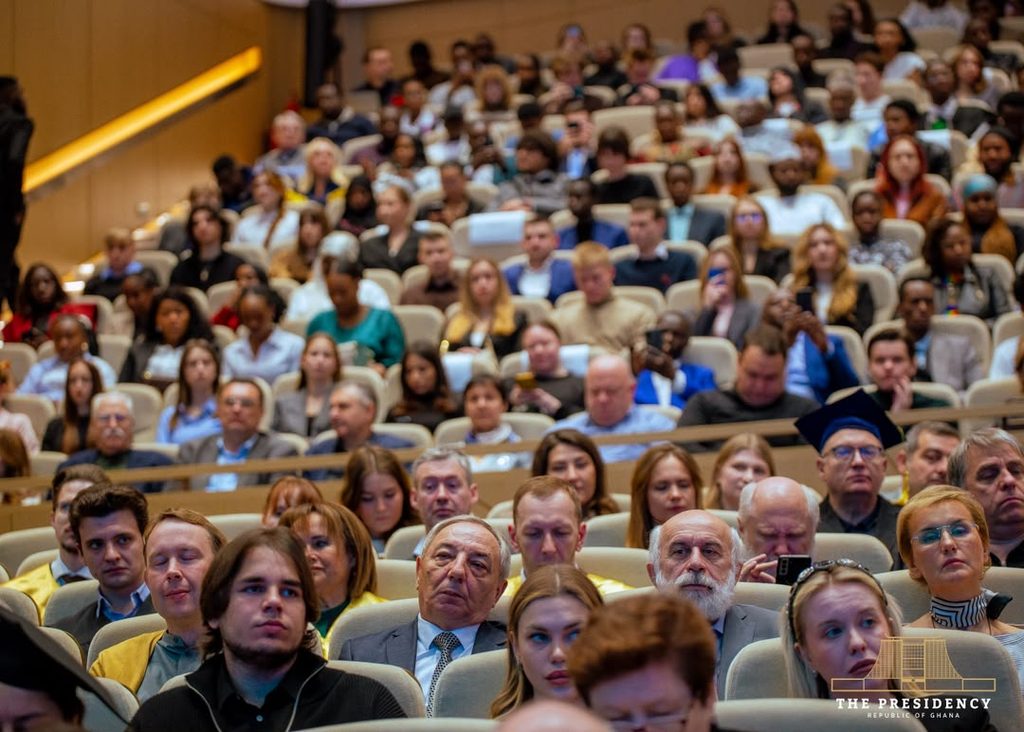
President Mahama said a university qualification should give its holder the confidence to ask searching questions and the ability to solve real-world problems.
“For our country, the value of education shows up in better healthcare, more productive agriculture, stronger businesses, and public institutions that serve our people well,” President Mahama stated.
“This is why closer relationships among universities, industry, and Governments are essential.”
He noted that research must have pathways into practice, and students need opportunities to test their ideas, gain experience, and turn their abilities into livelihoods.
President Mahama said, he therefore welcomes the discussion he had had with Professor Yastrebov and his proposal for the establishment of a Russian–African studies programme.
“I also note your kind invitation to send some of our brightest students to Patrice Lumumba University for specialization.”
President Mahama further expressed his appreciation to the Russian Government for the scholarships extended to Ghanaian students and for its continued support for educational cooperation.
He also thanked the University, the Rector, the lecturers, and the host communities that had helped Ghanaian students settle and gain a valuable education far away from home.
GNA
Edited by Kenneth Odeng Adade