By Anthony Adongo Apubeo, GNA
Bolgatanga, Oct. 22, GNA – Dr Segenet Kelemu, the Executive Director of the Pana Programme at the Mastercard Foundation, has called for concrete and measurable outcomes from initiatives aimed at empowering young people.
Speaking at the recently concluded World Food Forum (WFF) Flagship Event by the United Nation’s Food and Agriculture Organization (FAO), held in Rome, Italy, she warned that discussions on youth development risk becoming “lip service” without clear actions and follow-up.
Speaking at sessions titled “Small Grants for Big Impacts” and “Eye on Scale: Partnerships and investment to scale youth-led initiatives and institutionalized models of youth engagement,” Dr Kelemu urged the FAO’s Office of Youth and Women (OYW) to identify key actionable outcomes from the meeting and assess progress in subsequent years.
She said: ‘I would like to see at the end of this, the FAO Office of Youth and Women (OYW), identifying one or two actionable outputs from this meeting and what we can do.
“And a year from now, two years from now, we can report on this, what are the actionable areas. And I think not doing that would be just giving lip service for younger people.”
Dr Kelemu stressed that youth unemployment and food security were not challenges unique to Africa, noting that university graduates in other parts of the world also faced difficulties securing employment.
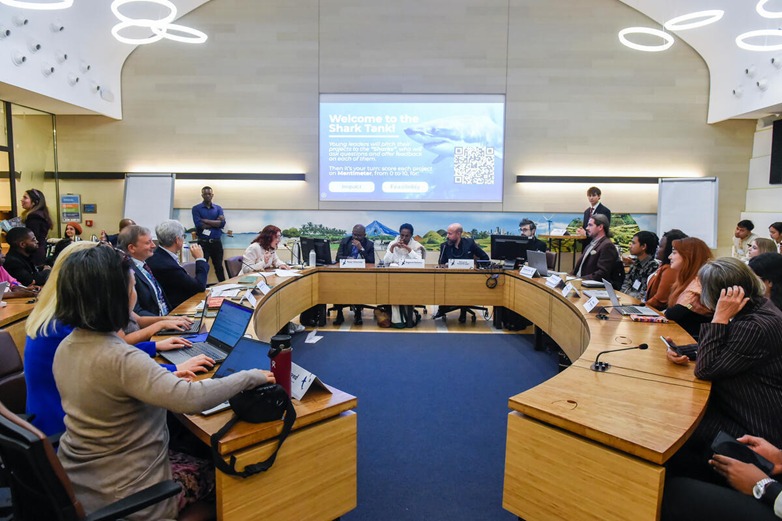
She said addressing these challenges required sustained action and collaboration among stakeholders rather than discussions alone.
“Mastercard Foundation has been a champion of young people at the centre, women at the centre, and Africa as a focus,” Dr Kelemu said.
She added that the foundation works with partners to identify innovations that are scalable, relevant to Africa, centred on people’s needs and capable of driving systemic change.
Making a contribution at the same event as a beneficiary of the Mastercard Foundation and grant through AGRA under the YEEFA programme, Ms Alberta Nana Akyaa Akosa, WFF Ghana National Chapter Lead and Founder of Agrihouse Foundation, highlighted the importance of partnerships in translating youth-focused investments into practical opportunities.
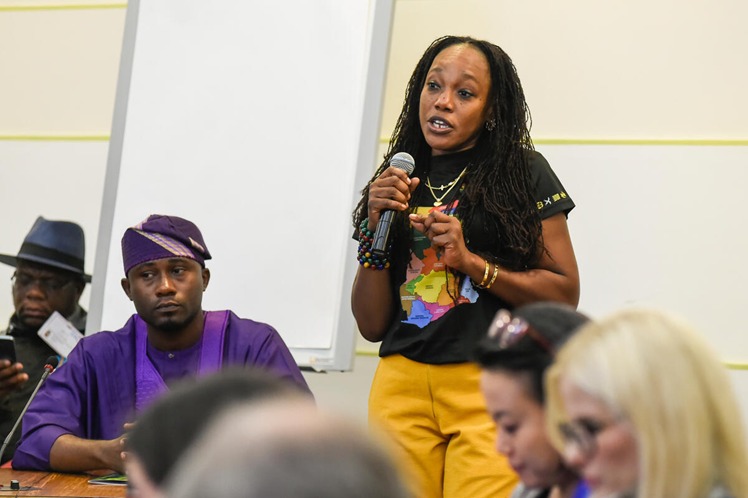
She disclosed that Agrihouse Foundation had benefited from a US$438,935 grant spread over three years to implement the organisation’s Boost to Bloom initiative, which aims to transition young people into dignified, fulfilling, and sustainable work within the agrifood sector.
The Boost to Bloom project seeks to strengthen production, value addition and competitiveness of horticultural crops targeting over 20,000 young people, women and persons with disabilities, in northern Ghana, including the Savannah, the North East, Northern, Upper West and Upper East Regions.
She emphasised that the support received for the project had so far helped in training over 7,000 young people, women, and people living with disabilities, especially in the area of technical knowledge, access to inputs, value addition, market availability, post-harvest control measures, and among others.
She outlined that, as part of efforts to improve access to agricultural inputs and promote inclusive agribusiness, nine agricultural input shops have been established and placed under the management of project beneficiaries, who are farmers with disabilities.
“The shops bring essential farming inputs closer to farmers and all farming communities while creating business and employment opportunities for the beneficiaries,” she added.
She further explained that, beyond production, business development and market access, the Boost to Bloom project continues to promote better nutrition and food safety through its “Eat Vegetable Campaign,” through radio discussions and public education activities on the proper handling, storage and preservation of vegetables to maintain freshness, and quality for safe consumption of locally produced vegetables.
Ms Akosa conveyed that, the support from Mastercard Foundation had contributed not only to the implementation of project activities and the empowerment of beneficiaries but also helped in strengthening Agrihouse Foundation’s internal technical capacity, improved the team’s competencies and reinforced the organization’s structures and systems, enabling it to deliver interventions more effectively and sustainably that respond to the needs of farming communities.
She applauded AGRA and the Mastercard Foundation for their continued investment and support for youth-led organizations such as Agrihouse Foundation, noting that their support for interventions such as the Boost to Bloom project, is helping to build stronger communities while creating meaningful opportunities for young people, women and farmers with disabilities.
Ms Akosa equally applauded the FAO office of Youth and Women and the Local Action Team, for designing all the meaningful, insightful, well-tailored, deeply powerful and empowering educational sessions for WFF National Chapter members attending the Flagship.
“These well thought-through and much-needed sessions will go a long way to strengthen our mindsets, help us grow our Chapters, build stronger partnerships and position chapters advantageously to take up agrifood system leadership positions,” Alberta added.
The discussions at the WFF highlighted the importance of moving beyond commitments to measurable results, with sustained partnerships, skills development and investment needed to help young people and by extension, women and people with disabilities participate more effectively in Africa’s agrifood systems.
The 2026 edition of WFF, hosted by FAO, under the theme “Innovate today. Nourish tomorrow,” took place from 8 to 16 October at FAO’s headquarters in Rome.
Held under the theme “Innovate today. Nourish tomorrow,” the WFF took place from 8 to 16 October at FAO’s headquarters in Rome, featuring more than 200 sessions, exhibitions and side events. More than 90,000 people from 189 countries participated, with in-person attendance doubling from the previous year, to 32,000. WFF content and messaging reached an estimated 2.4 billion people online.
Over the years, the WFF flagship event has offered a global convening space for young people, policymakers, scientists, innovators, investors and partners to connect, exchange perspectives and contribute to concrete solutions.
GNA
Edited by Caesar Abagali/Benjamin Mensah
Reporter: Anthony Adongo Apubeo
Reporter’s email address: [email protected]