By Mildred Siabi-Mensah
Takoradi, Oct. 30, GNA – The Ghana Tourism Authority (GTA) has commenced stakeholder consultations on a proposed National Animal Welfare Policy aimed at regulating the treatment of animals in tourism facilities and promoting responsible and sustainable tourism practices.
The policy, when finalised, is expected to establish national standards for the humane treatment of animals in tourism and hospitality establishments, while safeguarding wildlife, public health and Ghana’s reputation as a responsible tourism destination.
The Takoradi engagement forms part of nationwide zonal consultations designed to gather stakeholder input towards the development of a comprehensive animal welfare framework for the tourism industry.
The proposed policy will apply to all enterprises and attractions licensed or registered by the GTA and will cover animals kept at tourism facilities, wildlife interactions, working animals and the sourcing of animal products, including meat, poultry and eggs.
Mr Alexander Kwame Nketia, Director of Product Development and Investment at the GTA, said the policy had become necessary due to concerns about the treatment of animals at some tourism establishments.
He cited reports of animal cruelty, including incidents where monkeys were restrained with chains that cut into their skin, describing such practices as unacceptable and requiring clear regulatory guidelines.
Mr Nketia said research referenced by the Authority indicated that about 71 per cent of respondents interviewed in major cities and hotels were willing to patronise tourism facilities that treated animals humanely.
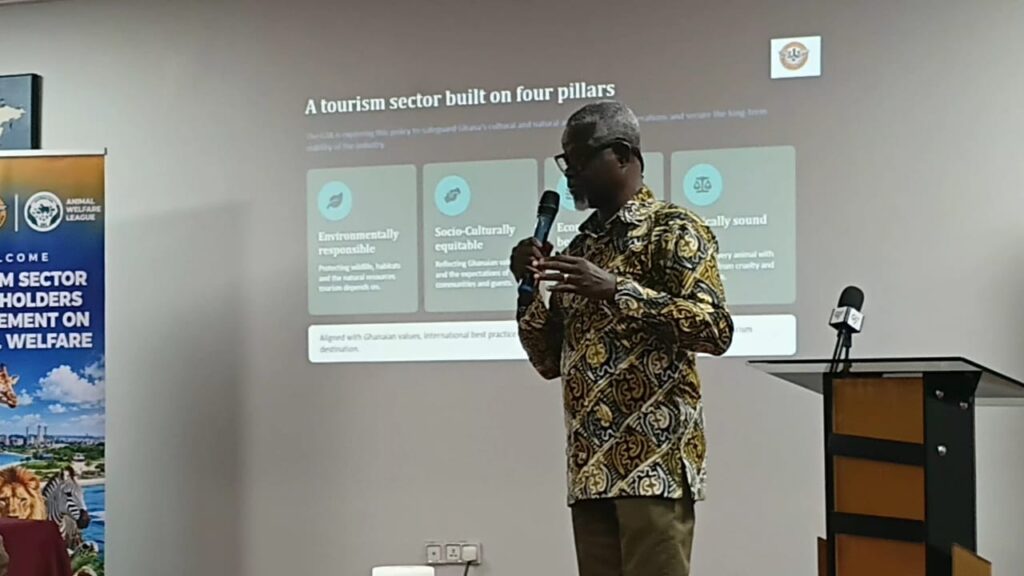
He noted that animal welfare was increasingly becoming a significant consideration for international travellers, investors and tourism partners, adding that poor welfare practices could damage the reputation of establishments through negative online reviews and public scrutiny.
According to him, responsible animal welfare practices would strengthen the tourism industry’s Environmental, Social and Governance (ESG) commitments and enhance its competitiveness in the global tourism market.
Under the draft policy, tourism establishments will be required to develop and annually review institutional animal welfare and responsible sourcing policies.
They will also be expected to appoint Animal Welfare Officers, provide veterinary oversight, maintain valid permits and animal inventories, and ensure appropriate housing, feeding and care for animals in their custody.
Other proposed requirements include compliance with biosecurity measures, humane transportation standards and regulations governing interactions between visitors and animals.
Dr Emmanuel Nyamekye, Senior Communications Lead of the Animal Welfare League, said the treatment of animals was an important indicator of a country’s commitment to responsible tourism.
He observed that animals formed part of many tourism and hospitality operations, including farms, attractions, resorts and food services, making their humane treatment a shared responsibility.
“Wherever animals are part of our work, whether on our farms, in our attractions, at resorts or in our kitchens, we have the responsibility to treat them humanely,” he said.
The proposed policy is anchored on existing legislation, including the Tourism Act, 2011 (Act 817), the Wildlife Resources Management Act, 2024 (Act 1115), the Public Health Act, 2012 (Act 851), relevant fisheries laws and regulations, and the Convention on International Trade in Endangered Species of Wild Fauna and Flora (CITES).
The GTA is developing the policy in partnership with the Animal Welfare League and World Animal Protection as part of efforts to integrate animal welfare into Ghana’s commitment to responsible and sustainable tourism.
The nationwide consultations are expected to provide industry players and other stakeholders an opportunity to contribute to the proposed framework before its finalisation and implementation.
GNA
Edited by Justina Hilda Paaga/Lydia Kukua Asamoah
Reporter: Mildred Siabi-Mensah