By Philip Tengzu, GNA
Doggoh, (UW/R), Oct. 2, GNA – The Savanna Agricultural Research Institute of the Council for Scientific and Industrial Research (CSIR-SARI) has trained about 300 women in three communities in the Upper West Region in livelihood skills to enhance their income-generating opportunities.
The beneficiaries, from Pieng in the Sissala East Municipality, Doggoh and Dazuuri in the Jirapa Municipality, were trained in household detergent and cosmetics production, including shea butter pomade and moringa soap production.
It formed part of the Sahelian Landscapes: A Land of Opportunities (LOGMe II) project being implemented by a consortium of organisations, including the CSIR-SARI in the Upper East and Upper West Regions.
The project is being implemented in partnership with the International Union for Conservation of Nature (IUCN) and sought to promote agroforestry as a climate-smart and income-generating agricultural practice.
The two-day training was focused on the project’s Activity Three, aimed at promoting value addition to shea products while providing alternative livelihoods to women and girls.
Dr Iddrisu Yahaya, Head of Department of the CSIR-SARI, Wa Station, said the initiative was intended to shift the attention of women and girls from activities that could destroy the vegetative cover.
“Our women and our girls are involved in wood and charcoal burning, so we want to move them away from that by giving them hands-on training on alternative livelihoods, which is also value addition to shea-butter”, he explained.
The beneficiaries received hands-on practical training in the production of caked and liquid soap and cream from shea-butter and moringa for hair and body.
They were also provided with the necessary start-up materials and equipment to enable them to begin production in their communities after the training.
Dr Yahaya said measures had been put in place to ensure the sustainability of the intervention, including encouraging the participants to work in groups.
He explained that the production equipment, which would be shared, would be rented by the groups, with proceeds from the rent used to maintain them and could also be used to purchase additional machines.
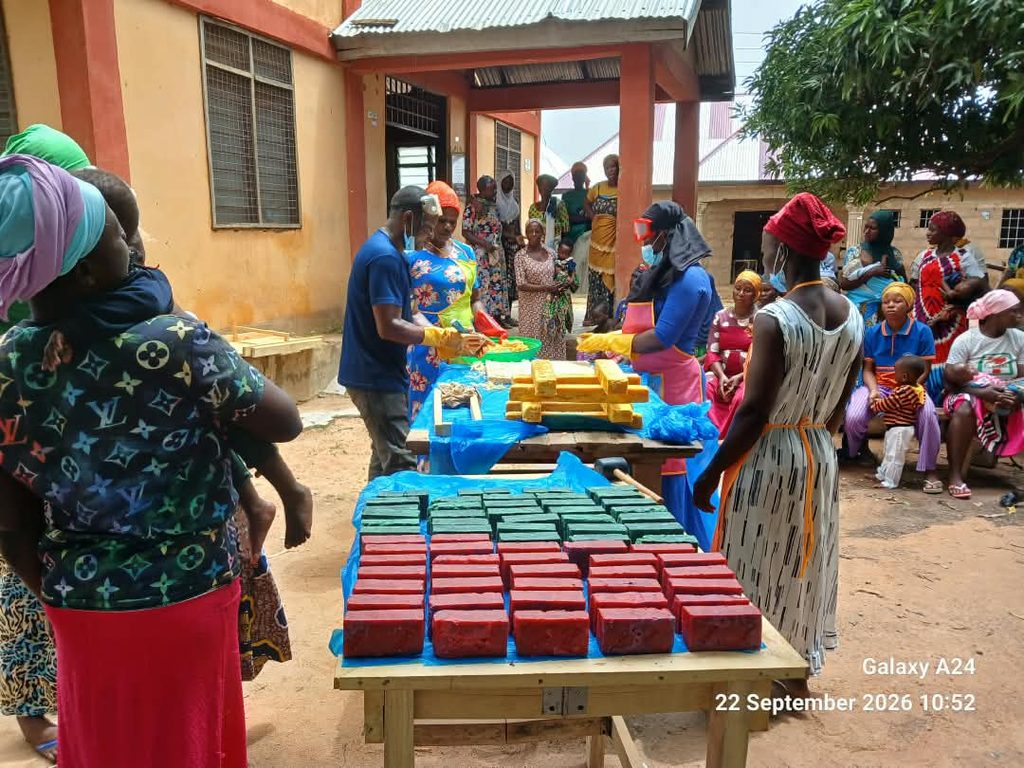
Some beneficiaries who spoke to the Ghana News Agency (GNA) at Doggoh expressed appreciation to CSIR-SARI and its partners for the intervention, as the skills acquired would help them improve their livelihoods and support their families.
Madam Cecilia Zupoge Bellingtaa, a beneficiary from Doggoh, said the training was an alternative source of income for her to support the education and healthcare needs of her children without relying on charcoal production and selling.
A similar intervention had been implemented in the Upper East Region, where about 400 women in two communities received the training.
The LOGMe II project was being implemented in seven communities in the Upper East Region and seven communities in the Upper West Region.
GNA
Edited by Bertha Badu-Agyei/Linda Asante Agyei
Reporter: Philip Tengzu, GNA
Reporter’s email: [email protected]