By Benjamin Adamafio Commey, GNA
Gomoa Fetteh (C/R), Oct. 30, GNA – The Reverend Professor Kwabena Agyapong-Kodua, Vice-Chancellor of Pentecost University, has called on African countries to move beyond dependence on imported technology and invest in local research, innovation and advanced manufacturing to accelerate industrial development.
He said Africa must develop the technical expertise and infrastructure to manufacture products locally using modern technologies rather than continue importing finished goods, including electric vehicles (EVs), electronic devices and industrial equipment.
“What Africa is lacking is technology. We have the moral and ethical foundations, but we need to strengthen our technical skills and capacity to develop and manufacture products locally. Today, when an iPad, a microphone or an electric vehicle is introduced, we rush to buy it because it has already been produced elsewhere.
“We must move beyond being consumers of technology to becoming innovators and manufacturers,” he said.
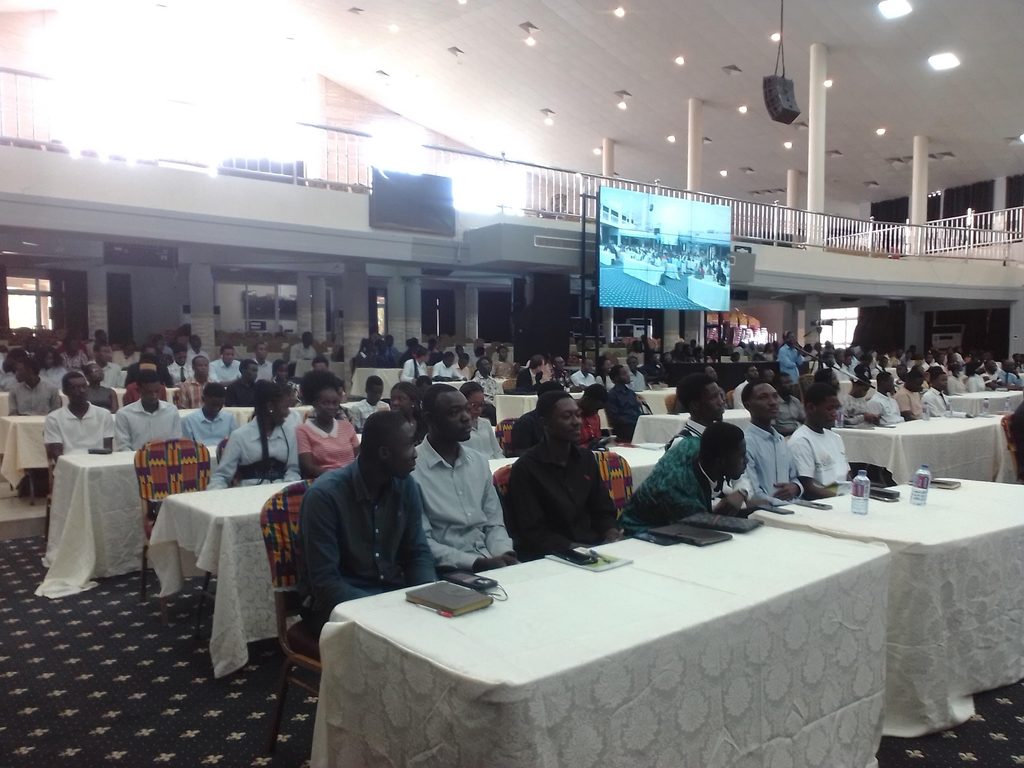
Prof Agyapong-Kodua made the call in an interview with the Ghana News Agency (GNA) on the sidelines of a dissemination conference on the Lasers4NetZero project held at Gomoa Fetteh in the Central Region on Wednesday.
The Lasers4NetZero project is a four-year European Union-funded research and training project aimed at making electric vehicle manufacturing more efficient, cost-effective and environmentally sustainable.
The project, which commenced in January 2024 and expected to end December 2027, also sought to improve laser cutting and welding, develop predictive models for manufacturing processes and introduce real-time monitoring systems that detect potential defects and enable corrective action during production.
Additionally, it aimed to train researchers in laser material processing, AI-based quality control, process simulation and lifecycle sustainability assessment, while strengthening collaboration between universities and industry.
It is being undertaken by six academic institutions and eight industrial partners from Europe and Africa, including the University of Bologna in Italy, the University of Warwick in the United Kingdom, Luleå University of Technology in Sweden, the Technical University of Ilmenau in Germany, Botswana International University of Science and Technology and Pentecost University.
Led by the University of Bologna, the project is funded by the EU at approximately €2.6 million.
Prof Agyapong-Kodua said African universities had a critical role in equipping students with the skills needed to develop and manufacture emerging technologies, particularly as the global automotive industry transitioned towards electric mobility.
To facilitate that, he said, Pentecost University was establishing an engineering village dedicated to emerging technologies, including Industry 4.0 and Industry 5.0, to prepare students for the changing demands of modern manufacturing.
The facility, being developed at Oyibi, he said, was expected to be completed by July 2027 and would expose students to advanced technologies and practical engineering applications.
The Vice-Chancellor said the university’s participation in Lasers4NetZero would also strengthen knowledge transfer, international research collaboration and doctoral training.
Professor Alessandro Fortunato, University of Bologna, Italy, who is the Laser4NetZero Project Coordinator, said about 30 per cent of emissions associated with electric vehicles could arise from manufacturing processes, including inefficient material use, energy-intensive production, defective components and waste.
The project, he said, sought to reduce those emissions by improving the manufacturing of batteries and fuel cells through advanced laser technologies and artificial intelligence (AI).
A laser is a concentrated beam of light that can deliver energy precisely to a material, enabling manufacturers to cut, join or process components with greater control than some conventional methods.
Prof Fortunato said combining lasers with AI could improve production speed, product quality and the detection of defects, ultimately reducing manufacturing costs and making electric vehicles more affordable.
One area of research involves replacing conventional oven-based drying of battery electrodes with laser-based processes to reduce energy consumption and processing time, he added.
Prof Fortunato told the GNA that the ultimate goal was to manufacture better-quality components while reducing production costs, energy consumption and material waste.
He said the project also offered African researchers and students opportunities for international exchanges, doctoral supervision and collaborative research.
Apostle Professor Joseph Buertey, Dean of the Faculty of Engineering, Science and Computing at Pentecost University, said the partnership would help transfer advanced manufacturing knowledge to Ghana and Botswana.
He said exposing students to laser-based manufacturing and electric vehicle technologies would prepare them to participate in emerging industries and contribute to Africa’s technological advancement.
The conference brought together researchers, students and industry stakeholders to share research findings and assess progress towards developing more sustainable manufacturing methods for electric vehicle batteries and fuel cells.
GNA
Edited by Agnes Boye-Doe
Reporter: Benjamin Adamafio Commey
Email: [email protected]